Waardorieel Trading Platform Alternatives 2026
Compare Waardorieel alternatives for 2026: regulated brokers, costs, platforms, and safety checks for US/EU traders seeking reliable trading options.

Compare Waardorieel alternatives for 2026: regulated brokers, costs, platforms, and safety checks for US/EU traders seeking reliable trading options.
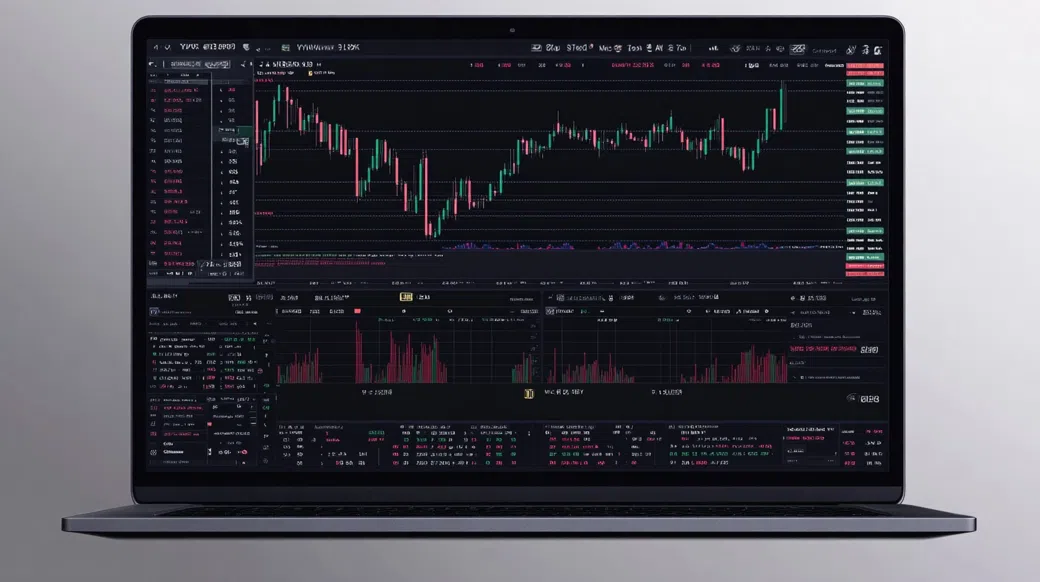
After years trading crude and products out of Dubai, I learned one lesson the hard way: headline leverage is loud, but operational safety is what keeps you in the game. Waardorieel is typically presented as an offshore-style Forex/CFD venue—often centered on a proprietary WebTrader and mobile app—aimed at traders who want quick access to FX pairs, index CFDs, commodities, and usually a menu of crypto CFDs. That mix can look convenient on the surface, especially if you’re used to fast onboarding and simple dashboards. The trade-off, for many, is that the protections you take for granted with top-tier oversight (clear segregation rules, formal complaint channels, compensation schemes in some jurisdictions) may not be as robust when a broker operates under a lighter offshore framework.
Cost and execution matter too. On this category of platform, EUR/USD pricing is commonly around 2.0 pips on a standard-style account, and maximum leverage often runs as high as 1:500. Those numbers can suit short-term CFD traders, but they also amplify the impact of slippage, swap/overnight fees, and margin calls when markets gap. If your plan includes systematic trading, deeper tools (MT4/MT5/cTrader), or expanding beyond CFDs into real stocks/ETFs, you’ll likely end up comparing Waardorieel alternatives that offer stronger regulation and broader market access. For reference and context, you can review the broker’s own materials at Waardorieel, then benchmark it against regulated competitors below.
Disclaimer: This article is for informational purposes only and does not constitute investment advice. CFDs and other leveraged products carry a high risk of loss, and you can lose more than your initial deposit in some cases.
From what is commonly observed with offshore CFD providers, Waardorieel appears positioned as a CFD-first brokerage offering access to Forex and a selection of CFD markets rather than a full “own-the-asset” investment account. The operating setup is often closer to a market maker or hybrid model than true DMA in listed markets, which matters if you’re sensitive to requotes, spread widening, or slippage around data releases. The target user is usually a retail trader who wants a straightforward WebTrader workflow, relatively high leverage (often marketed up to 1:500), and a low barrier to entry—commonly around a $250 minimum deposit. For traders comparing platforms like Waardorieel, the key question isn’t only “can I place trades?” but “what happens to my risk controls, funds protections, and execution quality when conditions turn ugly?”
The Waardorieel stack is typically built around a proprietary WebTrader with a companion iOS/Android app. Expect functional charting rather than institutional-grade depth: a modest indicator library, standard drawing tools, and the usual one-click trade ticket for market and pending orders. Many traders find these interfaces fine for discretionary FX/CFD trading, but less comfortable for strategy development—especially if you rely on custom indicators, automated execution, or detailed order routing controls. The account dashboard usually covers deposits/withdrawals, open positions, and basic performance summaries, with mobile parity focused on execution and monitoring rather than analysis. Execution “feel” can be acceptable in calm markets, yet spreads and fills often degrade during volatile sessions—precisely when disciplined traders want predictability.
Fee schedules in this segment are generally spread-led. A typical benchmark is EUR/USD from ~2.0 pips on a standard-style account, with additional costs coming from swap/overnight financing on held CFD positions. Some offshore brokers advertise “raw” accounts with tighter spreads plus commission, but unless terms are clearly documented, treat that as a variable rather than a certainty. Inactivity fees and withdrawal charges can also appear in the small print, and they’re often the hidden line items that frustrate active and occasional traders alike. When evaluating competitors to Waardorieel, the practical comparison is the all-in cost per round trip (spread + commission) under your typical trade size and holding period.
One pattern I see—particularly with MENA and Africa-based clients trading into US/EU sessions—is that “good enough” becomes “not good enough” the moment position size grows. The search for Waardorieel alternatives usually starts with a single friction point: a withdrawal that takes longer than expected, a spread blowout during CPI, or a platform that can’t support the strategy you actually run. Add leverage (often promoted up to 1:500) and CFDs, and the margin for error narrows fast; small operational issues become real P&L events, not just annoyances.
I approach broker selection the way I approach a commodities spread: define the risk first, then shop for the best execution. For alternatives to the Waardorieel trading platform, that means matching regulation, product set, and platform tooling to your strategy—then stress-testing the fees you’ll actually pay (including swaps and commissions), not just the headline spread.
Regulation is not a trophy; it’s a rulebook with enforcement. For US/EU-focused traders, look for oversight such as FCA (UK), ASIC (Australia), CySEC (EU), or NFA/CFTC (US). In the UK, eligible clients may fall under FSCS protection (up to £85,000), while Cyprus investment firms may participate in the ICF (up to €20,000). Ask how client money is held—segregated client funds is the phrase you want to see clearly stated—and confirm the entity on the regulator’s public register.
“More markets” only helps if they’re the markets you intend to use. If you trade macro themes, you may want FX plus index and commodity CFDs; if you’re building long-term diversification, you’ll care about real stocks and ETFs rather than share CFDs. Derivatives traders should check whether the broker supports listed options or futures (not just CFD look-alikes). Many brokers similar to Waardorieel focus on FX/CFDs and stop there; multi-asset venues widen the toolbox, but they also come with more complex margin and permissions.
Serious cost comparison is done in round-turn terms: spread + commission, then add what you’ll pay to hold risk (swap/overnight fees). A “0.0 pip” account can be expensive if commission is high; a wider-spread account can be cheaper for small sizes. Also check non-trading costs: inactivity rules, currency conversion charges, and withdrawal fees. If your current benchmark is roughly 2.0 pips on EUR/USD at Waardorieel-style pricing, you’ll often find regulated FX specialists offering lower all-in costs, especially on Raw/ECN-style accounts.
Platform choice is a strategy choice. MT4/MT5 and cTrader support automation, advanced order handling, and a wider ecosystem than many proprietary WebTrader builds. Execution model matters too: market maker setups can be fine for some retail flows, while STP/ECN or DMA frameworks tend to offer clearer routing and pricing dynamics—though slippage can still occur in fast markets. Test with small size during liquid and illiquid hours to see how spreads, fills, and latency behave. This is where regulated options vs Waardorieel often separate themselves: disclosures tend to be clearer, and tooling is usually deeper.
Support quality shows up at the worst moment: a margin call, a corporate action, or a funding query before the weekend. Look for extended coverage hours, multilingual desks if you need them, and documented escalation paths. Education should be more than webinars—it should explain margin, negative balance protection (where applicable), and how CFDs behave during volatility. Mobile parity matters if you manage risk on the move; the best apps let you adjust stops, monitor margin, and access statements without hunting through menus.
For pure FX/CFD trading, the main comparison is not leverage—offshore venues can quote 1:500, but that doesn’t make execution cheaper. With Waardorieel-style pricing, EUR/USD is commonly around 2.0 pips on a standard tier, and instrument breadth tends to be “enough” rather than exhaustive (think roughly a few dozen FX pairs, a handful of commodities, and a standard set of indices). Regulated FX specialists such as Pepperstone and OANDA typically provide stronger transparency on execution and often lower all-in pricing depending on account type (Raw/commission vs spread-only). If you scalp, cost-of-trade and slippage dominate your results; if you swing trade, swap/overnight financing and weekend gaps deserve equal attention. Either way, CFDs can move fast—high leverage magnifies both precision and mistakes.
If your goal is diversification in the literal sense—owning a basket of sectors, regions, and factors—CFDs are a partial substitute at best. Many platforms like Waardorieel either don’t offer real stocks/ETFs or offer them primarily as CFDs, which means no shareholder rights and pricing that can diverge slightly because of financing and spread. For US/EU investors seeking direct exposure, Interactive Brokers is a standout for breadth (stocks, ETFs, options, futures, bonds) and professional-grade routing, while Saxo Bank is often chosen for multi-asset access with a strong research and portfolio layer. The difference is structural: listed markets use exchange rules and custody frameworks; CFDs are bilateral contracts with margin mechanics. If long-term holdings are part of your plan, that structural difference is not a footnote—it’s the whole story.
Crypto access on CFD-centric brokers is usually delivered as crypto CFDs, not on-chain ownership. That means you’re trading price exposure with leverage (and spreads), without controlling a wallet or transferring the asset out. For some traders, that’s acceptable—particularly for short-term tactics around BTC or ETH volatility—yet it’s a different risk profile from spot ownership. In regulated CFD environments, brokers like IG and Plus500 commonly provide crypto CFD access (availability varies by region and regulation), alongside risk controls and clearer disclosures than many offshore setups. If you’re comparing top substitutes for Waardorieel for crypto, check margin rules, weekend pricing behavior, and whether negative balance protection applies under your jurisdictional entity.
Regulation: DFSA, FCA, MAS (entity depends on region)
Markets: Stocks, ETFs, bonds, options, futures, FX, CFDs
Fees: FX spreads commonly from ~0.6–1.2 pips depending on tier; investing/trading fees vary by market and venue
Platform: SaxoTraderGO, SaxoTraderPRO
Best For: Multi-asset diversification across listed and OTC markets
Regulation: FCA, ASIC, CySEC, DFSA
Markets: FX, index CFDs, commodity CFDs, crypto CFDs (where permitted)
Fees: Standard spreads often ~1.0–1.3 pips on EUR/USD; Raw-style pricing can be ~0.0–0.3 pips plus commission (varies by entity/account)
Platform: MT4, MT5, cTrader
Best For: Algorithmic traders needing MT4/MT5/cTrader flexibility
Regulation: SEC/FINRA, FCA, IIROC (by region)
Markets: Stocks, ETFs, options, futures, FX, bonds, funds
Fees: FX pricing is typically institutional-style with low spreads plus commission; equities/options/futures follow transparent venue-based commissions
Platform: Trader Workstation (TWS), IBKR Desktop, IBKR Mobile, Client Portal
Best For: Active investors who want exchange access and deep tooling
Regulation: CFTC/NFA, FCA, ASIC, IIROC (by region)
Markets: FX, index CFDs (outside the US), commodity CFDs (outside the US), crypto CFDs (availability varies)
Fees: Typically spread-led pricing; EUR/USD often around ~0.6–1.2 pips in liquid hours depending on region/account
Platform: OANDA Trade (proprietary), MT4 (region-dependent)
Best For: FX-first traders prioritizing transparent pricing and supervision
Regulation: FCA, ASIC, MAS
Markets: CFDs across FX, indices, commodities, shares; crypto CFDs (where permitted)
Fees: FX spreads often from ~0.6–1.2 pips on majors in normal conditions; other CFD costs depend on market and holding period
Platform: IG Trading Platform, MT4
Best For: Macro CFD traders seeking broad index/commodity coverage
Regulation: FCA, CySEC, ASIC, MAS
Markets: CFDs on FX, indices, commodities, shares; crypto CFDs (where permitted)
Fees: Costs are primarily embedded in the spread; typical major-pair spreads are commonly around ~0.8–1.5 pips depending on market conditions
Platform: Plus500 proprietary (web and mobile)
Best For: Simplicity-focused CFD traders who want a clean interface
| Platform | Regulation | Main Markets | Typical Costs | Best For |
|---|---|---|---|---|
| Saxo Bank | DFSA, FCA, MAS | Stocks/ETFs, options, futures, FX, CFDs | FX ~0.6–1.2 pips (tier-dependent); other fees by venue | Multi-asset diversification across listed and OTC markets |
| Pepperstone | FCA, ASIC, CySEC, DFSA | FX + major CFD markets | EUR/USD ~1.0–1.3 pips (Standard) or ~0.0–0.3 + commission (Raw) | Algorithmic traders needing MT4/MT5/cTrader flexibility |
| Interactive Brokers (IBKR) | SEC/FINRA, FCA, IIROC | Stocks/ETFs, options, futures, FX, bonds | Low spreads + commissions (product-dependent) | Active investors who want exchange access and deep tooling |
| OANDA | CFTC/NFA, FCA, ASIC, IIROC | FX; CFDs outside the US | Spread-led; often ~0.6–1.2 pips on EUR/USD in liquid hours | FX-first traders prioritizing transparent pricing and supervision |
| IG | FCA, ASIC, MAS | Broad CFDs (FX, indices, commodities, shares) | Majors often ~0.6–1.2 pips; holding costs via financing/swap | Macro CFD traders seeking broad index/commodity coverage |
| Plus500 | FCA, CySEC, ASIC, MAS | CFDs across major asset classes | Spread-based; majors commonly ~0.8–1.5 pips (conditions vary) | Simplicity-focused CFD traders who want a clean interface |
Switching brokers is less like changing apps and more like moving a trading operation across jurisdictions. Treat it as a controlled process: you want continuity of access, clean records, and no forced exposure while funds are in transit. If you’re exiting Waardorieel, remember that leveraged CFDs can gap—so reduce risk first, then move cash, then rebuild positions deliberately on the new venue.
If you’re still evaluating platforms like Waardorieel, review the current onboarding steps, instrument list, and fee schedule side-by-side with the regulated options above. Regional eligibility and entity selection can change your leverage limits, protections, and even product access, so verify the exact account you’d be opened under before committing funds.
Visit WaardorieelThe best alternative depends on whether you need real multi-asset access or mainly FX/CFDs. For broad diversification (stocks, ETFs, options, futures), Interactive Brokers or Saxo Bank are strong candidates; for FX/CFD execution and platform choice, Pepperstone and OANDA are more directly comparable. If your priority is a broad CFD catalogue with robust oversight, IG is often a practical benchmark for best Waardorieel alternatives 2026.
Waardorieel appears to fit the offshore/unregulated category commonly associated with Seychelles FSA-style frameworks rather than top-tier US/EU regulation. That doesn’t automatically mean fraud, but it usually means fewer formal investor protections than FCA/ASIC/CySEC/NFA-supervised brokers. For safety, prioritize segregated client funds policies, clear withdrawal terms, and verify any claimed licensing directly on the regulator’s register.
Most brokers similar to Waardorieel focus on FX and CFDs, so stocks and ETFs—if available—are commonly offered as CFDs rather than as real shares, and listed futures are often not offered. Crypto exposure is typically delivered via crypto CFDs, not on-chain ownership. Check the product list on Waardorieel carefully, then compare with multi-asset brokers like IBKR or Saxo if you want exchange-traded stocks/ETFs or futures.
Before switching, confirm the new broker’s regulator and exact legal entity, then review margin rules, negative balance protection (where applicable), and the full cost stack (spread, commission, and swap/overnight fees). Make sure you can pass KYC quickly and that your funding method is supported for withdrawals under AML rules. Finally, test execution with small trades to see real spreads and slippage during your usual trading hours.
About the Author: Nadia El-Amin is a former commodities trader based in Dubai who covers global brokerage markets with a focus on the Middle East and Africa. She writes from the perspective that diversification is the only free lunch in finance—provided the plumbing (regulation, custody, and execution) is built to survive stress.