Vogt Rendifels Trading Platform Alternatives 2026
Compare Vogt Rendifels alternatives for 2026: regulated brokers, platforms, costs, and safety checks for US/EU traders seeking reliable trading options.

Compare Vogt Rendifels alternatives for 2026: regulated brokers, platforms, costs, and safety checks for US/EU traders seeking reliable trading options.
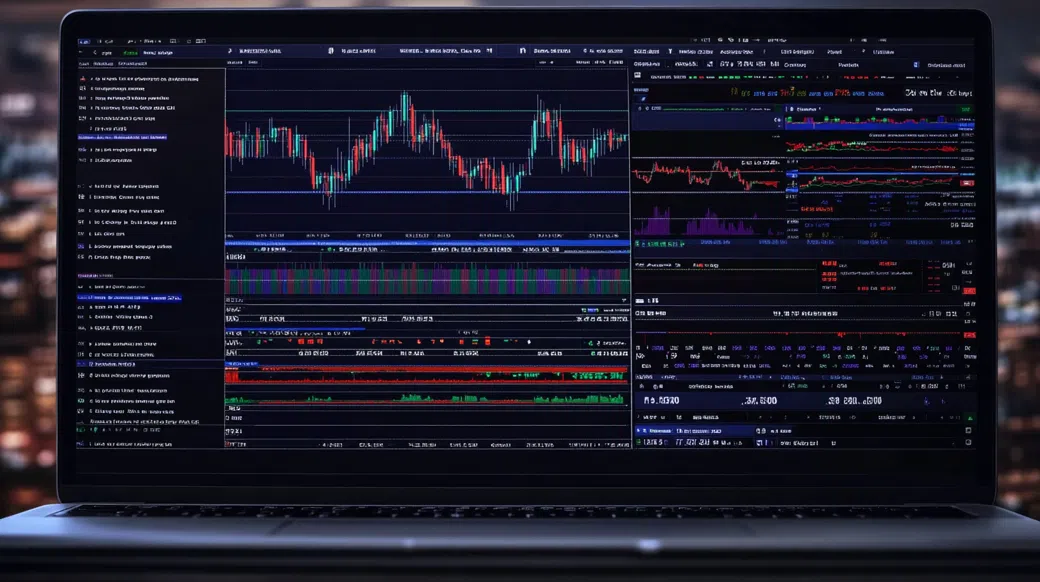
On a Dubai desk, you learn quickly that the cheapest trade is the one you can actually exit. That’s why the conversation around offshore CFD venues is never just about spreads and leverage—it’s about plumbing: custody, withdrawals, execution quality, and whether the rulebook is enforced. Vogt Rendifels appears to sit in that offshore category, typically associated with a Seychelles-style framework rather than the heavy supervision US and EU traders are used to. The offer tends to look familiar: forex and CFD trading, a proprietary WebTrader, and mobile access, with leverage that can run as high as 1:500.
For many retail traders, that mix is “good enough” until it isn’t. A wider product shelf (real stocks and ETFs, not just CFDs), a platform stack that supports MT4/MT5 or cTrader, and clearer investor-protection rules are often what pull traders toward regulated substitutes. The math matters too. If the usual EUR/USD spread sits around 2.0 pips on a standard-style account, the hidden cost over a month of active trading can dwarf a flashy bonus or a high leverage headline. That’s where Vogt Rendifels alternatives become a practical search, not a trendy one.
Below is a risk-aware guide to Vogt Rendifels trading platform alternatives 2026, built for a global audience with a US/EU focus—where KYC/AML standards, segregated client funds, and compensation schemes (like FSCS in the UK) are not optional extras, but the baseline.
Disclaimer: This article is for informational purposes only and does not constitute investment advice. CFDs and other leveraged products carry a high risk of loss, and you can lose more quickly than you expect.
From what is typically observed in this offshore CFD segment, Vogt Rendifels is positioned as a forex-and-CFD-first broker rather than a full multi-asset investment house. The emphasis is usually on quick onboarding, broad retail accessibility, and higher leverage (commonly up to 1:500) rather than exchange-traded ownership of shares or futures. The product list often lands around 30–50 FX pairs, a small basket of indices and commodities, and a selection of crypto CFDs—fine for directional speculation, less suited for long-horizon portfolio building. Traders comparing competitors to Vogt Rendifels usually do so because they want tighter execution standards, more transparent oversight, or a deeper market menu.
The typical Vogt Rendifels setup centers on a proprietary WebTrader with a companion iOS/Android app. Expect functional charting with common indicators, basic drawing tools, and a straightforward order ticket for market, limit, and stop orders. Where these platforms often feel “mid-tier” is depth: fewer advanced order types, limited customization compared with MT4/MT5 or cTrader, and less control over execution reporting (slippage stats, detailed fill logs). The client dashboard generally covers deposits/withdrawals, margin, and open positions, and mobile parity is usually decent for monitoring and simple entries—just not ideal for complex workflows.
Pricing in this category tends to be spread-led. A common reference point is EUR/USD around ~2.0 pips on a standard-style account, with higher-volatility instruments priced wider. Some brokers in the same lane advertise “raw” tiers (think 0.0–0.4 pips plus a round-turn commission in the $5–$8 range), but the fine print matters: swap/overnight financing can be a meaningful drag for multi-day holds, and withdrawal or inactivity charges can appear depending on funding method and account activity. For traders evaluating platforms like Vogt Rendifels, the key is to translate all fees into a monthly cost under your own trade frequency.
The first crack usually shows up during stress: a fast market, a margin call, or a withdrawal request that takes longer than expected. At that point, the conversation shifts from interface preferences to legal protections and operational reliability. If your strategy depends on consistent execution—especially around news—then a proprietary WebTrader with limited reporting can feel like driving at night with dim headlights. That’s why traders end up filtering for Vogt Rendifels alternatives that offer stronger supervision, clearer dispute processes, and a platform stack that matches their method.
I treat broker selection like position sizing: start with downside control, then optimize the rest. For alternatives to the Vogt Rendifels trading platform, that means you first decide what protections you need (regulator, compensation scheme, segregation rules), then match markets and tools to your strategy, and only then argue about a tenth of a pip.
Regulators are not all the same. The FCA (UK), ASIC (Australia), CySEC (Cyprus), and NFA/CFTC (US) operate with stricter reporting expectations than offshore regimes, and they typically require segregated client funds. In the UK, eligible clients may fall under the FSCS with coverage up to £85,000 in certain failure scenarios; under CySEC, the ICF can cover up to €20,000 for eligible retail clients. Don’t rely on a website footer—verify the license on the regulator’s public register.
Decide whether you’re trading for short-term expression or long-term ownership. FX and index CFDs are fine for tactical views, but a portfolio mindset needs broader building blocks: stocks, ETFs, bonds, and sometimes listed options or futures. Multi-asset brokers can also reduce concentration risk because you’re not forced to express every idea through CFDs. For Middle East/Africa-based clients trading globally, access to multiple exchanges under one roof is a quiet advantage.
Headline spreads are only the cover page. The real comparison is round-turn cost: spread + commission (if any) + typical slippage + swap/overnight fees if you hold. A 2.0-pip EUR/USD spread can be expensive if you trade frequently, even if the platform advertises high leverage. Also check non-trading costs—withdrawal charges, inactivity fees, and currency conversion—because they hit when you’re not even clicking “buy.”
Platform choice is strategy choice. MT4/MT5 and cTrader support automation, custom indicators, and broader integrations; proprietary WebTraders can be clean but often narrower in tooling. Execution model matters too: market maker vs STP/ECN/DMA changes how orders are handled and what slippage can look like during spikes. If you’re comparing against Vogt Rendifels, look for brokers that publish clear execution policies and support stable infrastructure during high-volume sessions.
Support is a trading tool, not a customer-service perk. Look for 24/5 coverage aligned with FX hours, clear escalation paths, and multilingual service if you operate cross-border. Education should go beyond “what is leverage” and include margin mechanics, swap calculations, and risk controls like negative balance protection (where applicable). Finally, check mobile parity—if the app can’t manage orders cleanly, it will betray you on travel days.
Forex and CFDs are the natural home turf for brokers in the Vogt Rendifels category: think 30–50 FX pairs, a handful of indices, and a short list of commodities. The catch is that cost and execution quality decide whether the edge survives. If EUR/USD is typically around ~2.0 pips, active traders can feel the friction fast; add leverage up to 1:500 and small missteps become large drawdowns. Regulated FX/CFD specialists like Pepperstone and OANDA are often chosen as regulated options vs Vogt Rendifels because they pair mature platforms (MT4/MT5/cTrader or strong proprietary systems) with clearer oversight and more transparent execution disclosures. For traders who scalp or trade news, those operational details can matter more than an extra 200x leverage on paper.
If your goal is diversification—the only free lunch I’ve ever seen work in real portfolios—then stocks and ETFs are where you build it. Offshore CFD venues frequently offer equity exposure mainly as CFDs (price tracking without ownership), which means no shareholder rights and different fee mechanics. Brokers like Interactive Brokers (IBKR) and Saxo Bank close that gap by providing access to real shares and ETFs across multiple exchanges, and in many cases listed options and futures as well. That difference is not cosmetic: real holdings support longer holding periods, broader hedging choices, and cleaner tax recordkeeping in many jurisdictions. For US/EU-focused readers, that’s often the single biggest reason to look at top substitutes for Vogt Rendifels.
Crypto on many CFD-first platforms is usually crypto CFDs—a derivative bet on price rather than on-chain ownership. That can be useful for short-term trading, but it doesn’t give you wallet transfers or the operational control that comes with holding spot crypto. In regulated environments, availability varies by region, and many mainstream brokers restrict crypto to CFDs (or don’t offer it at all) depending on local rules. For traders who want regulated crypto CFD exposure alongside traditional markets, brokers such as IG and Plus500 are commonly considered among the best Vogt Rendifels alternatives 2026 because they operate under established regulators and integrate crypto exposure into a broader risk framework. Either way, treat crypto volatility and weekend gaps as a separate risk bucket.
Regulation: DFSA, FCA, MAS
Markets: Stocks, ETFs, bonds, FX, CFDs, options, futures
Fees: FX spreads typically from ~0.6–1.2 pips (account/pricing tier dependent); commissions apply on exchange-traded products
Platform: SaxoTraderGO, SaxoTraderPRO
Best For: Multi-asset portfolio builders who still trade tactically
Regulation: FCA, ASIC, CySEC, DFSA
Markets: FX, CFDs (indices, commodities, some crypto CFDs depending on region)
Fees: Raw-style pricing often ~0.0–0.3 pips + commission (varies by platform/entity); Standard accounts typically from ~1.0 pip+
Platform: MT4, MT5, cTrader
Best For: Execution-focused FX traders and systematic strategies
Regulation: SEC/FINRA, FCA, IIROC
Markets: Stocks, ETFs, options, futures, bonds, FX
Fees: Low, schedule-based commissions on many products; FX pricing is typically tight but depends on venue and size
Platform: Trader Workstation (TWS), IBKR Mobile, Client Portal
Best For: Advanced traders needing global exchanges and listed derivatives
Regulation: FCA, ASIC, MAS
Markets: CFDs (FX, indices, commodities, shares), spread betting (UK), limited crypto CFDs depending on region
Fees: FX spreads often from ~0.6–1.2 pips on major pairs; financing costs apply on leveraged overnight positions
Platform: IG Web Platform, IG Mobile (MT4 available in some regions)
Best For: Risk-managed CFD exposure with strong oversight
Regulation: CFTC/NFA, FCA, ASIC, IIROC
Markets: FX (and CFDs in certain jurisdictions)
Fees: Pricing is typically spread-based; majors can be competitive, with costs varying by account type and region
Platform: OANDA Trade (web/mobile), MT4
Best For: FX-first traders prioritizing transparency and regulation
Regulation: FCA, CySEC, ASIC, MAS
Markets: CFDs (FX, indices, commodities, shares; crypto CFDs where permitted)
Fees: Spread-only model; costs vary by instrument and volatility, with overnight funding on leveraged holds
Platform: Plus500 WebTrader, Plus500 Mobile
Best For: Beginners who want a simple CFD interface
| Platform | Regulation | Main Markets | Typical Costs | Best For |
|---|---|---|---|---|
| Saxo Bank | DFSA, FCA, MAS | Stocks/ETFs, FX, options, futures, CFDs | FX ~0.6–1.2 pips; commissions on exchanges | Multi-asset portfolio builders who still trade tactically |
| Pepperstone | FCA, ASIC, CySEC, DFSA | FX, CFDs (indices/commodities; some crypto CFDs) | Raw ~0.0–0.3 pips + commission; Standard ~1.0 pip+ | Execution-focused FX traders and systematic strategies |
| Interactive Brokers (IBKR) | SEC/FINRA, FCA, IIROC | Real stocks/ETFs, options, futures, bonds, FX | Commission schedules; tight FX pricing by venue/size | Advanced traders needing global exchanges and listed derivatives |
| IG | FCA, ASIC, MAS | CFDs across FX/indices/commodities/shares | FX often ~0.6–1.2 pips; overnight financing on leverage | Risk-managed CFD exposure with strong oversight |
| OANDA | CFTC/NFA, FCA, ASIC, IIROC | FX (and CFDs in some regions) | Spread-based pricing; varies by region/account type | FX-first traders prioritizing transparency and regulation |
| Plus500 | FCA, CySEC, ASIC, MAS | CFDs (FX/indices/commodities/shares; crypto CFDs where allowed) | Spread-only; overnight funding on leveraged holds | Beginners who want a simple CFD interface |
Switching brokers is a small project, not a single click—treat it like operational risk management. The cleanest migrations reduce the chance of being stuck mid-transfer with open margin exposure, missing documents, or a funding method mismatch. If you’re moving away from offshore venues, keep leverage in check during the transition; execution errors and funding delays are most painful when positions are oversized. My approach is to set the new account up first, then unwind and withdraw in an orderly sequence from Vogt Rendifels.
If you’re still considering it, compare the onboarding steps, regional eligibility, and the platform stack against the regulated options above. Read the execution policy, review swap/overnight charges for your holding period, and test withdrawals with a small amount before you scale.
Visit Vogt RendifelsThe best choice depends on whether you’re building a diversified book or trading short-term CFDs. For real multi-asset access (stocks/ETFs, options, futures), Interactive Brokers or Saxo Bank are strong candidates; for FX execution with MT4/MT5/cTrader, Pepperstone is a common pick. If your priority is a simpler CFD interface under top-tier regulation, IG or Plus500 can fit.
Vogt Rendifels appears to operate in an offshore/unregulated-style framework commonly associated with jurisdictions such as the Seychelles rather than FCA/NFA-level supervision. That doesn’t automatically mean you can’t trade, but it usually implies fewer investor-protection mechanisms and less recourse if disputes arise. For many US/EU traders, that difference is the main reason they prioritize regulated options vs Vogt Rendifels.
On brokers similar to Vogt Rendifels, stocks and futures are often not offered as exchange-traded products; equity exposure is frequently via CFDs instead. Crypto is commonly provided as crypto CFDs (price exposure, no on-chain ownership). If you want real stocks/ETFs and listed futures, IBKR and Saxo are more suitable; for crypto CFD access in regulated settings, availability varies by region with brokers like IG or Plus500 offering it where permitted.
Before switching, verify the new broker on the regulator’s public register and confirm how client funds are held (segregated accounts, and whether any compensation scheme applies such as FSCS up to £85k or ICF up to €20k for eligible clients). Map your strategy to the platform stack (MT4/MT5/cTrader vs proprietary), then compare round-turn costs including swap/overnight fees. Finally, plan the withdrawal path so funding methods and AML checks don’t surprise you mid-migration.
About the Author: Nadia El-Amin is a former commodities trader based in Dubai who covers global brokerage markets with a focus on the Middle East and Africa. She approaches broker selection the same way she approached risk on a trading book: protect the downside first, then diversify deliberately because concentration is what breaks accounts.