Vif Capitoire Trading Platform Alternatives 2026
Compare Vif Capitoire alternatives for 2026: regulated brokers, fees, platforms, and safety checks for US/EU traders seeking reliable options.

Compare Vif Capitoire alternatives for 2026: regulated brokers, fees, platforms, and safety checks for US/EU traders seeking reliable options.
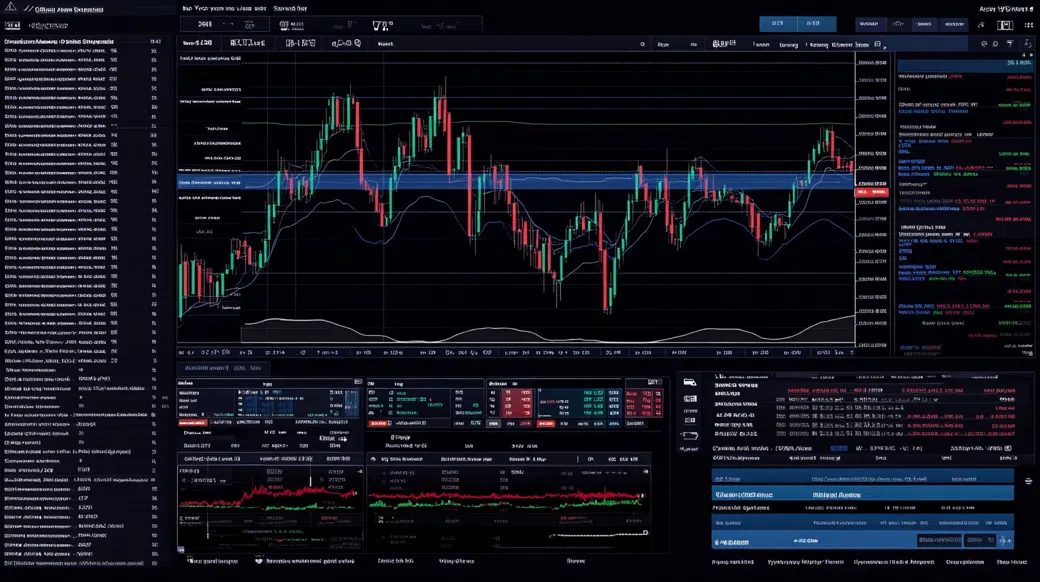
Some brokers sell you a story; others sell you a framework. From my years on commodities desks in Dubai—where margin, overnight financing, and execution hiccups can turn a quiet session into a headline—I’ve learned that a trading platform is only as good as the risk controls behind it. The name Vif Capitoire shows up in the same corner of the market as many offshore CFD providers: a proprietary WebTrader experience, a mobile app, and a product set that leans heavily into forex and CFDs, with crypto CFDs often in the mix. That can be workable for a small, speculative account, but it’s rarely the final destination for traders building a longer-term, diversified plan.
For US and EU readers in particular, the questions tend to get practical fast: What happens if a dispute arises? Where are client funds held? What are the real costs once swaps, slippage, and withdrawals enter the picture? If the platform tops out at basic order types and modest analytics, can your strategy even be implemented cleanly? Those are the reasons many people start searching for Vif Capitoire alternatives—not to chase shiny leverage, but to get clearer rules, broader market access, and a platform stack that matches how they actually trade.
Disclaimer: This article is for informational purposes only and does not constitute investment advice. CFDs and other leveraged products carry a high risk of loss, and you can lose more than your deposit in some circumstances.
On a functional level, Vif Capitoire fits the CFD-first broker model: access is typically centered on forex pairs and CFD instruments (indices and commodities), with crypto exposure often offered via CFDs rather than direct coin ownership. Public signals around firms in this bracket commonly point to offshore supervision—here, best understood as a Seychelles FSA-style framework—rather than a top-tier retail regime like the FCA, ASIC, CySEC, or NFA. The intended audience is usually newer or opportunistic traders attracted to flexible leverage and a quick on-ramp, not institutions seeking deep market access or exchange-traded breadth.
The platform experience is generally a proprietary WebTrader with basic-to-mid depth: charts that cover the essentials, a workable indicator set, and the usual drawing tools for support/resistance and trend structure. Order entry tends to focus on market and pending orders, with risk controls like stop-loss and take-profit available, though advanced order logic is not the hallmark of this tier. Mobile parity is usually decent for monitoring and execution—especially for FX/CFD traders who manage positions on the move—while the account dashboard emphasizes deposits, withdrawals, margin, and open exposure. For traders comparing platforms like Vif Capitoire, the difference often comes down to how transparent execution feels during fast markets and whether the toolset supports repeatable decision-making.
Cost structure in offshore CFD setups typically revolves around spread-based pricing on a Standard-style account, with EUR/USD commonly around ~2.0 pips in normal conditions. Some brokers in this segment offer a “Raw/ECN-like” tier—often featuring tighter spreads with a separate commission—but you should treat any such labeling as a cue to inspect the round-turn cost rather than a guarantee of institutional routing. Swap/overnight financing matters more than most marketing admits, particularly for index or commodity CFDs held beyond a day. You may also encounter withdrawal handling fees or processing quirks depending on payment rails, and inactivity charges can appear if the account sits idle.
Withdrawals and dispute resolution are where theory meets reality. If you’re trading leveraged CFDs, the platform’s convenience is only half the equation; the other half is how predictable the broker’s processes are when you want your capital back or when slippage turns a tight stop into an expensive lesson. That’s why Vif Capitoire alternatives come up most often after traders hit a friction point—usually something operational rather than technical. A platform can be “fine” until it’s asked to perform under stress: volatile markets, margin calls, payment reviews, or a strategy that needs professional-grade tooling.
Think of the selection process as aligning a broker to your risk budget. The goal isn’t to find the most features; it’s to find the cleanest match between regulation, costs, execution, and the instruments you actually use. “Bigger leverage” can be a distraction—especially in drawdown—while small differences in spread, commission, and slippage compound quickly over a month of active trading.
Start with the regulator and the legal entity you’ll sign with. FCA (UK), ASIC (Australia), and CySEC (EU) oversight generally raises the bar on conduct rules, capital requirements, and client money handling, including segregated client funds. In the UK, FSCS protection can apply up to £85,000 per eligible person if a firm fails; under CySEC, the ICF may cover up to €20,000 for eligible claims. By contrast, brokers similar to Vif Capitoire operating offshore rarely offer comparable safety nets in practice, even if they advertise “security” broadly.
List what you need in plain words: FX majors/minors, gold and oil CFDs, index CFDs, and maybe crypto CFDs for short-term exposure. Then decide whether you also need real ownership products—stocks and ETFs you actually hold, options for hedging, or futures for commodity-style precision. Diversification is the only free lunch I’ve seen survive multiple cycles, and it’s hard to diversify properly if everything is a CFD wrapper. Multi-asset platforms can reduce “account sprawl” by putting FX, equities, and fixed income under one roof.
Compare using a round-turn lens: spread + commission for a full in-and-out trade. A Raw account showing 0.1–0.3 pips means little if the commission turns it into an expensive ticket, and a wider spread can still win if execution is stable and commissions are low. Don’t ignore swap/overnight fees, especially on indices and commodities where financing can dominate. Also scan for inactivity charges and withdrawal fees—small numbers that become big when repeated.
Platform choice is really a workflow choice. MT4/MT5 and cTrader support automation, custom indicators, and a wide ecosystem, while proprietary terminals can be smoother for beginners but narrower for professionals. Ask how the execution model is described—market maker vs. STP/ECN/DMA—and what that implies for fills during volatility. Slippage and latency aren’t academic; they show up most when you’re trading news, stop-outs, or tight risk. If you’re migrating from Vif Capitoire, test execution on a small live size before committing meaningful capital.
Good support is boring—until it isn’t. Check hours, languages, and whether there’s a clear escalation path for payment or trade disputes. Education matters if you’re building competency (margin math, risk sizing, platform skills), but experienced traders should value precise documentation, stable mobile apps, and transparent reporting. A clean statement history helps with taxes and post-trade review, and that’s part of the “user experience” too.
In FX/CFDs, the offshore model’s main appeal is usually leverage—often as high as 1:500—paired with a quick WebTrader onboarding. The catch is that leverage amplifies errors as efficiently as it amplifies wins, and pricing/execution details can be harder to benchmark. If EUR/USD is typically around ~2.0 pips on a standard setup, active traders may feel the drag over time, especially when combined with slippage in fast markets. For traders who want tighter pricing and a more mature platform stack, Pepperstone and IC Markets are often considered for MT4/MT5/cTrader access and a clearer Raw+commission structure. For EU/UK clients focused on CFD breadth with strong supervision, IG is frequently used for indices and CFDs with robust platform tooling and long-standing reporting standards.
This is where the difference between “trading exposure” and “owning an asset” becomes obvious. Many platforms in the same lane as Vif Capitoire offer equities mainly as CFDs—price participation without shareholder rights, and often with financing costs if you hold positions. Traders who want real stocks and ETFs (cash equities), plus the ability to layer in options or futures for hedging, typically move toward Interactive Brokers or Saxo Bank. IBKR is built for breadth and direct market access across regions, which suits portfolio-style diversification; Saxo is strong for multi-asset management with a polished interface and research depth. If your goal is a core portfolio plus tactical hedges, those features matter more than promotional leverage.
Crypto is often offered here as CFDs: you’re trading price movement, not moving coins on-chain to a wallet. That can be perfectly valid for short-term directional trades, but it’s a different risk profile from holding spot crypto—counterparty risk sits with the broker, and overnight financing may apply depending on contract design. For traders who want regulated options vs Vif Capitoire for crypto price exposure, IG and Plus500 commonly provide crypto CFDs in jurisdictions where permitted, wrapped inside a clearer compliance environment. For those who want crypto primarily as a satellite position inside a broader portfolio (FX + equities + bonds), a multi-asset broker may still be the better home base, even if crypto access is more limited or region-dependent.
Regulation: DFSA, FCA, MAS
Markets: Stocks, ETFs, bonds, options, futures, FX, CFDs
Fees: FX spreads typically from ~0.6–1.2 pips depending on tier; commissions apply on exchange-traded assets
Platform: SaxoTraderGO, SaxoTraderPRO
Best For: Multi-asset investors building diversified portfolios
Regulation: SEC/FINRA, FCA, IIROC
Markets: Stocks, ETFs, options, futures, bonds, FX
Fees: Low, transparent commissions on many markets; FX pricing is typically tight with commission-style schedules depending on region
Platform: Trader Workstation (TWS), IBKR Desktop, Client Portal, API
Best For: Professional-grade trading, research, and global market access
Regulation: FCA, ASIC, CySEC, DFSA
Markets: FX, CFDs (indices, commodities, select shares as CFDs)
Fees: Standard spreads often around ~1.0+ pip on EUR/USD; Raw accounts can run ~0.0–0.3 pips plus commission (commissions vary by platform/region)
Platform: MT4, MT5, cTrader
Best For: Algorithmic and scalping strategies needing MT4/MT5/cTrader
Regulation: CFTC/NFA, FCA, ASIC, IIROC
Markets: FX, CFDs (availability varies by region)
Fees: Typically spread-based pricing; EUR/USD commonly around ~0.6–1.2 pips in liquid hours (varies by account/region)
Platform: OANDA Trade (web/mobile), MT4
Best For: FX-focused traders prioritizing regulatory coverage and transparency
Regulation: FCA, ASIC, MAS
Markets: CFDs (indices, FX, commodities, shares), spread betting (UK/IE), selected exchange-traded access in some regions
Fees: Competitive spread-based pricing on major markets; costs vary by instrument and region
Platform: IG Web Platform, mobile app, MT4 (in supported regions)
Best For: Index and macro traders who want a mature CFD venue
Regulation: FCA, CySEC, ASIC, MAS
Markets: CFDs (FX, indices, commodities, shares, crypto CFDs where permitted)
Fees: Primarily spread-based; overnight funding applies on held positions and varies by market
Platform: Plus500 proprietary WebTrader, iOS/Android apps
Best For: Simplicity-first CFD trading with a regulated brand
| Platform | Regulation | Main Markets | Typical Costs | Best For |
|---|---|---|---|---|
| Saxo Bank | DFSA, FCA, MAS | Stocks/ETFs, options, futures, FX, CFDs, bonds | FX ~0.6–1.2 pips by tier; commissions on exchanges | Multi-asset investors building diversified portfolios |
| Interactive Brokers (IBKR) | SEC/FINRA, FCA, IIROC | Global stocks/ETFs, options, futures, bonds, FX | Commission schedules vary; FX typically tight with commission-style pricing | Professional-grade trading, research, and global market access |
| Pepperstone | FCA, ASIC, CySEC, DFSA | FX + CFDs (indices/commodities/share CFDs) | Raw ~0.0–0.3 pips + commission; Standard ~1.0+ pip | Algorithmic and scalping strategies needing MT4/MT5/cTrader |
| OANDA | CFTC/NFA, FCA, ASIC, IIROC | FX (plus CFDs where available) | Spread-based; EUR/USD often ~0.6–1.2 pips in liquid hours | FX-focused traders prioritizing regulatory coverage and transparency |
| IG | FCA, ASIC, MAS | CFDs (indices/FX/commodities/shares), spread betting (UK/IE) | Spread-led; varies by instrument and region | Index and macro traders who want a mature CFD venue |
| Plus500 | FCA, CySEC, ASIC, MAS | CFDs across FX/indices/commodities/shares; crypto CFDs where permitted | Spread-based; overnight funding is a meaningful cost for holds | Simplicity-first CFD trading with a regulated brand |
A broker switch is a small operational project, not a single click. Treat it like risk management: protect your records, reduce open exposure, and verify the new venue before moving size. The fastest way to turn a clean migration into a messy one is to rush withdrawals or ignore KYC/AML checks that can pause payments. If you’re moving away from Vif Capitoire, assume you’ll need patience and documentation, especially when payment providers are involved.
If you’re still evaluating whether the platform fits your trading style, review the current onboarding flow, instrument list, and trading conditions side-by-side with regulated competitors. Regional eligibility can change quickly, so confirm what applies in your jurisdiction before funding an account.
Visit Vif CapitoireThe best choice depends on whether you want multi-asset ownership or CFD-style trading. For real stocks/ETFs plus options and futures, Interactive Brokers and Saxo Bank are strong Vif Capitoire alternatives in 2026. For FX/CFD trading with MT4/MT5/cTrader, Pepperstone is often a practical step up in tooling and cost transparency. This is the core split behind the best Vif Capitoire alternatives 2026 lists: portfolio breadth vs. CFD specialization.
Vif Capitoire appears to operate under an offshore-style framework (commonly associated with jurisdictions like Seychelles), which generally does not provide the same investor protections as FCA, ASIC, CySEC, or NFA oversight. That means fewer formal backstops such as FSCS (up to £85,000) or ICF (up to €20,000) eligibility and less predictable dispute pathways. If safety is your top priority, regulated options vs Vif Capitoire are usually the more conservative route.
Vif Capitoire is generally positioned around forex and CFDs, with crypto often offered as crypto CFDs rather than on-chain ownership. Real stocks/ETFs and listed futures are more commonly found at multi-asset brokers; Interactive Brokers and Saxo Bank are examples that provide exchange-traded access in many regions. If you’re comparing alternatives to the Vif Capitoire trading platform for diversification, clarify whether you want CFDs for short-term exposure or real holdings for longer-term allocation.
Before switching, verify the new broker’s exact legal entity on the regulator register (FCA/ASIC/CySEC/NFA) and confirm your product eligibility in your country. Then compare round-turn trading costs (spread + commission) and read the funding/withdrawal rules so AML checks don’t surprise you. Finally, test execution with small size and review swap/overnight fees—those are often the hidden difference between competitors to Vif Capitoire and truly professional venues.
About the Author: Nadia El-Amin is a former commodities trader based in Dubai who now covers global brokerage and market-structure trends with a focus on the Middle East and Africa. She approaches broker selection the same way she approached risk on a trading desk: diversify, verify the plumbing, and respect leverage because it never forgives complacency.