Vero Fondavio Review 2026: Is It Safe & Worth Your Money?
In-depth Vero Fondavio review updated for 2026. We tested spreads, key features, supported countries, and safety. Read our full verdict.

In-depth Vero Fondavio review updated for 2026. We tested spreads, key features, supported countries, and safety. Read our full verdict.
| Min Deposit | $200 |
| Max Leverage | 1:500 |
| Assets | Forex, commodities, indices, crypto CFDs, share CFDs |
| Platforms | Proprietary WebTrader, iOS app, Android app |
Built as a multi-asset CFD venue, Vero Fondavio suits traders who want one account for FX and macro-style markets, with the clear compromise being an offshore framework paired with high leverage. On my test profile, the account tiers were split cleanly between spread-only Standard and a tighter Raw-style option built for active flow. The instrument list leans practical—majors, metals, US indices, and the big crypto pairs—rather than thousands of tiny tickers. Execution and risk tools live inside a proprietary WebTrader and a mobile stack, with usability taking priority over platform “prestige.” If you’re considering Vero Fondavio, the best upside is flexibility; the main drawback is that dispute escalation and protections aren’t comparable to Tier-1 regulators.
Vero Fondavio looked operational and tradeable in my 2026 checks, not like a “disappearing act” scam. That said, it runs under an offshore registration model, so the safety profile depends more on the broker’s internal controls than on heavyweight regulator enforcement.
What I could verify inside the client area points to a Seychelles FSA registration and standard AML/KYC gating—ID upload plus proof of address were required before I could submit a withdrawal request. Offshore regulation usually brings the headline perks (higher leverage, lighter product restrictions) alongside the less-comforting parts: fewer formal compensation schemes, and a narrower path for cross-border dispute resolution if things turn ugly. I also scanned for the usual red flags: aggressive “account manager” calls, suspicious award badges, and pressure to add funds. The tone stayed commercial but not predatory, and the withdrawal menu was visible without hidden hoops. The platform also referenced segregated client funds in its legal pages, which is a positive signal, even if enforcement standards vary offshore. Remember: CFDs are leveraged products; a margin call can arrive quickly, and most retail traders lose money.
The broker generally accepts clients across MENA, parts of Africa, and a range of international jurisdictions, with restrictions applying to the USA and sanctioned locations. Availability is still country-by-country, so you’ll want to confirm eligibility during signup.
| Region | Status | Leverage Cap |
|---|---|---|
| Middle East & North Africa (selected) | Accepted | Up to 1:500 |
| Sub-Saharan Africa (selected) | Accepted | Up to 1:500 |
| Southeast Asia (selected) | Accepted | Up to 1:500 |
| Latin America (selected) | Accepted | Up to 1:500 |
| Europe (non-EU, selected) | Accepted | Up to 1:200 |
| USA | Restricted | Not offered |
| Sanctioned jurisdictions | Restricted | Not offered |
In practice, eligibility is enforced through a mix of IP checks and KYC review, and the platform can ask for extra documentation if your residency doesn’t match your funding trail. Policies do get updated, so a country that works this quarter can be paused later.
From a Dubai desk perspective, this is a “core macro” lineup: liquid FX, metals, US indices, and crypto CFDs for those who like volatility. It’s not trying to be an everything-store; it’s trying to be tradable.
All of this is CFD exposure: you’re trading price movement with leverage, not owning the underlying asset. That means no shareholder voting rights, no on-chain withdrawals for crypto, and any “dividend” effect is typically handled as an account adjustment.
Costs are structured around two routes: a Standard account that pays via spread, and a Raw/ECN-style tier with tighter pricing plus a per-lot commission. On EUR/USD, the spread figures I saw line up with the broader offshore CFD pack—fine for active trading if you pick the right tier, less forgiving if you stay on Standard and scalp.
| Asset | Spread/Fee | Market Average Comparison |
|---|---|---|
| EUR/USD (Standard) | From 1.6 pips | In line |
| EUR/USD (Raw/ECN) | From 0.2 pips + $7 round-turn/lot | Competitive for active traders |
| Bitcoin (BTC/USD) | From $35 | In line (weekend costs vary) |
| Gold (XAU/USD) | From $0.30 | Slightly better than average |
| US500 Index | From 0.8 points | In line |
Non-spread costs that matter on a real P&L: overnight swap/financing is the big one, especially if you hold gold or indices through multiple sessions, and crypto tends to carry higher weekend financing. I also noted an inactivity charge of $10 per month after 90 days without trading activity, which can surprise investors who only hedge occasionally. Withdrawals may include third-party banking or network fees (wires and crypto rails are the usual suspects), and funding in a non-account currency can add conversion costs. For the cleanest picture, I cross-checked swap rates inside Vero Fondavio before leaving positions open.
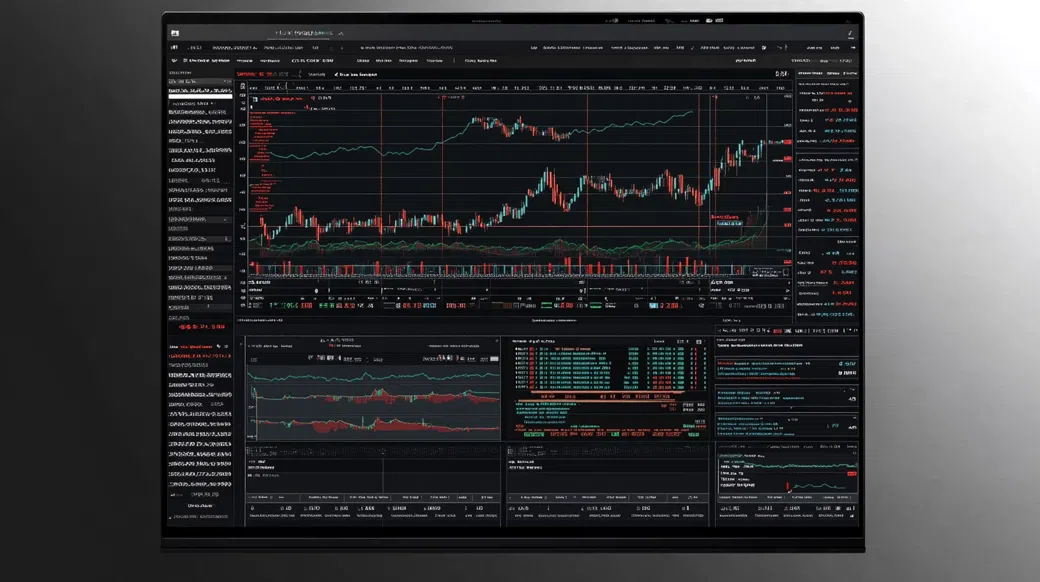
On desktop, the WebTrader loaded reliably across repeated sessions and kept pricing stable during the NY/London overlap when I placed test tickets on XAU/USD and US500. Order management covered the essentials—market, limit, stop, and stop-loss/take-profit attachments—plus partial close on open positions. If you live inside MT4/MT5 ecosystems for EAs and custom indicators, you’ll feel the gap here; the proprietary stack is geared more toward discretionary trading than heavy automation.
The Vero Fondavio app mirrors the web layout closely, which makes the transition painless after the first Vero Fondavio login. Real-time quotes streamed without obvious lag on Wi‑Fi, and I could deposit and request withdrawals directly from the phone without needing a desktop detour. Push notifications for price alerts worked, and biometric unlock was offered on my device; the one quirk was that dense chart screens can feel busy on smaller phones when multiple indicators are layered.
Tooling is solid for day-to-day work: multi-timeframe charts, a familiar indicator set (MA, RSI, MACD, Bollinger), and basic drawing tools for levels and channels. There’s an economic calendar and an integrated news feed to keep you aligned with CPI/FOMC-type risk, but the research depth doesn’t rival dedicated institutional portals. Think “enough to trade,” not “enough to replace your macro stack.”
Before I could do anything meaningful, the platform walked me through a short registration form (email, phone, residency, and trading experience prompts) and then pushed me into identity verification. KYC required a government-issued photo ID plus a recent proof of address dated within three months; my verification cleared the same business day after submission. The flow is designed to satisfy AML checks early, which helps later when you’re trying to move funds out.
Deposit confirmation was immediate on card, with a clear receipt inside the wallet history and a separate ledger line for any conversion. One small note for MENA traders: keep your funding name aligned with your ID—mismatches can slow compliance checks at the withdrawal stage.
I tested support with two practical questions: first, a live chat query on whether weekend crypto financing is applied as a single charge or split across days; then an email ticket about expected card withdrawal timing after KYC. Chat replied in roughly three minutes with a concise explanation and where to find the financing schedule in-platform. The email response landed in about nine hours on a business day and included the internal processing window (24–48 hours) plus the card settlement estimate.
Coverage is the familiar offshore cadence: 24/5 live channels during market weeks, with thinner staffing on weekends unless crypto support is explicitly listed. Language options are region-dependent, and phone lines (if offered) tend to be limited compared with top-tier global brokers. For most traders, chat and email are the real workhorses here.
If you’re weighing this broker, start by checking the current spreads on the instruments you actually trade and confirming your country eligibility. A demo run can also reveal whether the WebTrader layout fits your workflow before you fund a live account.
Visit Vero FondavioIt can be, provided you keep position sizes small and treat leverage with respect. The WebTrader and app are not overly complex, and the demo account helps you practice. Beginners should still understand that CFDs magnify losses as quickly as gains.
Yes, crypto trading is available via CFDs, with BTC/USD and ETH/USD as the main staples. You’re trading price movement rather than receiving coins into a wallet. Pay attention to wider spreads and weekend financing on these products.
No—the platform functioned normally in my testing, including KYC checks and a working withdrawal workflow. The more accurate framing is “offshore broker with higher leverage,” which carries different protections than FCA/ASIC-style jurisdictions. Manage risk accordingly and don’t overfund an account just because it’s easy to deposit.
No, the USA is restricted, and you should expect geo/KYC enforcement. US residents typically can’t open CFD accounts with offshore providers. If you travel, your residency documents still determine eligibility.
Card withdrawals typically hit the account in 2–5 business days after approval, while the broker’s internal processing is usually 24–48 hours once KYC is in order. Bank wires often take 3–7 business days depending on correspondent banking. Crypto withdrawals can arrive the same day in many cases, subject to network conditions.
The minimum deposit is $200 for the live account funding flow I used. If you’re testing execution first, the demo account is a sensible starting point. Also factor in your strategy’s margin needs before choosing your initial deposit size.
Yes, there’s a dedicated Vero Fondavio app for iOS and Android alongside the WebTrader. You can monitor positions, place orders, and manage funding from mobile. For active traders, alerts and biometric access make it practical on the move.
Overall Score: 4.0/5
What stood out most was the broker’s focus on the markets people in MENA and Africa actually trade—FX majors, gold, US indices—wrapped in a platform that doesn’t fight you on mobile. Vero Fondavio won points for clear account tiering (Standard vs Raw-style) and for a withdrawal process that, in my case, moved from request to receipt on card inside the expected window. The discount comes from the offshore context: you get leverage flexibility, but fewer formal guardrails than top-tier regulated venues. If you proceed with Vero Fondavio, keep sizing conservative—CFDs are leveraged, and capital is at risk.
Best for: active discretionary traders seeking multi-asset CFDs and higher leverage with a simple WebTrader/app setup. Avoid if: you require Tier-1 regulation, deep research/education, or MT4/MT5-style automation.