Swaptairis Trading Platform Alternatives 2026
Compare Swaptairis alternatives for 2026: regulated brokers, fees, platforms (MT4/MT5/cTrader), markets, and safety checks for US/EU-focused traders.

Compare Swaptairis alternatives for 2026: regulated brokers, fees, platforms (MT4/MT5/cTrader), markets, and safety checks for US/EU-focused traders.
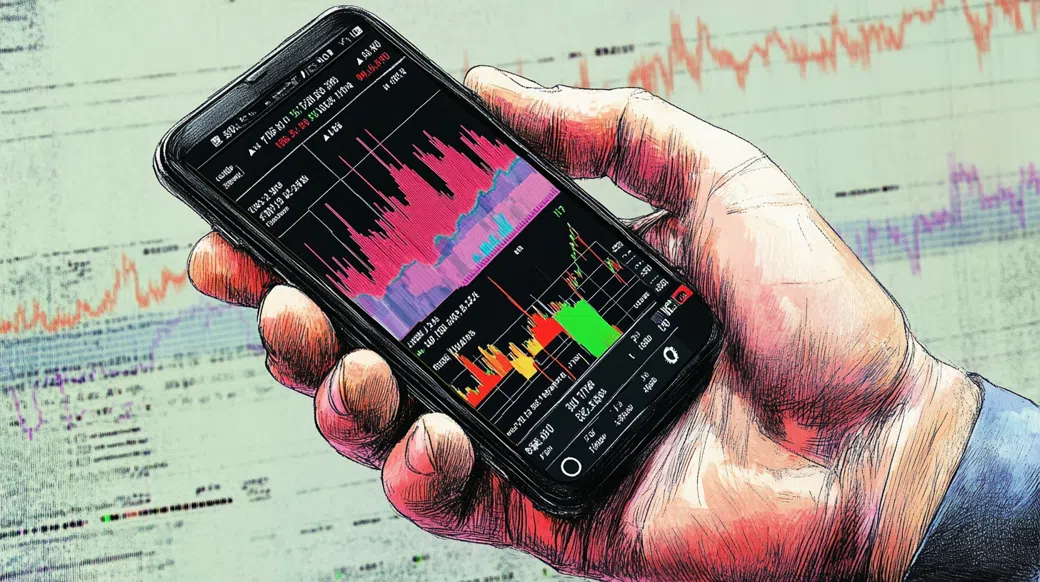
Dubai taught me a simple rule: if your access to markets depends on a single counterparty, you’d better understand that counterparty. Swaptairis sits in the familiar offshore CFD lane—typically centered on forex and index/commodity CFDs, with crypto CFDs often on the menu as well. The platform experience is usually built around a proprietary WebTrader plus mobile apps, which can be perfectly serviceable for basic order placement and chart checks, but rarely matches the tooling depth that active traders want for risk management, automation, or multi-asset diversification.
For a US/EU-leaning audience, the pressure points are predictable: tighter regulatory expectations, stricter KYC/AML standards, and a stronger preference for transparent execution and client-money safeguards. Offshore setups commonly advertise high leverage (think up to 1:500) and accessible entry deposits (often around $250), yet the trade-off is that investor protection mechanisms may be thinner than what you’d see under the FCA, ASIC, CySEC, or the NFA framework. If you’re comparing costs, the “headline” often masks the true bill: on a typical standard-style account, EUR/USD spreads around 2.0 pips are not unusual in this segment, and financing (swap/overnight fees) can quietly dominate outcomes for swing traders.
This guide maps practical Swaptairis alternatives—from multi-asset houses built for real stock/ETF ownership to FX/CFD specialists with stronger platform stacks. I’ll also show how to switch in a way that protects your capital flow and your data trail, because the administrative side of trading matters as much as the chart. If you want to review the current offering directly, start with Swaptairis and then benchmark it against the regulated options below.
Disclaimer: This article is for informational purposes only and does not constitute investment advice. Trading CFDs and other leveraged products involves a high risk of loss and may not be suitable for all investors.
From the way it is typically presented in the market, Swaptairis operates as an offshore-style CFD brokerage model rather than a full, exchange-connected multi-asset firm. The product mix usually leans heavily on FX and CFDs—major and minor currency pairs, a small shelf of indices and commodities, and a rotation of crypto CFDs—aimed at retail traders who want fast account opening and simplified access to leveraged instruments. In practical terms, that means you’re trading contracts priced off underlying markets, not taking ownership of shares or holding coins on-chain. For traders comparing brokers similar to Swaptairis, the big question is less “can I place an order?” and more “what happens when the platform, pricing, or withdrawal process is tested under stress?”
The platform stack in this category is usually anchored by a proprietary WebTrader with a companion iOS/Android app. Expect a clean dashboard, watchlists, one-click trading toggles, and charting that covers the basics: timeframes, common indicators, and drawing tools for support/resistance and trendlines. Order tickets typically support market and limit orders, sometimes stop orders and trailing stops, with position management visible in an “open trades” blotter. What’s often missing—especially compared to MT4/MT5 or cTrader ecosystems—is deep strategy tooling (custom indicators, robust backtesting, and mature automation workflows). Mobile parity is generally decent for monitoring and closing risk, but heavy analysis still tends to be more comfortable on desktop.
Cost structures for platforms like Swaptairis commonly revolve around a spread-first model. A typical benchmark is EUR/USD “from ~2.0 pips” on a standard-style account, with tighter pricing sometimes marketed on higher tiers that may introduce commission. On the leverage side, maximums can run high (often up to 1:500), which magnifies both opportunity and margin-call speed—so a small move can become a big P&L swing. Overnight financing (swap) applies to most CFD positions held beyond the trading day, and it’s not a footnote for longer-horizon traders; it can be the difference between a good thesis and a costly hold. Some offshore brokers also layer operational fees—withdrawal handling or inactivity charges—so it’s worth reading the schedule line by line before funding.
The first spark is often not price—it’s friction. A trader may accept a 2.0-pip EUR/USD spread for a while, right up until execution quality, platform limits, or withdrawal timelines start to interfere with the strategy. For US/EU-based traders, compliance is another catalyst: stricter KYC/AML expectations and clearer dispute channels are part of the “sleep-at-night” package. In that mix, Swaptairis alternatives aren’t about novelty; they’re about tightening the plumbing around your trading—custody safeguards, transparent margin rules, and platform capability aligned to your workflow.
I approach broker selection the way I used to approach a crude cargo: start with the risk envelope, then negotiate price. The right substitute depends on what you trade (and how), but the evaluation should be consistent: legal framework, product scope, trading costs, execution behavior, and operational reliability. Below is the checklist I’d use when screening alternatives to the Swaptairis trading platform for a US/EU-focused trader.
Begin with the regulator’s public register—FCA (UK), ASIC (Australia), CySEC (Cyprus), or NFA/CFTC for US-facing FX. Regulation won’t make trading “safe,” but it typically forces clearer segregation of client funds, more robust complaints pathways, and stricter disclosure rules. Where applicable, compensation frameworks matter: the UK’s FSCS can cover eligible clients up to £85,000, and Cyprus’ ICF can cover eligible clients up to €20,000. Those schemes have rules and limits, but they’re a different world from lightly supervised offshore setups.
Match instruments to your actual objectives. If you’re building a long-term allocation—US/EU equities, ETFs, bonds—then a multi-asset broker with real-market access is usually a better fit than CFD-only exposure. If your edge lives in FX and indices, a specialist CFD provider can still work well, provided pricing and execution are transparent. For many traders, the deciding factor is diversification: holding real stocks/ETFs alongside tactical FX/CFD trades reduces dependency on one product type and one volatility regime.
Think in “round-turn” terms: spread cost plus commission to open and close. That’s the metric that tells you what a strategy really pays per lot, per trade, per month. Then layer in swaps (overnight financing) for holds, and operational costs like inactivity fees or withdrawal charges. High leverage marketing can distract from the quiet math: a 2.0-pip spread on EUR/USD may be manageable for position trading, but it can crush a high-frequency approach where the average profit target is small.
Platform choice is strategy choice. MT4/MT5 ecosystems support indicators, EAs, and a deep library of third-party tools; cTrader appeals to traders who care about depth-of-market style interfaces and efficient order handling; proprietary platforms vary wildly in depth. Execution model matters too: market-maker pricing can be fine for many retail flows, while STP/ECN or DMA-style routing is often preferred for traders sensitive to slippage and latency. If you’re benchmarking against Swaptairis, test fills during active sessions, not only in quiet hours.
Operational resilience shows up in the boring moments: fast verification, clear margin-call communication, and support that can resolve funding issues without a week of email loops. Look for multilingual coverage if you travel or operate across regions, and check whether education is practical (platform training, risk controls, market primers) rather than pure promotion. Finally, mobile parity matters—being able to reduce risk, adjust stops, and monitor margin on the phone is a real-world requirement, not a luxury.
Forex and CFDs are usually the center of gravity here: roughly a few dozen FX pairs (often 30–50), a small basket of commodities (think 5–10), and a set of indices (around 8–15). The competitive question is not “does it have EUR/USD?”—it’s the microstructure: spreads, slippage, and how the broker handles fast markets. With a typical EUR/USD spread around 2.0 pips on standard-style pricing and leverage that can reach 1:500, the platform may suit casual directional trades but becomes expensive for repeat entries. If you want tighter pricing and more mature platform options, Pepperstone and IC Markets are frequently used benchmarks: both offer MT4/MT5 and cTrader stacks (depending on entity), and their Raw-style accounts are often structured around low spreads plus commission—useful when your strategy depends on cost discipline and predictable execution behavior.
Stock and ETF exposure is where many offshore CFD platforms show their limits. Even when “shares” are displayed, the exposure is often via CFDs, meaning no shareholder voting, no direct participation in corporate actions in the way an owner would experience, and different financing/friction costs. Traders who want to build a proper core portfolio—US and EU equities, sector ETFs, fixed income—typically benefit from brokers that provide access to real exchanges and custody arrangements rather than synthetic contracts. Interactive Brokers is the obvious heavyweight for broad market access (stocks, ETFs, options, futures, bonds, and FX), while Saxo Bank is a strong fit for those wanting a curated multi-asset experience with robust portfolio reporting. In both cases, the diversification toolkit is simply wider than what most competitors to Swaptairis in the offshore CFD category can offer.
Crypto at offshore CFD brokers is commonly offered as crypto CFDs—price exposure without on-chain ownership. That’s not inherently “bad,” but it’s a different instrument with different risks: funding rates, weekend gaps, and platform-specific pricing can matter more than traders expect. If you’re using crypto tactically (short-term volatility trades), regulated CFD providers like IG can be a more structured route in eligible regions, with clearer disclosures around leverage and margin. For traders who treat crypto as part of a broader allocation discussion, it’s worth separating the question into two: do you want trading exposure (CFDs) or ownership (spot custody)? Many regulated brokers focus on the former for retail clients, while true on-chain ownership typically sits with specialized crypto venues—outside the scope of many traditional brokerage frameworks. Either way, treat crypto leverage with extra caution; the margin call arrives faster than the narrative.
Regulation: DFSA, FCA, MAS (entity-dependent).
Markets: Stocks, ETFs, bonds, options, futures, FX, CFDs.
Fees: FX spreads typically from ~0.6–1.2 pips depending on account/volume; multi-asset pricing varies by exchange and product.
Platform: SaxoTraderGO, SaxoTraderPRO.
Best For: Multi-asset diversification with strong portfolio analytics.
Regulation: FCA, ASIC, CySEC, DFSA (entity-dependent).
Markets: FX, indices, commodities, CFDs (product availability varies by jurisdiction).
Fees: Standard spreads often around ~1.0+ pip; Raw-style pricing can be ~0.0–0.3 pips plus commission (commissions vary by platform/entity).
Platform: MT4, MT5, cTrader (availability varies).
Best For: Systematic FX traders needing MT4/MT5/cTrader flexibility.
Regulation: SEC/FINRA, FCA, IIROC (entity-dependent).
Markets: Stocks, ETFs, options, futures, bonds, FX (product access varies by region).
Fees: FX pricing can be very competitive for active traders; commissions and exchange fees apply across listed products (schedule depends on venue and tier).
Platform: Trader Workstation (TWS), IBKR Desktop, WebTrader, mobile app, APIs.
Best For: Professional-style access to global exchanges and APIs.
Regulation: FCA, ASIC, MAS (entity-dependent).
Markets: CFDs on FX, indices, commodities, shares (region-dependent); broader offering varies by country.
Fees: Typical FX spreads often from ~0.6–1.0+ pips on majors depending on market conditions; financing applies on CFD holds.
Platform: IG proprietary platform, MT4 (availability varies by region).
Best For: Macro-driven CFD traders who value strong research tools.
Regulation: CFTC/NFA (US), FCA, ASIC, IIROC (entity-dependent).
Markets: FX (core), CFDs in eligible regions (availability varies).
Fees: Spreads commonly from ~0.6–1.4 pips on majors depending on account type and market conditions; financing applies to leveraged positions.
Platform: OANDA proprietary platforms, MT4 (availability varies).
Best For: US-eligible FX traders prioritizing a long-standing framework.
Regulation: FCA, ASIC, BaFin (entity-dependent).
Markets: CFDs on FX, indices, commodities, shares (region-dependent).
Fees: FX spreads often from ~0.7–1.2+ pips on majors; other costs include financing for overnight CFD positions.
Platform: Next Generation platform, MT4 (availability varies).
Best For: Active discretionary traders who want advanced charting in a proprietary platform.
| Platform | Regulation | Main Markets | Typical Costs | Best For |
|---|---|---|---|---|
| Saxo Bank | DFSA/FCA/MAS | Stocks/ETFs, futures, options, FX, CFDs | FX ~0.6–1.2 pips (varies); exchange/product fees apply | Multi-asset diversification with strong portfolio analytics |
| Pepperstone | FCA/ASIC/CySEC/DFSA | FX + CFDs (indices/commodities) | Raw ~0.0–0.3 pips + commission; Standard ~1.0+ pip | Systematic FX traders needing MT4/MT5/cTrader flexibility |
| Interactive Brokers (IBKR) | SEC/FINRA, FCA, IIROC | Stocks/ETFs, options, futures, bonds, FX | Competitive FX for active; commissions/exchange fees vary by product | Professional-style access to global exchanges and APIs |
| IG | FCA/ASIC/MAS | CFDs on FX/indices/commodities (plus shares CFDs in regions) | FX often ~0.6–1.0+ pips; CFD financing on holds | Macro-driven CFD traders who value strong research tools |
| OANDA | CFTC/NFA, FCA, ASIC, IIROC | FX (core); CFDs where permitted | Spreads ~0.6–1.4 pips (conditions vary); financing on leveraged trades | US-eligible FX traders prioritizing a long-standing framework |
| CMC Markets | FCA/ASIC/BaFin | CFDs on FX/indices/commodities/shares (region-dependent) | FX ~0.7–1.2+ pips; financing on overnight CFDs | Active discretionary traders who want advanced charting in a proprietary platform |
Switching brokers is less like changing a chart theme and more like moving cash between vaults. Treat the process as operational risk management: verify the destination first, then move funds in controlled steps, and keep an audit trail. Because leveraged CFDs can move quickly against you, avoid doing the transfer while you’re running oversized exposure or relying on tight margin buffers. If you’re exiting Swaptairis, plan the sequence so you don’t end up unable to trade while capital is in transit.
If you’re benchmarking brokers, seeing the current onboarding flow and product list can help you compare like-for-like against regulated substitutes. Check your regional eligibility, review the fee schedule (including swaps), and map platform features to your strategy before committing meaningful capital.
Visit SwaptairisThe best option depends on whether you need real multi-asset investing or primarily FX/CFDs. For broad diversification into stocks/ETFs alongside FX, Interactive Brokers or Saxo Bank are strong benchmarks; for FX execution and platform choice (MT4/MT5/cTrader), Pepperstone is often a closer match to the CFD workflow. Traders focused on research and discretionary CFD trading may prefer IG or CMC Markets.
Swaptairis appears to fit an offshore/unregulated profile, commonly associated with jurisdictions such as the Seychelles FSA rather than top-tier regulators like the FCA, ASIC, CySEC, or NFA. That doesn’t automatically mean misconduct, but it usually means fewer formal investor-protection layers and less predictable dispute resolution. If safety is your priority, consider regulated options with segregated client funds and clearer supervision.
Swaptairis is generally positioned around forex and CFDs, with crypto often provided as crypto CFDs rather than on-chain ownership. Real stock/ETF investing and listed futures access are typically limited in this offshore CFD segment, and where “stocks” exist they’re often CFDs. If you want listed futures or true stock/ETF ownership, brokers like Interactive Brokers or Saxo Bank are usually a better fit.
Before switching, verify the new broker’s legal entity on the regulator’s register and confirm which protections apply in your country. Next, compare round-turn cost (spread + commission), swap/overnight fees, and the execution model (market maker vs STP/ECN/DMA) against your strategy. Finally, download your statements from Swaptairis, complete KYC at the new broker, then move funds using the same deposit/withdrawal rails to avoid AML delays.
About the Author: Nadia El-Amin is a former commodities trader based in Dubai and a financial journalist covering brokerage markets across the Middle East and Africa. She focuses on execution quality, risk controls, and the practical reality of moving capital across borders—because diversification is the only free lunch, but only if your market access is robust.