Solide Négocerine Review 2026: Is It Safe & Worth Your Money?
In-depth Solide Négocerine review updated for 2026. We tested spreads, key features, supported countries, and safety. Read our full verdict.

In-depth Solide Négocerine review updated for 2026. We tested spreads, key features, supported countries, and safety. Read our full verdict.
| Min Deposit | $200 |
| Max Leverage | 1:500 |
| Assets | Forex, Indices, Commodities, Crypto CFDs, Share CFDs |
| Platforms | WebTrader, iOS app, Android app |
Built like a multi-asset CFD desk for active retail traders, Solide Négocerine suits people who want leverage and cross-market diversification—while accepting the lighter protection that comes with an offshore setup. In my test account, the pricing clearly split into a spread-only Standard tier and a tighter Raw/ECN-style option with commission, which will matter if you scalp majors or hedge around news. Market coverage leans practical: FX, gold/oil, global indices, plus the usual big-name crypto CFDs. The trading stack is proprietary (WebTrader + mobile), clean enough for execution but not an MT4/MT5 ecosystem clone. The headline drawback is jurisdictional: you’re trading under an offshore framework, so dispute escalation and compensation schemes aren’t the same as Tier‑1 venues—read the fine print at Solide Négocerine.
Solide Négocerine looked operational and tradeable in my checks, not a “disappear-with-your-deposit” setup. That said, its safeguards are those of an offshore-registered CFD broker—so “safe” depends on how you size risk and how much regulatory recourse you require.
Regulatory posture matters more than marketing, so I started by verifying the entity details and found the broker operating under a Mauritius FSC registration model. In practice, that tends to open the door to higher leverage and broader onboarding, but it also usually means weaker statutory compensation schemes and a more limited escalation path if a dispute turns ugly. On the behavior side, I ran a simple red-flag sweep: no pushy “account manager” calls after registration, no fake trophy-wall awards plastered across every screen, and the withdrawal menu stayed available even before I traded. KYC/AML was not optional—ID plus proof of address were required before I could finalize a payout request, and the terms referenced segregated client funds language (still, that’s not the same as a Tier‑1 trust framework). Remember: CFDs are leveraged products; many retail accounts lose money, and your capital is always at risk.
This service is primarily accessible across parts of MENA, Africa, LATAM, and select non‑EU European jurisdictions, subject to local rules. The USA and sanctioned jurisdictions are blocked.
| Region | Status | Leverage Cap |
|---|---|---|
| MENA (selected countries) | Accepted | Up to 1:500 |
| Sub-Saharan Africa (selected countries) | Accepted | Up to 1:500 |
| Latin America (selected countries) | Accepted | Up to 1:500 |
| Non‑EU Europe (selected countries) | Accepted | Up to 1:200 |
| Southeast Asia (selected countries) | Accepted | Up to 1:500 |
| USA | Restricted | Not offered |
| Sanctioned jurisdictions | Restricted | Not offered |
Access is enforced via signup declarations plus KYC checks, and I also saw IP-based prompts when switching networks. Don’t treat eligibility as permanent—country policies can tighten quickly when compliance teams update their risk lists.
What stood out is the “portfolio-builder” feel: enough instruments to spread risk across rates, risk-on indices, and commodities, rather than a narrow FX-only lineup. If you trade like I used to in Dubai—always watching correlations—this menu is functional.
Exposure here is via CFDs, not ownership: no shareholder voting, no transfer of shares, and no on-chain crypto withdrawals. Dividends (where offered) are typically handled as cash adjustments, not the classic investor experience.
Costs on Solide Négocerine hinge on account choice: Standard is spread-only, while Raw/ECN-style pricing compresses spreads and adds a per-lot commission. On balance, the totals are broadly in line with offshore CFD peers—reasonable for active trading, not the cheapest in the world.
| Asset | Spread/Fee | Market Average Comparison |
|---|---|---|
| EUR/USD (Standard) | From 1.6 pips | Near the middle of the pack |
| EUR/USD (Raw/ECN) | From 0.2 pips + $7 round-turn/lot | Competitive for commission-based pricing |
| Bitcoin (BTC/USD) | From $35 | Typical for CFD crypto spreads |
| Gold (XAU/USD) | From $0.35 | Slightly better than average at calm liquidity |
| US500 Index | From 0.8 points | Within normal range |
Beyond the headline spread: swaps/overnight financing are the quiet drain if you hold leveraged positions for days, and weekend financing on crypto can be noticeably heavier. I also flagged an inactivity charge of $10 per month after 90 days of dormancy, which can turn “set-and-forget” accounts into slow leaks. Finally, funding in one currency and trading in another can trigger conversion costs; if you’re moving between AED/USD/EUR, plan for that friction.
On desktop, the proprietary WebTrader loaded reliably and stayed stable through my sessions, including a fast-switch workflow between charts and the order ticket. Order types covered the essentials—market, limit, stop, plus stop-loss/take-profit controls—with execution that felt consistent on liquid instruments. Still, algorithmic traders will notice the gap: I didn’t see anything that matches the depth of the MT4/MT5 ecosystem for EAs and third-party tooling, so discretionary traders are the natural audience.
The Solide Négocerine app is built for “phone-first” monitoring: live quotes, watchlists, and one-tap position management were easy to reach. My Solide Négocerine login held its session well, and biometric unlock was available on my device, which matters when you’re checking margin during a commute. Deposits and withdrawals were accessible from the same navigation bar, and push notifications can be enabled for price alerts—useful, though I’d like more granular alert conditions for serious macro traders.
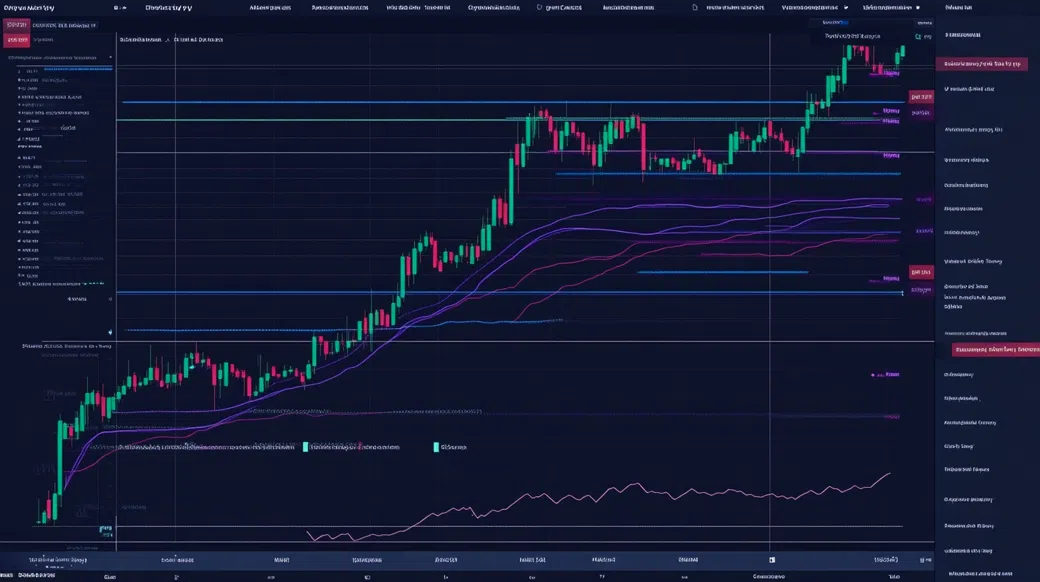
Charting covered the staples—multiple timeframes, common indicators (RSI/MACD/MAs), and basic drawing tools—enough to execute a clean plan without hopping to another terminal. Research is more “headline and calendar” than deep desk-grade analysis: an economic calendar and news feed are present, but you won’t confuse it with a dedicated MT5/cTrader research stack. For most retail flows, it’s serviceable; for heavy quant or multi-factor work, you’ll supplement externally.
Instead of burying compliance in the background, the onboarding pushed identity checks early: after entering email, phone, and basic profile data, I was prompted to upload a government ID plus a proof of address dated within three months. Verification on my account cleared within the same business day, and the AML prompts were clear enough to avoid guesswork. This matches what I expect from offshore brokers trying to keep banking rails open.
As a practical note, the Solide Négocerine minimum deposit is set at $200, which is neither ultra-low nor institutional—think “serious beginner” sizing. I funded my test via USDT to minimize card frictions, and the balance reflected quickly with an on-screen confirmation and email receipt. For those wanting to inspect the interface first, the demo mirrors the live layout closely, which is exactly how it should be.
I tested support with two real questions: first on live chat about where to find the swap schedule for gold, then by email asking how long card vs crypto payouts usually take after KYC. Chat picked up in roughly three minutes and pointed me to the instrument-specific financing panel inside the platform, including a reminder that triple-swap timing can vary by product. The email ticket landed a detailed reply later the same day (about eight hours), with a clean checklist of what slows withdrawals (mismatched names, incomplete address docs, and compliance reviews).
Coverage is aligned with the CFD norm: 24/5 availability, with weekend staffing thinner and mostly oriented toward crypto trading issues. Language breadth looked region-dependent; English was solid, and the tone felt professional rather than salesy. Phone support wasn’t front-and-center in my dashboard, so if you require “pick up the phone” escalation, treat that as a potential limitation.
If you’re considering this broker, start by checking your country eligibility, then open a demo to inspect spreads at your usual trading hours (London open and NY overlap tell the truth). Once comfortable, test a small live deposit and a small withdrawal—process matters as much as pricing.
Visit Solide NégocerineYes, it can work for beginners who stay disciplined with position sizing and use the demo first. The platform layout is not overly technical, and the Standard account keeps fees simple (spread-only). The offshore framework and high leverage mean you should treat risk controls as non-negotiable.
Yes, crypto trading is available via CFD contracts (for example BTC and ETH pairs). You’re speculating on price moves rather than owning coins on-chain, and financing can be higher over weekends. For short-term hedges, it’s convenient; for long-term holding, it’s a different product.
No, based on my 2026 test the broker behaved like a functioning offshore CFD provider: I could trade, complete KYC, and submit a withdrawal request. The more accurate question is “is Solide Négocerine legit under a top-tier regulator?”—and the answer is that it’s not positioned as a Tier‑1 regulated venue. Use extra caution, read terms, and avoid over-leveraging.
No, Solide Négocerine is not offered to USA residents. The signup flow and compliance checks are designed to block US clients. If you’re in the US, look for a properly registered domestic provider instead.
A Solide Négocerine withdrawal typically clears internal processing in 24–48 hours after KYC is approved. From there, card withdrawals commonly land in 2–5 business days, bank wires can take 3–7 business days, and crypto payouts are often same-day. Real timing depends on method, compliance flags, and banking hours.
The Solide Négocerine minimum deposit is $200. That level is enough to run modest position sizes, but it’s still easy to blow up if you combine small equity with 1:500 leverage. Many traders start with the demo and then fund the minimum to test real execution and withdrawals.
Yes, Solide Négocerine offers iOS and Android apps alongside its WebTrader. The app supports core trading actions, account management, and alerts, making it practical for monitoring margin on the move. For deeper analysis, the desktop browser view still feels roomier.
Overall Score: 4.0/5
From a trader’s perspective, the appeal is clear: a usable proprietary platform, a sensible Standard vs Raw/ECN split, and enough markets to diversify beyond a single FX pair—exactly the kind of breadth I look for after years of watching correlations in commodities and indices. The constraint is equally clear: this is an offshore-registered CFD setup, so you must bring your own discipline on leverage, documentation, and withdrawal hygiene. If you’re comfortable with that trade-off, Solide Négocerine can be a practical venue for tactical, risk-managed trading. CFDs are leveraged; losses can exceed expectations if you ignore margin and volatility.
Best for: active traders in MENA/Africa/LATAM who want multi-asset CFDs and the option of Raw/ECN pricing. Avoid if: you require Tier‑1 regulation, MT4/MT5 ecosystems, or you’re prone to overusing 1:500 leverage.