Silber Anlagheim Trading Platform Alternatives 2026
Compare Silber Anlagheim alternatives for 2026: regulated brokers, costs, platforms, and safety checks for US/EU-focused traders choosing a reliable option.

Compare Silber Anlagheim alternatives for 2026: regulated brokers, costs, platforms, and safety checks for US/EU-focused traders choosing a reliable option.
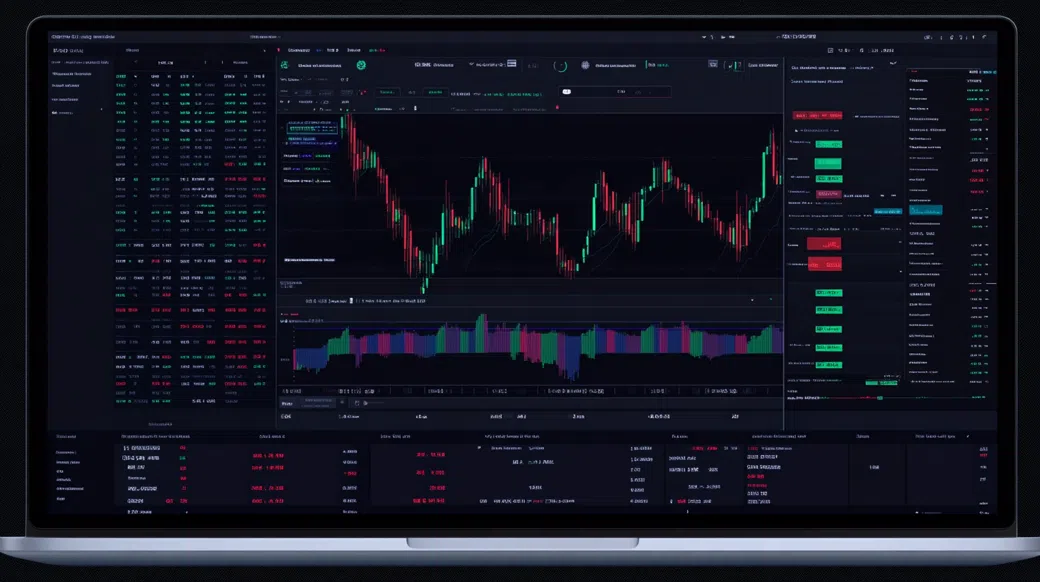
After a decade watching spreads widen in the Gulf on headline risk and tighten again when liquidity returns, I’ve learned one lesson that travels well from Dubai to Frankfurt: structure matters more than slogans. Many traders first meet Silber Anlagheim through a straightforward CFD-style setup—typically forex and index CFDs, a handful of commodities, and crypto CFDs—delivered via a proprietary WebTrader and a mobile app. The appeal is usually speed to entry: modest onboarding friction, leverage that can run high (often marketed around 1:500 in this offshore segment), and a minimum deposit commonly seen around $250.
But “easy” can become expensive. Costs like a ~2.0 pip typical EUR/USD spread on a standard-style account, swap/overnight financing, and withdrawal friction can dominate your P&L long before your strategy has a fair test. And when a broker sits under an offshore framework (often linked to Seychelles FSA structures in this category), the practical question becomes less about chart buttons and more about what happens when there’s a dispute, a margin call, or a volatile weekend gap.
This is where Silber Anlagheim alternatives enter the conversation. The strongest substitutes are not “more leverage” or “more promises.” They’re regulated venues with clearer client-money rules, transparent execution models, and broader diversification options—because diversification is the only free lunch in finance, and it starts with access and governance, not just instruments.
Disclaimer: This article is for informational purposes only and does not constitute investment advice. CFDs and other leveraged products carry a high risk of loss and may not be suitable for all investors.
From the pattern I see across Middle East and Africa-facing brokerage funnels, Silber Anlagheim looks positioned as a CFD-first trading platform: forex pairs, indices, commodities, and usually crypto CFDs, aimed at retail traders who want quick access via browser and mobile. The operating model commonly resembles a market-maker or hybrid setup rather than direct market access, which can matter when markets jump and slippage decides your entry. For traders comparing brokers similar to Silber Anlagheim, the big differentiator isn’t only what you can trade—it’s the legal framework around client money, complaints, and enforcement when something goes wrong.
The platform stack in this segment is typically a proprietary WebTrader with basic-to-mid charting—good enough for discretionary entries, less ideal for systematic execution. Expect standard order types (market, limit, stop), a modest set of indicators and drawing tools, and an account dashboard focused on deposits, margin level, and open positions. Mobile tends to mirror the browser experience rather than offering pro-grade depth. Execution can feel fine in calm hours, yet the true test is high volatility: if fills slip during news or thin liquidity, your strategy’s edge can evaporate fast.
Cost-wise, offshore CFD platforms often lead with “from” pricing while most retail users live closer to average conditions. A reasonable expectation for a standard-style setup is EUR/USD around ~2.0 pips, with swaps/overnight financing applied when positions are held past rollover. Some brokers in this category advertise tighter “Raw/ECN-style” pricing with commissions, but the economic reality is the all-in round-turn cost plus the quality of execution. Also watch for operational charges—withdrawal fees, currency conversion costs, and inactivity rules—because these are the silent leaks that don’t show up on a trade ticket.
The moment a trader stops thinking in single trades and starts thinking in months of volume, the cracks get louder. On paper, offshore leverage and quick onboarding look attractive; in practice, the combination of platform limitations, variable execution, and unclear investor protections can push people toward Silber Anlagheim alternatives that feel more “institutional.” For US/EU-focused traders, regional restrictions and compliance expectations (KYC/AML checks, deposit-source matching) also shape what is realistically usable, not just what is advertised.
Think of choosing among regulated options vs Silber Anlagheim as building a trading “risk budget.” Your edge—if you have one—should be spent on markets, not on counterparty uncertainty. The right comparison is: protections (legal + operational), execution quality, total cost per trade, and whether the instrument set supports genuine diversification beyond CFDs.
Start with regulators that enforce real conduct standards: FCA (UK), ASIC (Australia), CySEC (EU), and NFA/CFTC (US). These frameworks commonly require segregated client funds and defined complaints processes. Compensation schemes can matter: the UK’s FSCS can cover eligible clients up to £85,000, while CySEC’s ICF can cover up to €20,000 in certain cases. None of that removes trading risk, but it changes the “what if” scenario when a broker fails.
Asset breadth is not marketing fluff; it’s portfolio design. If your plan includes FX for tactical trades, indices for macro views, and real stocks/ETFs for long-term ballast, you’ll want a broker that offers ownership where possible—not only CFDs. Platforms like Silber Anlagheim often center on CFDs, which can be efficient for short-term exposure but are a different product than cash equities, futures, or exchange-traded options.
Compare costs using round-turn economics: spread + commission + expected slippage, then add swap for holding periods. A scalper doing 200–500 round turns per month will feel a 0.5 pip difference far more than a one-time deposit bonus. Also check non-trading fees—conversion charges, withdrawal methods, and inactivity rules—because a low headline spread won’t save you from administrative bleed.
Platform choice is strategy choice. MT4/MT5 support EAs and a deep ecosystem; cTrader is popular with execution-focused traders; proprietary platforms vary widely. Execution model matters too: market maker versus STP/ECN/DMA changes how orders are routed and how conflicts are managed. If you’re leaving Silber Anlagheim, insist on clear language around order execution, slippage handling, and whether negative balance protection applies under your jurisdiction.
During calm markets, everyone answers emails. The real test is a fast-moving session when margin levels are tight. Look for multi-language support, clear hours, and documented escalation paths. Education is useful when it’s practical—margin call mechanics, swap calculations, and risk sizing—not just glossy webinars. Finally, confirm mobile parity: you should be able to manage stops and exposure from your phone without losing key controls.
For FX and index CFDs, Silber Anlagheim likely sits in the familiar offshore retail bracket: roughly 30–50 forex pairs, 8–15 indices, 5–10 commodities, and leverage marketed around 1:500. That can be workable for small, tactical positions, but the trade-off is usually execution transparency and the consistency of spreads (think ~2.0 pips typical on EUR/USD in standard conditions). If FX is your main arena, Pepperstone and OANDA are often stronger competitors to Silber Anlagheim because they pair robust regulation with mature platform stacks (MT4/MT5/cTrader in Pepperstone’s case; strong FX infrastructure and regulatory coverage for OANDA). The point isn’t that volatility disappears—it doesn’t—but tighter pricing, better reporting, and clearer governance can make your backtests behave more like reality.
Here’s where many traders feel the ceiling. Offshore CFD platforms frequently offer equity exposure mostly as CFDs—useful for short-term directional views, but not the same as owning shares or ETFs (no voting rights, no direct participation in corporate actions in the same way). If your 2026 plan includes building a diversified core—US/EU ETFs plus satellite trades—Interactive Brokers (IBKR) and Saxo Bank tend to be top substitutes for Silber Anlagheim. Both are designed for multi-asset allocation, with access to real stocks and ETFs alongside derivatives. For a commodities-minded trader, this matters: you can hedge macro exposure using different instruments instead of forcing every idea through a CFD ticket.
Crypto is where product labeling matters most. Silber Anlagheim-style offerings typically provide crypto CFDs—price exposure without on-chain ownership, wallets, or the ability to transfer coins. That can suit short-term hedging, but it is not “holding crypto.” If you want regulated CFD exposure to crypto moves, IG and Plus500 are commonly used in EU/UK contexts (jurisdiction rules apply), while FX-focused brokers may offer crypto CFDs in select regions. The practical decision: do you need a trading instrument for volatility, or do you need custody and transfers? For most risk-managed portfolios, crypto CFDs are a tactical sleeve—size it accordingly, because leverage plus weekend gaps can turn small positions into outsized losses.
Regulation: DFSA, FCA, MAS (group-level, jurisdiction dependent)
Markets: Stocks, ETFs, bonds, FX, CFDs, options, futures
Fees: FX spreads generally competitive (often ~0.6–1.2 pips depending on tier); commissions apply on many exchange-traded products
Platform: SaxoTraderGO, SaxoTraderPRO
Best For: Multi-asset diversification with a pro-grade platform
Regulation: SEC/FINRA, FCA, IIROC (entity dependent)
Markets: Stocks, ETFs, options, futures, bonds, FX
Fees: Low, transparent commissions on many markets; FX pricing typically tight with commission-based structures depending on account/setup
Platform: Trader Workstation (TWS), IBKR Mobile, Client Portal
Best For: Serious traders who want direct market access breadth
Regulation: FCA, ASIC, CySEC, DFSA (entity dependent)
Markets: FX, CFDs (indices, commodities, some crypto CFDs in eligible regions)
Fees: Raw accounts often show ~0.0–0.3 pips + commission; Standard-style pricing typically ~1.0+ pip depending on conditions
Platform: MT4, MT5, cTrader
Best For: Execution-focused FX traders and algorithm users
Regulation: CFTC/NFA, FCA, ASIC, IIROC (entity dependent)
Markets: FX, CFDs (availability varies by region)
Fees: Typically spread-based pricing on core FX; EUR/USD often around ~0.6–1.2+ pips depending on market conditions and account type
Platform: OANDA Trade (proprietary), MT4
Best For: US-eligible FX access with strong compliance culture
Regulation: FCA, ASIC, MAS (entity dependent)
Markets: CFDs across indices, FX, commodities, shares (often as CFDs), crypto CFDs in eligible regions
Fees: Competitive spread-based CFD pricing; costs vary by instrument and volatility (FX often ~0.6+ pips under typical conditions)
Platform: IG web platform, mobile apps (MT4 available in many regions)
Best For: Macro traders who rotate across indices and commodities
Regulation: FCA, CySEC, ASIC, MAS (entity dependent)
Markets: CFDs (FX, indices, commodities, shares as CFDs, crypto CFDs in eligible regions)
Fees: Spread-based; overall costs depend on instrument and session liquidity (no separate commission on most trades)
Platform: Plus500 proprietary WebTrader, mobile apps
Best For: Simplicity-first CFD trading with tier-1 oversight
| Platform | Regulation | Main Markets | Typical Costs | Best For |
|---|---|---|---|---|
| Saxo Bank | DFSA, FCA, MAS | Stocks/ETFs, FX, options, futures, CFDs | FX ~0.6–1.2 pips (tier-dependent); exchange commissions apply | Multi-asset diversification with a pro-grade platform |
| Interactive Brokers (IBKR) | SEC/FINRA, FCA, IIROC | Stocks/ETFs, options, futures, bonds, FX | Commission-led pricing; FX typically tight with transparent fees | Serious traders who want direct market access breadth |
| Pepperstone | FCA, ASIC, CySEC, DFSA | FX and CFD suite | Raw ~0.0–0.3 pips + commission; Standard ~1.0+ pip | Execution-focused FX traders and algorithm users |
| OANDA | CFTC/NFA, FCA, ASIC, IIROC | FX (plus CFDs where permitted) | Spread-based FX commonly ~0.6–1.2+ pips (conditions vary) | US-eligible FX access with strong compliance culture |
| IG | FCA, ASIC, MAS | CFDs across FX/indices/commodities/shares | Spread-based; FX often ~0.6+ pips (instrument dependent) | Macro traders who rotate across indices and commodities |
| Plus500 | FCA, CySEC, ASIC, MAS | CFDs (FX, indices, commodities, shares CFDs) | Spread-based pricing; no separate commission on most trades | Simplicity-first CFD trading with tier-1 oversight |
Switching brokers is not a “click and go” exercise; it’s operational risk management. Treat it like moving margin from one clearing setup to another: verify the destination first, then unwind exposure, then move cash with clean documentation. If leverage is part of your approach, reduce position sizes during the transition—execution differences and platform learning curves can turn a normal trade into a forced margin event.
If you’re still evaluating account conditions, take a moment to review onboarding steps, eligible regions (USA is commonly restricted), and the platform tools you’ll actually use day-to-day. A clean comparison against the best Silber Anlagheim alternatives 2026 is easier when you have the current terms in front of you.
Visit Silber AnlagheimThe best option depends on whether you want pure FX/CFDs or a broader, diversified portfolio. For multi-asset access to real stocks/ETFs plus derivatives, Interactive Brokers (IBKR) and Saxo Bank are strong choices; for FX execution with MT4/MT5/cTrader, Pepperstone is frequently a better match. If your aim is simple, regulated CFD access, Plus500 or IG can be more straightforward than many offshore competitors to Silber Anlagheim.
Silber Anlagheim appears to fit an offshore/unregulated profile commonly associated with Seychelles FSA-type frameworks in this segment, which generally offers fewer investor-protection layers than FCA/ASIC/CySEC/NFA oversight. That doesn’t automatically mean a trader cannot use the platform, but it does raise the importance of counterparty risk controls: smaller balances, faster withdrawals, and conservative leverage. For most US/EU traders prioritizing protections like segregated funds and formal dispute processes, regulated substitutes are typically safer.
With platforms like Silber Anlagheim, stocks and ETFs are often offered as CFDs rather than real ownership, and exchange-traded futures are typically not part of the core retail CFD menu. Crypto exposure is commonly available as crypto CFDs (price tracking without on-chain transfer). If you need real stocks/ETFs or listed futures for hedging, consider IBKR or Saxo; for crypto CFDs in eligible regions, IG or Plus500 are commonly used under tier-1 regulation.
Before moving, verify the new broker’s exact legal entity on the relevant regulator register and confirm client-money segregation and negative balance protection rules for your region. Next, compare all-in trading costs (spread + commission + swap) and read the execution policy so you understand how slippage is handled. Finally, complete KYC at the new broker first, then close exposure and withdraw from Silber Anlagheim using clean AML-compliant funding paths.
About the Author: Nadia El-Amin is a former commodities trader based in Dubai who covers brokerage market structure across the Middle East and Africa. She writes for a global audience with a practical focus on execution, regulation, and portfolio construction—because diversification is the only free lunch, and access determines what diversification you can actually achieve.