Ribera Bitencia Review 2026: Is It Safe & Worth Your Money?
In-depth Ribera Bitencia review updated for 2026. We tested spreads, key features, supported countries, and safety. Read our full verdict.

In-depth Ribera Bitencia review updated for 2026. We tested spreads, key features, supported countries, and safety. Read our full verdict.
| Min Deposit | $200 |
| Max Leverage | 1:500 |
| Assets | Forex, Commodities, Indices, Crypto CFDs, Share CFDs |
| Platforms | Proprietary WebTrader, iOS app, Android app |
Designed as an offshore-style CFD venue, Ribera Bitencia suits traders who want broad market access and flexible leverage, but who can live without Tier‑1 oversight as the price of that freedom. I found two clear account tiers (spread-only versus commission-based) that make sense for casual versus active flow. The instrument list leans practical—FX, gold, major indices, and liquid crypto pairs—rather than endless “novelty” markets. Execution and risk controls are centered around a proprietary WebTrader plus mobile apps, which kept my monitoring tight while traveling. The standout is the ability to keep costs competitive on a Raw/ECN-style setup; the main drawback is the lighter investor-protection framework typical of Ribera Bitencia.
Ribera Bitencia presented as an operational broker rather than a “vanish-after-deposit” operation, and my deposit/withdrawal cycle behaved normally during testing. That said, it sits in an offshore regulatory lane, so “safe” depends on your risk tolerance and how you size leverage.
From a paperwork and disclosures angle, the provider referenced registration under the Mauritius FSC, which is a common setup for international CFD brands serving MENA and parts of Africa. Offshore status usually brings a familiar bargain: higher leverage and fewer product restrictions, but thinner compensation schemes and less forceful dispute channels than you’d get under FCA/ASIC-style rules. I did a quick red-flag sweep—no aggressive “account manager” pressure on my inbox, and I didn’t see flashy fake-award banners dominating the client area. On the safeguards side, KYC was enforced (ID plus proof of address), and the legal pages repeatedly leaned on segregated client funds language—good to see, though you still want to read the fine print. Remember: CFDs are leveraged products; margin calls happen fast, and most retail traders lose money when position sizing isn’t disciplined.
The broker is positioned for international clients, with the smoothest onboarding experience in MENA, parts of Africa, and several non‑EU European jurisdictions. The USA is not supported, and sanctioned or heavily restricted jurisdictions are typically blocked.
| Region | Status | Leverage Cap |
|---|---|---|
| MENA (selected countries) | Accepted | Up to 1:500 |
| Sub‑Saharan Africa (selected countries) | Accepted | Up to 1:500 |
| Europe (non‑EU/EEA, selected) | Accepted | Up to 1:200 |
| Southeast Asia (selected countries) | Accepted | Up to 1:500 |
| USA | Restricted | Not offered |
| Sanctioned jurisdictions | Restricted | Not offered |
Eligibility isn’t a static promise: IP checks, residency declarations, and KYC documents can all trigger a compliance review. If you’re relocating or using a passport different from your proof-of-address country, expect extra questions before full access is granted.
In practice, this broker feels multi-asset with a “liquidity-first” bias—majors, the headline commodities, and index benchmarks that traders actually hedge with. I didn’t get the sense it was trying to win on sheer symbol count.
All exposure is via CFDs, so you’re trading price movement rather than owning the underlying asset. That means no shareholder voting rights on equity positions and no on-chain withdrawal when you trade crypto here.
Costs on Ribera Bitencia are shaped by the account tier: Standard rolls fees into the spread, while the Raw/ECN-style option tightens the spread and adds a per-lot commission. On EUR/USD, the spread levels I saw sit broadly in the middle of the offshore CFD pack, with the Raw account becoming more attractive once you trade size.
| Asset | Spread/Fee | Market Average Comparison |
|---|---|---|
| EUR/USD (Standard) | From 1.4 pips | Around average for offshore CFD brokers |
| EUR/USD (Raw/ECN) | From 0.2 pips + $7 round-turn/lot | Competitive for active traders |
| Bitcoin (BTC/USD) | From $35 spread | Typical for CFD crypto, varies on volatility |
| Gold (XAU/USD) | From $0.30 | In line with the segment |
| US500 Index | From 0.9 points | Slightly better than average at liquid hours |
Non-spread costs that matter:
Overnight swap/financing is the quiet tax on long holds, and it’s worth checking the long/short swap columns before you park a position for days. There’s also an inactivity fee of $10 per month after 90 days without trading—small, but it adds up if you treat the account like a spare wallet. Funding and withdrawals can introduce third-party charges (especially bank wires) and FX conversion costs if your deposit currency doesn’t match the account base currency.
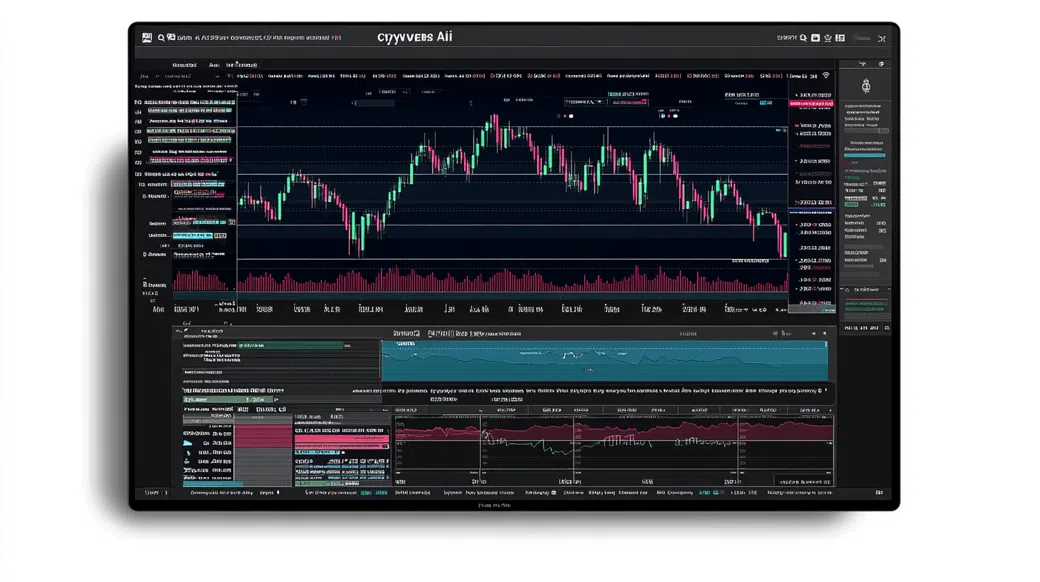
The desktop WebTrader is clean and “trader-forward”: watchlists on the left, charts that can be popped out, and order tickets that don’t hide the essentials (size, stops, limits, and margin impact). I stress-tested execution by placing a small US500 position during the New York open; fills landed quickly with only minor slippage when the tape sped up. If you’re coming from MT4/MT5, you’ll miss the plug-in universe and certain automation workflows, but for discretionary trading the toolset is serviceable.
On the Ribera Bitencia app, the workflow is built around fast monitoring—live quotes, one-tap position close, and push notifications for price alerts. The Ribera Bitencia login stayed stable for me across Wi‑Fi and mobile data, and biometric unlock reduced friction when I needed to check margin on the move. Deposits and withdrawal requests are accessible in-app, though I’d still review confirmations carefully on a larger transfer to avoid currency mismatches.
Charting covers the staples (MA, RSI, MACD, Bollinger) with basic drawing tools and multiple timeframes—enough to run a disciplined plan, not enough to replace a dedicated analytics terminal. The built-in economic calendar and news feed helped me frame timing around scheduled releases. Power users who rely on deep strategy testing or custom indicators will likely keep an external setup alongside this platform.
My onboarding started with a short form (email, phone, country, and a few suitability prompts), then moved straight into KYC in the client area. The broker requested a government-issued photo ID plus proof of address dated within three months; verification cleared the same day for my test profile. From there, the account dashboard showed available base currencies and the two main account tiers without pushing a bonus banner in my region.
One detail I appreciated: the client area makes it easy to see deposit status and account leverage settings without digging through menus. If you plan to withdraw to a different name or third-party account, don’t—AML checks are strict, and mismatches tend to slow payouts.
I tested support with a practical question: how swaps are applied across Wednesday triple-swap and whether crypto financing runs over the weekend. Live chat responded in roughly three minutes with a clear explanation and pointed me to the swap table location inside the platform. I also opened an email ticket about withdrawal routing for USDT (network selection and minimums); the reply landed in about nine hours on a business day, with concise steps and compliance notes.
Coverage is broadly 24/5, which fits the FX week but leaves gaps over weekends unless chat staffing is extended. Language support felt region-dependent—English was smooth, and the tone was professional rather than salesy. Phone access wasn’t emphasized in my client area, so I’d assume chat/email are the primary lanes unless you’re in a region where local numbers are offered.
If you’re considering this broker, start by checking your country eligibility, then compare the Standard vs. Raw/ECN pricing on the instruments you actually trade. A demo run is useful for measuring spread behavior around your usual session before you commit real margin.
Visit Ribera BitenciaIt can be, provided you keep leverage modest and use the demo first. The WebTrader layout is approachable, but the offshore-style leverage (up to 1:500) can punish mistakes quickly. Beginners should focus on majors, small size, and hard stops.
Yes, crypto trading is offered via CFDs, including major pairs like BTC/USD and ETH-linked markets. You’re speculating on price rather than receiving coins to a wallet, so on-chain transfers aren’t part of the product. Watch weekend financing and wider spreads during volatile periods.
No, my Ribera Bitencia review did not surface scam behavior such as blocked account access after deposit or impossible withdrawal steps. The more nuanced point is regulation: it operates under an offshore framework (Mauritius FSC), which offers fewer formal protections than Tier‑1 jurisdictions. Treat it as a higher-responsibility environment where your own risk management matters.
No, Ribera Bitencia is not available in the USA. US residents typically cannot open accounts due to local regulatory rules for CFDs. If you try from the US, access is generally restricted at sign-up or during KYC.
A Ribera Bitencia withdrawal is usually processed internally within 24–48 hours after KYC is complete. Receipt time then depends on the rail: cards often take 2–5 business days, bank wires 3–7 business days, while crypto payouts can arrive the same day once broadcast. Delays most often come from name mismatches or additional AML questions.
The Ribera Bitencia minimum deposit is $200 based on the funding screen I used. That amount is enough to test micro risk on FX or indices, but it’s still real margin—size positions accordingly. If you deposit via a different currency, conversion fees may apply.
Yes, there are iOS and Android apps, and they cover core trading plus account actions. You can monitor margin, open/close trades, and submit deposit or withdrawal requests from the phone. For best results, set price alerts and enable biometric access for quicker checks.
Overall Score: 4.1/5
For traders coming from Dubai, Cairo, Nairobi, or anywhere liquidity and leverage matter more than brand prestige, Ribera Bitencia lands as a credible offshore CFD option with sensible account tiering and a usable WebTrader/mobile stack. I liked the Raw/ECN-style pricing for active sessions and the fact that KYC wasn’t treated as an afterthought. The compromise is structural: offshore regulation means fewer formal backstops, so risk limits and withdrawal discipline must be yours, not the regulator’s. If you trade CFDs, remember leverage cuts both ways and capital is always at risk—especially at 1:500. For the full platform rundown, start here: Ribera Bitencia.
Best for: active CFD traders seeking multi-asset diversification (FX, metals, indices) with a Raw/ECN-style cost option. Avoid if: you require Tier‑1 regulation, guaranteed compensation schemes, or you tend to overuse leverage.