Puo Crecianza Review 2026: Is It Safe & Worth Your Money?
In-depth Puo Crecianza review updated for 2026. We tested spreads, key features, supported countries, and safety. Read our full verdict.

In-depth Puo Crecianza review updated for 2026. We tested spreads, key features, supported countries, and safety. Read our full verdict.
| Min Deposit | $200 |
| Max Leverage | 1:500 |
| Assets | Forex, Indices, Commodities, Crypto CFDs, Share CFDs |
| Platforms | WebTrader, iOS app, Android app |
Built as an offshore CFD venue with a multi-asset menu, Puo Crecianza suits traders who want leverage and a simple platform stack, with the trade-off being lighter investor protections than top-tier jurisdictions. In my 2026 check, the account ladder split cleanly into a spread-only Standard and a tighter Raw/ECN-style tier, which is where costs start to make sense for frequent ticketing. The product list leaned practical—FX majors, key indices, and the usual metals/energy—plus crypto CFDs for weekend exposure. The WebTrader kept the workflow lean and the mobile apps mirrored it well, but research/education remains more “starter kit” than a full trading desk. If you’re curious, start by mapping your risk limits before you click into Puo Crecianza.
Puo Crecianza looks operational and tradeable rather than a “vanish-with-your-deposit” setup, but it sits in the offshore bracket, so safety depends more on your own risk controls than on a strong regulator backstop. I didn’t hit the classic scam tells (blocked withdrawals, aggressive bonus traps, or pressure calls) during my test window.
From the paperwork and footer disclosures I reviewed, the provider presents itself as registered through the Mauritius FSC framework, which is common for international CFD brokers servicing MENA/Africa corridors. In practice, that offshore posture can mean higher leverage access and faster product rollout, yet it also tends to come with thinner compensation schemes and fewer avenues if a client wants formal arbitration. My red-flag scan focused on the basics: KYC actually being enforced (it was), clarity around AML checks, and whether the site leaned on suspicious “global award” badges (I didn’t see anything overly theatrical). The language around segregated client funds was present, though—as always—segregation is not the same as a Tier‑1 guarantee. Finally, remember the instrument risk: CFDs are leveraged products, margin calls happen fast, and most retail traders lose money when risk sizing is loose.
This broker is positioned for international onboarding across MENA, parts of Africa, and selected non‑EU European and Asian jurisdictions, while the USA and sanctioned countries are blocked. Eligibility is checked at signup and again at withdrawal-level verification.
| Region | Status | Leverage Cap |
|---|---|---|
| GCC (UAE, Oman, Qatar, Kuwait) | Accepted | Up to 1:500 |
| North Africa (Egypt, Morocco, Tunisia) | Accepted | Up to 1:500 |
| Sub‑Saharan Africa (Kenya, Nigeria, Ghana) | Accepted | Up to 1:500 |
| Non‑EU Europe (select countries) | Accepted | Up to 1:200 |
| Southeast Asia (select countries) | Accepted | Up to 1:500 |
| USA | Restricted | Not offered |
| Sanctioned jurisdictions | Restricted | Not offered |
Geo-blocking is enforced via IP and document checks, and the platform didn’t let me proceed to funding without selecting an eligible residence. Policies can tighten without notice, so treat availability as a “verify today” item, not a lifetime entitlement.
Unlike single-product FX shops, this platform is built for traders who want to rotate risk between macro themes—rates via indices, inflation hedges via metals, and momentum via crypto CFDs—without leaving the same account.
All exposure here is via CFDs, meaning you’re trading price movement with leverage rather than owning the underlying asset. That also means no shareholder voting rights, and crypto positions aren’t on-chain withdrawals—just CFD settlement inside your account.
Pricing is split between a spread-only Standard account and a Raw/ECN-style tier where spreads compress and a per-lot commission is added. On my test account, EUR/USD on Standard started around 1.6 pips, while the Raw feed floated near 0.2 pips plus a $7 round-turn commission—broadly in line with offshore CFD peers.
| Asset | Spread/Fee | Market Average Comparison |
|---|---|---|
| EUR/USD (Standard) | From 1.6 pips | Near average for offshore CFD brokers |
| EUR/USD (Raw/ECN) | From 0.2 pips + $7 round-turn/lot | Competitive for active traders |
| Bitcoin (BTC/USD) | From $30 | Typical; can widen on weekend volatility |
| Gold (XAU/USD) | From $0.30 | Reasonable for a CFD feed |
| US500 Index | From 0.8 points | Middle of the pack |
Costs beyond the spread matter more than most traders admit: overnight swap/financing stacked up quickly on multi-day FX holds, and crypto weekend financing can bite if you carry through thin-liquidity hours. The inactivity charge was listed at $10 per month after 90 days with no trading activity, which is small until it isn’t—especially for “parked” accounts. Also watch conversion: funding in AED or KES and trading USD-quoted CFDs introduces FX conversion costs at deposit and sometimes again on withdrawal.
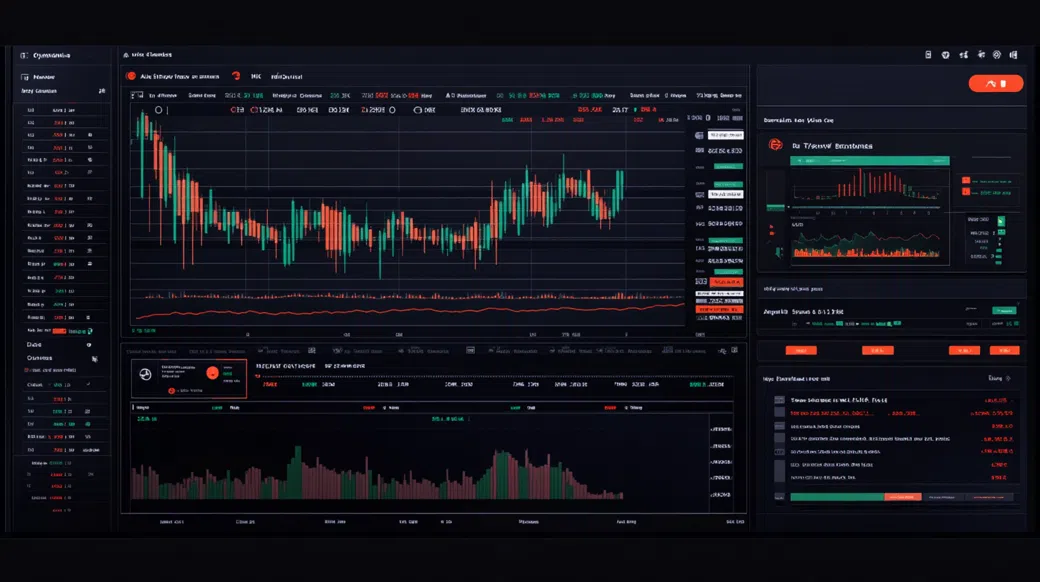
On desktop, the WebTrader behaved like a clean execution console rather than a cluttered social terminal: watchlists on the left, chart center, ticket on the right. I ran a small EUR/USD market order during the London open and a US500 order during the New York overlap; fills landed without a requote loop, and stop-loss edits were applied instantly on my side. Still, traders married to the MT4/MT5 ecosystem should note that I didn’t see a confirmed MetaTrader download inside the client area—this service is built around its proprietary front end.
The Puo Crecianza app kept the essentials tight: live quotes, one-tap position close, and deposits/withdrawals accessible from the same menu tree. My Puo Crecianza login stayed stable with biometric unlock enabled, and push notifications triggered reliably for price alerts. A small quirk: on a weak connection, the chart would refresh a fraction late after switching timeframes, so I wouldn’t scalp purely off the phone during fast news.
Charting covered the usual indicator toolbox—moving averages, RSI, MACD, Bollinger—plus drawing tools for levels and channels. An integrated economic calendar and news stream helped for “what’s next?” context, but it won’t replace a dedicated research terminal or the plugin-rich world around MT5/cTrader. Alerts and watchlists did the job for managing a diversified basket across FX, metals, and indices.
After entering email, phone, and residence details, the platform pushed me straight into identity verification rather than letting me trade first and explain later. For KYC, I uploaded a passport photo page and a recent bank statement dated within three months; approval came the same business day, and the AML prompts were explicit about matching funding names to the account holder. Funding via card showed an on-screen confirmation and the balance updated immediately after authorization.
One practical detail for MENA-based traders: the base currency choices were USD-leaning, so if you earn in AED or SAR, factor conversion into your cost map. I’d also expect the platform to re-check documents at first sizable withdrawal, which is normal in an offshore regulation setting.
I tested support with a specific question most traders ignore until it hurts: how swap/overnight rates are applied across Wednesday rollovers and whether crypto financing differs on weekends. Live chat answered in roughly three minutes with a clear breakdown and pointed me to where the swap values display on the order ticket; the follow-up email transcript landed about nine hours later with the same information and a reminder about instrument-specific multipliers.
Coverage looked 24/5 for chat and tickets, which fits the CFD broker norm, and language availability felt strongest in English with region-dependent options beyond that. Phone support wasn’t front-and-center in my dashboard, so I’d treat voice escalation as limited. Over weekends, you can still manage crypto positions, but don’t expect full staffing like a prime broker desk.
If you’re considering this broker, the smartest first step is to open a demo and mirror your real risk limits—same lot sizes, same stop distance, same instruments. Then verify your country eligibility and compare Standard vs Raw pricing on the pairs you actually trade.
Visit Puo CrecianzaIt can be, as long as you treat it as a leveraged CFD platform and start small. The WebTrader is not intimidating, and the $10,000 demo helps you learn order types and margin behavior. Beginners should avoid using 1:500 leverage until they’ve proven consistent risk control.
Yes, crypto trading is available as CFDs, with BTC and ETH among the core markets. You’re speculating on price movement rather than buying coins for on-chain transfer. Keep an eye on weekend spreads and financing if you hold positions for days.
No, my experience didn’t match the pattern of a typical “scam broker,” and basic KYC/AML checks were enforced. The more accurate framing is that it’s an offshore CFD provider, so protections and complaint pathways are not the same as FCA/ASIC-regulated firms. If you’re asking “Puo Crecianza scam” questions, keep position sizes conservative and test withdrawals early.
No, the USA is restricted and the platform didn’t accept US residency in the onboarding flow. US-based traders typically need a locally authorized venue due to regulatory rules around CFDs and leverage. If you travel often, expect residency to be checked via KYC documents, not just IP.
A Puo Crecianza withdrawal typically leaves the broker side within 24–48 hours after KYC is in order. From there, delivery depends on the rail: cards often take 2–5 business days, bank wires around 3–7 business days, and crypto can arrive the same day. Always expect longer timelines during compliance reviews or bank holidays.
The Puo Crecianza minimum deposit is $200 for the live Standard account I opened. Depositing more doesn’t reduce risk by itself, but it can help you avoid over-leveraging tiny balances. If you plan to trade frequently, compare the Raw/ECN commission model before funding heavily.
Yes, Puo Crecianza has mobile apps for iOS and Android. You can manage orders, monitor margin, and handle deposits or withdrawals from the app. For fast markets, I still prefer placing complex entries on desktop and using mobile for monitoring and exits.
Overall Score: 4.0/5
From a trader’s lens, the appeal of Puo Crecianza is the combination of multi-asset CFDs and a clear split between casual (Standard) and cost-aware (Raw/ECN) pricing—without forcing you into an overbuilt platform. My funding and platform usage were smooth, and the fee schedule was readable enough to model before taking risk. The caveat is structural: offshore registration means fewer formal safeguards, so treat leverage like a loaded tool, not a feature badge. If you proceed, test a small deposit and a withdrawal cycle early via Puo Crecianza.
Best for: MENA/Africa-focused traders who want diversified CFD access (FX, indices, metals, crypto) and can self-manage risk. Avoid if: you require Tier‑1 regulation, deep institutional research, or you’re prone to overusing 1:500 leverage.