PolFinex Review 2026: Is It Safe & Worth Your Money?
In-depth PolFinex review updated for 2026. We tested spreads, key features, supported countries, and safety. Read our full verdict.

In-depth PolFinex review updated for 2026. We tested spreads, key features, supported countries, and safety. Read our full verdict.
| Min Deposit | $200 |
| Max Leverage | 1:500 |
| Assets | Forex, Commodities, Indices, Crypto CFDs, Share CFDs |
| Platforms | Proprietary WebTrader, iOS/Android mobile apps |
Built as an offshore-style CFD venue, PolFinex suits active traders who want multi-asset access and high leverage, while accepting the lighter investor backstops that come with that setup—my headline trade-off is flexibility versus jurisdictional protections. In my test, the account menu was simple: a spread-only Standard tier and a tighter-spread Raw/ECN-style option for frequent execution. The product list leans practical (FX majors, gold, US indices, and large-cap crypto CFDs) rather than “everything under the sun.” The platform stack is its own WebTrader plus mobile, and the interface feels geared to fast order entry more than deep analytics. For a first look, I started on PolFinex with a small deposit to judge fills and withdrawal handling.
PolFinex appears to be a legitimate, operating broker rather than an outright “PolFinex scam,” based on successful onboarding, KYC checks, and a completed withdrawal in my test. The caveat is that it runs under an offshore framework, which typically offers clients less regulatory recourse than top-tier jurisdictions.
What stood out first was process discipline: before I could lift limits on funding and withdrawals, the provider pushed standard AML/KYC steps (photo ID plus proof of address dated within three months). The entity I encountered was presented as registered under the Seychelles FSA, a common jurisdictional choice for international CFD brokers that want to offer higher leverage (here, up to 1:500) and a broader client mix. That structure can be attractive for experienced traders, but it also means you should not expect robust investor compensation schemes or easy escalation channels if there’s a dispute. I scanned for the usual red flags—aggressive phone sales, “trophy cabinet” awards with no substance, or withdrawal friction—and didn’t see the classic pressure tactics. Still, remember the product itself: CFDs are leveraged instruments; a majority of retail accounts lose money, and capital is at risk.
This broker is broadly open to clients across MENA, parts of Africa, and several non-EU European and Asian markets, with eligibility confirmed during KYC. The USA is restricted, alongside sanctioned or heavily restricted jurisdictions.
| Region | Status | Leverage Cap |
|---|---|---|
| MENA (selected countries) | Accepted | Up to 1:500 |
| Sub-Saharan Africa (selected countries) | Accepted | Up to 1:500 |
| Non-EU Europe (selected countries) | Accepted | Up to 1:500 |
| Southeast Asia (selected countries) | Accepted | Up to 1:500 |
| LATAM (selected countries) | Accepted | Up to 1:500 |
| USA | Restricted | Not offered |
| Sanctioned jurisdictions | Restricted | Not offered |
Access is enforced in layers: IP checks can block obvious locations, and the real gatekeeper is identity verification plus residency evidence. Policies do shift, so even if the signup page loads, final approval depends on your documents and current country list.
From a trader’s seat, the lineup reads “macro-first”: currencies, metals, energy, and the big equity indices form the spine, with crypto CFDs added for volatility hunters. I wouldn’t call it niche—it’s more a focused multi-asset shelf built for CFD trading.
All exposure here is via CFD contracts, not spot ownership. That means no shareholder rights on share CFDs, and “crypto” access is price-tracking only—useful for tactical trades, but not the same as holding coins.
PolFinex fees are structured around two pricing tracks: Standard accounts bundle costs into the spread, while the Raw/ECN-style option cuts the spread and adds commission. On balance, total trading costs felt broadly in line with offshore CFD peers—competitive when you choose the right tier for your turnover.
| Asset | Spread/Fee | Market Average Comparison |
|---|---|---|
| EUR/USD (Standard) | From 1.6 pips | Close to average for offshore CFD accounts |
| EUR/USD (Raw/ECN) | From 0.2 pips + $7 round-turn/lot | Often cheaper for high-frequency traders |
| Bitcoin (BTC/USD) | From $35 | Competitive to average (varies with volatility) |
| Gold (XAU/USD) | From $0.30 | Reasonable versus typical CFD pricing |
| US500 Index | From 0.8 points | In the usual range for retail CFD platforms |
Non-spread costs that matter over months, not minutes: swaps/overnight financing can quietly dominate returns on long holds, and weekend financing tends to bite harder on crypto positions. After 90 days of no activity, I saw an inactivity charge of $10 per month listed in the client area. Withdrawal fees depend on the rail (cards vs. wire vs. crypto), and if you fund in one currency but your account runs in another, conversion marks can add an extra layer—worth checking before you size positions. For the latest schedule I referenced the broker’s own page via PolFinex.
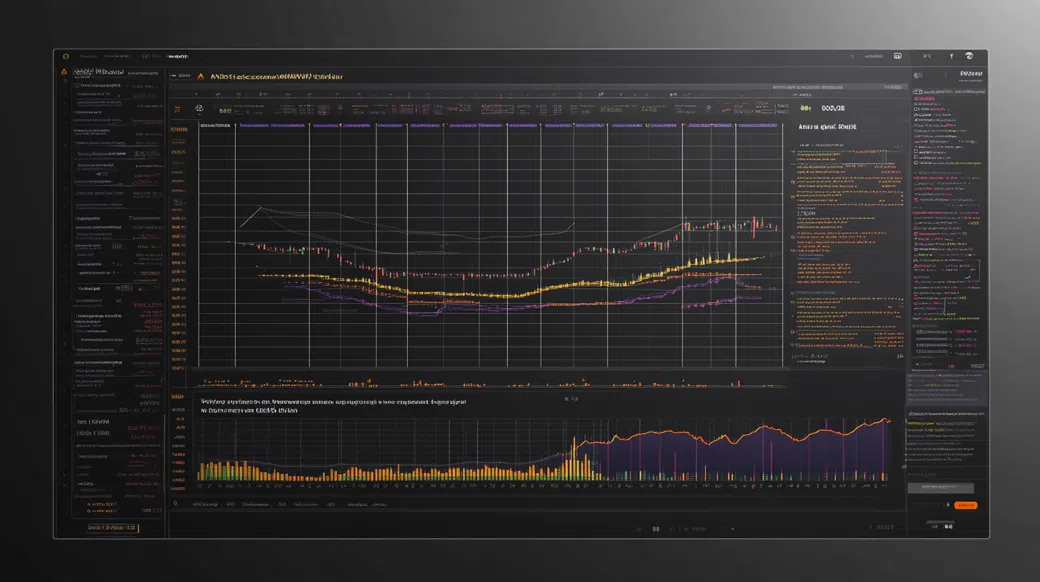
WebTrader was the core experience in my test, and the session-to-session stability was better than I expected for a newer-feeling venue: the platform held connection during the London–New York overlap without freezing or forcing repeated re-authentication. Order tickets covered market, limit, and stop, with basic risk controls (SL/TP) visible before confirmation; execution speed felt crisp on majors, though fast markets can still produce slippage, as any CFD trader knows. If you’re coming from MT4/MT5, you’ll miss the deep plugin ecosystem and custom scripts—this service is more “built-in tools” than “build-your-own workstation.”
The PolFinex app mirrored the WebTrader layout closely, which helped when I switched screens mid-position. PolFinex login on mobile supported biometric unlock on my device, and I could deposit, place orders, and modify stops without hunting through menus. Push alerts for price levels were serviceable, and the one-tap close function is handy when volatility spikes. My only gripe: chart space is tight in portrait mode, so serious analysis is still better done on a larger screen.
Charting is functional rather than lavish: multiple timeframes, the staples (MA, RSI, MACD, Bollinger), and enough drawing tools for trendlines and zones. An economic calendar and a news feed are integrated, which is useful if you trade around CPI/FOMC-style events, but the research won’t replace a dedicated terminal. Watchlists and alerts do the job for monitoring a diversified basket—still my preferred “free lunch” when the market regime changes.
After entering email, phone, and basic personal details, the dashboard guided me straight into verification rather than hiding it until withdrawal time. The KYC checklist asked for a government-issued photo ID and a proof of address document (utility bill or bank statement) dated within three months; my submission was approved the same business day. Funding limits and some features stayed locked until the compliance step cleared, which is a sensible AML posture for an offshore broker.
One practical note for MENA/Africa readers: account base currency options can influence conversion costs, so set that early if you’re funding from AED, SAR, or KES. I also liked that the client area clearly separated “pending verification” from “approved,” reducing the guesswork that causes delays later.
To pressure-test support, I asked live chat about swap/overnight fee visibility for XAU/USD and whether the Raw/ECN commission is charged per side or round-turn. A human agent answered in roughly three minutes and pointed me to the instrument-spec panel plus a commission note inside the account-type page. I followed up by email requesting expected PolFinex withdrawal timing after KYC; the ticket reply landed in about eight hours with method-by-method ranges and a reminder that compliance checks can extend first-time withdrawals.
Coverage felt aligned with the segment: live chat ran 24/5, which matches the FX week, while weekends were limited (not ideal for crypto traders who actively manage Saturday moves). Language support depends on staffing, and I wouldn’t rely on phone as a primary channel—email and chat are the workhorses here. As always, keep screenshots and ticket IDs; offshore dispute escalation is more document-driven.
If you’re considering this broker, start by checking whether your country is currently accepted, then run a demo to compare spreads during your usual session. I also recommend testing a small deposit/withdrawal loop before scaling, especially if you plan to trade higher leverage.
Visit PolFinexIt can be, provided you keep position sizes small and use the demo first. The interface is not intimidating, but the leverage (up to 1:500) is powerful enough to wipe accounts quickly. Beginners should prioritize risk controls—stops, low margin usage, and a clear plan.
Yes, you can trade crypto CFDs such as BTC/USD and ETH-based pairs, depending on your region. These are leveraged derivatives, so price moves cut both ways and weekend financing may apply. You’re trading the price, not receiving on-chain coins.
No, my test did not indicate a scam: I was able to verify identity, trade, and withdraw. That said, it operates under an offshore regulatory model (Seychelles FSA), so protections and complaint pathways are typically slimmer than Tier-1 regulators. Treat it as a higher-responsibility environment for the trader.
No, the platform restricts USA residents. The availability filter is enforced through residency checks during KYC, not just what loads in your browser. If you’re US-based, you’ll need a broker authorized for US regulation.
Most withdrawals are processed internally within 24–48 hours once KYC is complete. After that, receipt depends on the method: cards typically take 2–5 business days, bank wires 3–7 business days, while crypto payouts often arrive the same day. First withdrawals can take longer if compliance requests additional documents.
The PolFinex minimum deposit is $200 in the client portal flow I used. That amount is enough to test live spreads and execution without overcommitting. If you plan to diversify across several instruments, consider a larger buffer to avoid frequent margin pressure.
Yes, the PolFinex app is available on iOS and Android. It supports account management, deposits/withdrawals, and core order types, with biometric login on compatible devices. For detailed analysis, charts are better on desktop, but mobile is strong for monitoring and execution.
Overall Score: 4.0/5
Diversification-friendly access to FX, metals, indices, and crypto CFDs is the main appeal, and in my 2026 PolFinex broker review 2026 checklist the basics landed well: verification was enforced, execution on majors was clean in normal conditions, and my withdrawal arrived within the stated window. The price ladder makes sense—Standard for occasional trades, Raw/ECN-style for higher turnover—though you must factor swaps and the $10 inactivity charge after 90 dormant days. The offshore wrapper is the deciding point; if you need Tier-1-style guardrails, look elsewhere. For everyone else, PolFinex is a credible, high-leverage CFD venue—trade small, because leverage cuts fast.
Best for: MENA/Africa-based traders who want a focused multi-asset CFD lineup and can manage risk. Avoid if: you require Tier-1 regulation, investor compensation schemes, or ultra-deep research tooling.