Peak Credmere Trading Platform Alternatives 2026
Compare Peak Credmere alternatives for 2026: regulated brokers, platforms, fees, and safety checks for US/EU-focused traders moving from offshore CFDs.

Compare Peak Credmere alternatives for 2026: regulated brokers, platforms, fees, and safety checks for US/EU-focused traders moving from offshore CFDs.
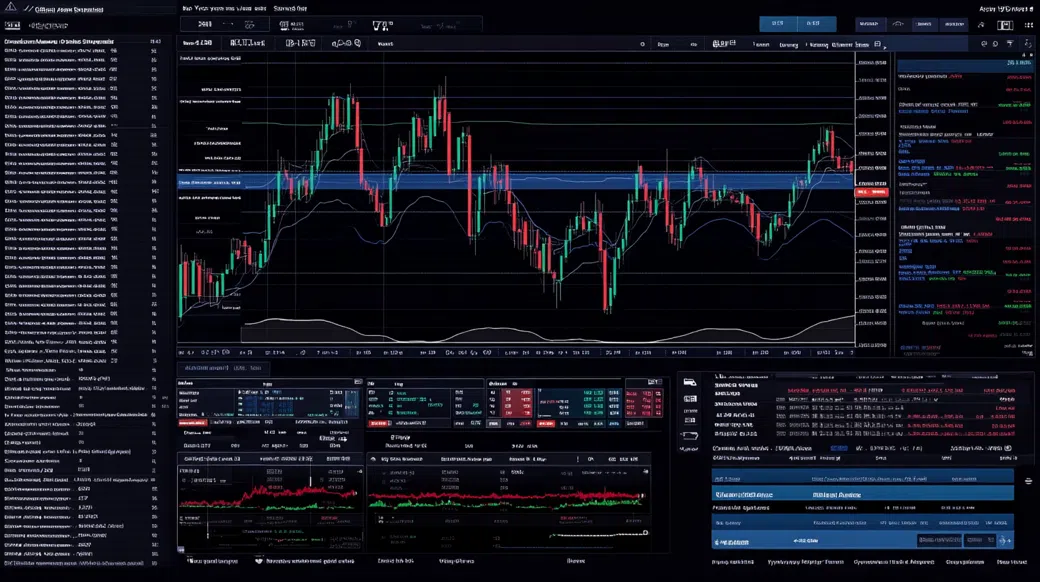
From a Dubai dealing desk, you learn quickly that “cheap” trading is rarely cheap—especially once withdrawals, slippage, and platform limits start biting. Peak Credmere sits in the familiar offshore CFD lane: a forex-and-CFD offering, typically paired with a proprietary WebTrader and a mobile app, plus the sort of leverage (often marketed up to 1:500) that looks exciting right until a margin call arrives. Based on what’s commonly observable for brokers operating under a Seychelles-style framework, you can expect a modest instrument list (roughly a few dozen FX pairs, a handful of commodities and indices, and crypto CFDs), with a Standard-account EUR/USD spread often around 2.0 pips and a minimum deposit that tends to cluster near $250. For some traders that’s “good enough.” For others—especially US/EU clients who care about investor protections, tighter execution standards, and clear dispute channels—it’s a starting point, not a destination.
That’s where Peak Credmere alternatives come in. The best substitutes aren’t necessarily the flashiest; they’re the ones with verifiable oversight, clearer fee math (spread + commission + swaps), and a platform stack that fits your strategy—whether that’s discretionary chart trading on a phone between flights or systematic execution on MT5/cTrader. This guide focuses on Peak Credmere trading platform alternatives 2026 with a practical lens: risk first, then functionality, then costs. If you’re currently using Peak Credmere, treat the switch as a controlled operation—because leverage cuts both ways, and operational friction is a cost even when it doesn’t show up in the spread.
Disclaimer: This article is for informational purposes only and does not constitute investment advice. CFDs and other leveraged products carry a high risk of loss and are not suitable for all investors.
On the spectrum from multi-asset broker to pure CFD shop, Peak Credmere sits closer to the CFD-first end. The typical proposition is straightforward: access to forex and CFD markets with relatively low onboarding friction, a minimum deposit around $250, and leverage that can run up to 1:500 depending on instrument and client category. In this segment, the execution model is commonly market-maker style (prices streamed internally with hedging where the broker chooses), which can be fine for smaller tickets but becomes more sensitive to slippage and execution rules when volatility spikes. The target audience is usually newer retail traders and cross-border clients who prioritize simplicity over deep market access—particularly compared with competitors to Peak Credmere that provide listed equities, futures, or DMA routing.
The platform experience generally centers on a proprietary WebTrader with basic-to-mid charting and a companion iOS/Android app. Expect the essentials: watchlists, one-click order placement, common indicators, and drawing tools for quick technical work. Order types are typically focused on market/limit/stop with straightforward risk controls (stop-loss and take-profit), though advanced conditional logic and strategy testing tend to be thinner than on MT4/MT5 or cTrader. Mobile parity is usually decent for monitoring and manual execution, but heavy chart study—multiple timeframes, templates, and indicator stacking—often feels constrained. The account dashboard normally emphasizes deposits/withdrawals, open positions, and margin usage, with limited transparency on execution metrics like fill statistics or rejected orders.
Cost-wise, the offshore CFD pattern is more about spreads than explicit commissions. A Standard-style account in this category often shows EUR/USD near 2.0 pips in typical conditions, while “Raw/ECN” labeling—when offered—commonly pairs very tight displayed spreads (around 0.0–0.4 pips) with a round-turn commission in the neighborhood of $5–$8 per standard lot. Beyond the headline spread, the real bill arrives via swap/overnight financing for held positions, plus occasional operational fees (for example, inactivity charges after extended dormancy or withdrawal processing fees depending on method). For traders comparing platforms like Peak Credmere, it’s the all-in, repeatable cost per trade—not the marketing line—that decides whether a strategy survives.
Risk management doesn’t only live in your stop-loss; it also lives in who holds your margin. Many traders begin hunting for Peak Credmere alternatives once they realize that leverage and convenience are not a substitute for hard protections, fast dispute resolution, and transparent execution rules. Offshore-style setups can work for small, short-term exposure—but the moment your position sizes, holding periods, or cash balances grow, the platform’s “non-trading” details matter: withdrawal handling, platform reliability during news, and whether your broker offers protections like negative balance policies aligned with strict regulators.
I treat broker selection like building a portfolio: define the risk budget first, then allocate to the tools that fit. For alternatives to the Peak Credmere trading platform, the goal is not to “upgrade” on vibes—it’s to tighten your operational risk (regulation, custody practices, dispute channels) while improving your strategy fit (markets, platform, execution quality). Use the criteria below like a pre-trade checklist: if a broker fails one of your non-negotiables, you don’t negotiate with it.
Start with what you can verify publicly: FCA in the UK, ASIC in Australia, CySEC in the EU, and NFA/CFTC for US-facing FX. These regimes typically enforce rules around segregated client funds and conduct standards, and some attach formal compensation structures—FSCS coverage in the UK up to £85,000 for eligible clients, and the CySEC-linked ICF up to €20,000 in qualifying cases. That isn’t a profit guarantee; it’s a last-resort safety net. The point is accountability: a regulator you can check beats a logo you can’t.
Decide whether you’re trading exposure or building wealth. If you need real stocks/ETFs, options, bonds, or futures, a multi-asset venue is usually the cleanest route; CFDs on shares don’t give shareholder rights and can embed financing costs that surprise long holders. If your focus is FX and index CFDs only, a specialist with strong execution can be enough. Traders comparing brokers similar to Peak Credmere should map instruments to objectives: hedging, income, long-term equity allocation, or short-term speculation rarely belong on the same toolset.
Ignore “from 0.0” headlines and calculate the round-turn cost. For FX, that means spread plus commission (if any), multiplied by how you actually trade—session frequency, average holding time, and size. Then add the quieter leaks: swap/overnight fees on leveraged CFDs, conversion charges if your base currency mismatches, and inactivity fees if you trade seasonally. A platform that’s 0.4 pips cheaper can matter more than one that offers higher leverage, because cost is paid every trade while leverage is only useful if it doesn’t blow you up.
Platform choice is strategy choice. MT4/MT5 and cTrader open the door to EAs, custom indicators, and deeper order management, while proprietary platforms can be perfectly fine for manual trading—until you need automation, multi-account workflows, or more detailed reporting. Execution model matters too: market maker versus STP/ECN/DMA changes how you should think about slippage during data releases and thin liquidity. If you’re moving from Peak Credmere, test execution with a small live account and watch how stops fill around volatility—not just how smooth the interface looks.
When markets move, “we’ll get back to you” is not a service level. Look for support hours that match your trading sessions, plus language coverage if you operate across regions. Good education isn’t hype videos; it’s clear margin rules, product disclosures, and platform guides that reduce operator error. Finally, check mobile parity: if you manage risk from your phone, the app must allow full position controls, order modification, and clean margin visibility.
Forex and CFDs are the core of what Peak Credmere-style venues usually deliver: roughly 30–50 FX pairs, a compact set of indices, and a handful of commodities—often enough for directional trading. The trade-off is that pricing and execution can be less competitive than top-tier venues, especially if you’re paying around a 2.0-pip typical EUR/USD spread on a Standard setup while running meaningful volume. In regulated shops built for active FX—think Pepperstone or IC Markets—raw-spread accounts often combine tighter spreads with transparent commissions, and you get mature platforms like MT4/MT5/cTrader that support automation and better reporting. Leverage can still be meaningful, but it’s typically constrained for retail clients under FCA/CySEC rules, which many professionals see as a feature: it forces discipline. For Peak Credmere alternatives in FX/CFDs, focus on execution consistency and total cost per round trip, not the maximum leverage headline.
If your plan includes long-term equity exposure—US mega-caps, European dividends, or a simple global ETF sleeve—this is where many offshore CFD platforms disappoint. The common offer is share CFDs rather than direct share ownership, which means no shareholder rights and financing costs that can make multi-month holding expensive. A multi-asset broker such as Interactive Brokers (IBKR) or Saxo Bank is built for this job: broader exchange access, multiple order types, and infrastructure designed for custody and reporting across regions. For US/EU readers building diversified portfolios, this is the clean dividing line between “trading a price” and “owning an asset.” Among the best Peak Credmere alternatives 2026, the ones that give you real equities and ETFs—alongside FX when needed—tend to be the most future-proof for serious diversification.
Crypto on offshore CFD platforms is usually delivered as crypto CFDs—price exposure without on-chain ownership. That can be appropriate for short-term hedging or tactical trades, but it’s not the same as holding coins in a wallet, and it carries financing and weekend-gap considerations depending on broker terms. Regulated alternatives split into two camps: CFD brokers like IG or Plus500 that may offer crypto CFDs (jurisdiction dependent), and multi-asset brokers that focus more on traditional markets while offering limited crypto exposure through regulated channels where permitted. The practical question is intent: if you want high-beta speculation, crypto CFDs might be enough; if you want long-term participation in the ecosystem, you’ll likely need a separate, regulated crypto venue (outside the scope of this broker comparison). For regulated options vs Peak Credmere in crypto, prioritize clear product labeling, margin rules, and robust risk controls such as negative balance protection where applicable.
Regulation: FCA, DFSA, MAS (entity depends on your residency)
Markets: Stocks, ETFs, bonds, options, futures, FX, CFDs
Fees: FX spreads typically vary by tier (often ~0.8–1.2 pips on standard-style pricing; tighter for active tiers); commissions apply on exchange-traded products
Platform: SaxoTraderGO, SaxoTraderPRO
Best For: Diversification-first investors who also trade FX
Regulation: SEC/FINRA, FCA, IIROC
Markets: Stocks, ETFs, options, futures, bonds, FX
Fees: FX is typically commission-based with very tight pricing on major pairs for larger tickets; exchange fees/commissions apply to listed products
Platform: Trader Workstation (TWS), IBKR Desktop, mobile app, Client Portal
Best For: Pro-style multi-market traders needing global access
Regulation: FCA, ASIC, CySEC, DFSA
Markets: FX, index CFDs, commodity CFDs, crypto CFDs (where permitted), share CFDs
Fees: EUR/USD often ~0.0–0.3 pips on Razor/Raw plus commission (varies by entity); Standard-style pricing typically around ~1.0+ pip
Platform: MT4, MT5, cTrader
Best For: Cost-sensitive FX scalpers and algo traders
Regulation: CFTC/NFA, FCA, ASIC, IIROC
Markets: FX, CFDs (outside the US; product set depends on region)
Fees: Typically spread-only pricing on many accounts; majors can be around ~0.6–1.4 pips depending on market conditions and region
Platform: OANDA Trade (web/mobile), MT4
Best For: US-eligible FX traders prioritizing oversight
Regulation: FCA, ASIC, BaFin
Markets: CFDs on FX, indices, commodities, treasuries/rates, shares (region-dependent); some stockbroking offerings in select jurisdictions
Fees: FX spreads can be competitive (often ~0.7+ pips on majors on spread-only pricing); share CFD costs depend on market and commission schedule
Platform: Next Generation platform, MT4 (in select regions)
Best For: Chart-driven CFD traders who value research tools
Regulation: FCA, CySEC, ASIC
Markets: Stocks, ETFs, CFDs (including FX/indices/commodities), crypto (availability depends on jurisdiction)
Fees: FX/CFD costs are primarily embedded in spreads; crypto pricing and non-trading fees vary by region and product
Platform: eToro web platform, mobile app
Best For: Beginners who want social features and simplicity
| Platform | Regulation | Main Markets | Typical Costs | Best For |
|---|---|---|---|---|
| Saxo Bank | FCA, DFSA, MAS | Stocks/ETFs, options, futures, FX, CFDs | FX ~0.8–1.2 pips typical on standard tiers; commissions on exchanges | Diversification-first investors who also trade FX |
| Interactive Brokers (IBKR) | SEC/FINRA, FCA, IIROC | Global stocks/ETFs, options, futures, bonds, FX | FX commission-based with tight pricing; exchange commissions/fees apply | Pro-style multi-market traders needing global access |
| Pepperstone | FCA, ASIC, CySEC, DFSA | FX + major CFD suite | Raw ~0.0–0.3 pips + commission; Standard ~1.0+ pip | Cost-sensitive FX scalpers and algo traders |
| OANDA | CFTC/NFA, FCA, ASIC, IIROC | FX (US), FX/CFDs (non-US varies) | Often spread-only; majors ~0.6–1.4 pips depending on conditions | US-eligible FX traders prioritizing oversight |
| CMC Markets | FCA, ASIC, BaFin | CFDs across FX/indices/commodities/shares | Spread-only FX often ~0.7+ pips on majors; share CFD schedule varies | Chart-driven CFD traders who value research tools |
| eToro | FCA, CySEC, ASIC | Stocks/ETFs + CFDs; crypto where offered | Spread-based FX/CFDs; crypto and non-trading fees vary by region | Beginners who want social features and simplicity |
A broker migration is a capital-preservation exercise, not a weekend chore. Sequence matters: you want the new account verified, tested, and operational before you pull funds from the old venue. Keep in mind that leveraged CFD positions can move against you quickly during the transition, and closing trades under stress is how traders turn a paperwork change into a P&L event. Treat the process like you’d treat a refinery shutdown—stepwise, documented, and with contingencies.
If you’re still evaluating your current setup, review the onboarding flow, product list, and fee schedule in detail—and compare them line-by-line against regulated substitutes. Regional eligibility can change what you’re offered, especially for crypto CFDs and leverage.
Visit Peak CredmereThe best choice depends on whether you need multi-asset investing or mainly FX/CFDs. For real stocks/ETFs and broad diversification, Interactive Brokers (IBKR) or Saxo Bank are hard to ignore; for FX execution and MT4/MT5/cTrader workflows, Pepperstone is a frequent fit. US-based traders who want strong oversight often shortlist OANDA for spot FX under CFTC/NFA rules.
Peak Credmere appears to operate in an offshore/unregulated-style framework (commonly associated with jurisdictions such as Seychelles), which typically offers fewer investor protections than FCA/ASIC/CySEC or NFA regimes. That doesn’t automatically mean you can’t trade, but it does mean you should weigh counterparty risk, withdrawal processes, and dispute options more heavily than the headline leverage. If safety is your priority, Peak Credmere alternatives under tier-1 regulators provide clearer accountability and, in some regions, compensation mechanisms.
With Peak Credmere-style offerings, the common setup is forex and CFDs, with crypto often provided as crypto CFDs rather than on-chain ownership. Real stocks/ETFs and exchange-traded futures are frequently not the core product and may be missing or offered only synthetically as CFDs. If you need listed stocks/ETFs or futures access, look at Interactive Brokers (IBKR) or Saxo; for crypto CFDs (where allowed), brokers like IG/Plus500-type models are usually the regulated route.
Before switching, verify the new broker’s license on the regulator’s official register, then confirm the legal entity you’ll contract with matches your residency. Next, compare round-turn costs (spread + commission) and the swap schedule, because holding leveraged CFDs overnight can change the economics of a strategy. Finally, test execution quality with small trades and make sure you can complete KYC and withdrawals smoothly before moving your full balance.
About the Author: Nadia El-Amin is a former commodities trader based in Dubai who now writes as a financial journalist covering brokerage market structure across the Middle East and Africa. She focuses on execution quality, risk controls, and cross-border account realities—because diversification is the only free lunch, but only when your platform infrastructure is sound.