Neve Fondivio Trading Platform Alternatives 2026
Compare Neve Fondivio alternatives for 2026: regulated brokers, platforms, costs, and safety checks for US/EU traders seeking reliable execution and protection.

Compare Neve Fondivio alternatives for 2026: regulated brokers, platforms, costs, and safety checks for US/EU traders seeking reliable execution and protection.
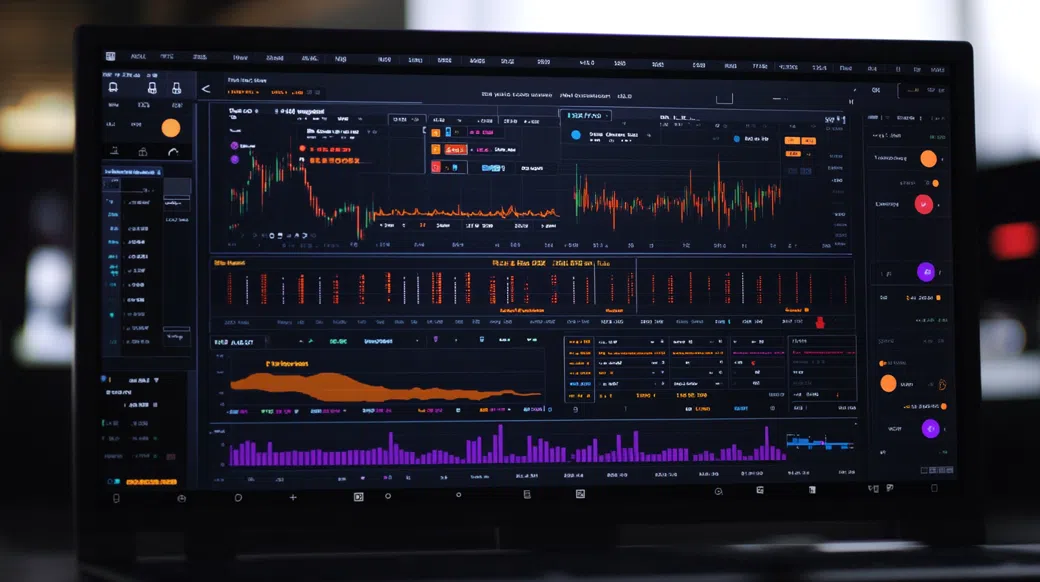
After a few cycles on a leveraged CFD account, most traders stop obsessing over “maximum leverage” and start obsessing over the boring stuff: execution quality, withdrawals that clear on time, and whether their broker answers to a real regulator. That’s the lens I’m using for this guide to Neve Fondivio trading platform alternatives 2026—especially for US/EU readers who need clean compliance, clear disclosures, and predictable protections.
Based on what’s commonly observed with offshore CFD providers in this segment, Neve Fondivio appears positioned as a Forex-and-CFD-first broker, typically offering a proprietary WebTrader plus a mobile app. Product coverage often centers on a few dozen FX pairs, major indices, a short list of commodities, and a menu of crypto CFDs. Pricing in this tier is usually presented as “simple,” but the real bill shows up in the spread, swap/overnight financing, and occasional friction around funding and withdrawals.
So why do people search for Neve Fondivio alternatives? In practice, it’s rarely about “more instruments” in the abstract. It’s about moving to a venue where your risk controls are stronger: credible oversight (FCA/ASIC/CySEC/NFA), segregated client funds, negative balance protection where required, and platforms that support the way you actually trade—manual, systematic, or hedged. Diversification may be the only free lunch, but broker risk is the bill you can avoid paying if you choose carefully.
Disclaimer: This article is for informational purposes only and does not constitute investment advice. CFDs and other leveraged products carry a high risk of loss and are not suitable for every investor.
From a trader’s point of view, Neve Fondivio looks like an offshore-orientated CFD brokerage model rather than a full multi-asset investment house. The typical setup is built around leveraged Forex and CFDs, with high headline leverage (commonly up to 1:500) and a minimum deposit in the lower retail range (often around $250). US residents are generally restricted in this category, and other sanctioned jurisdictions tend to be excluded as well. If you’re comparing brokers similar to Neve Fondivio, the key question isn’t the homepage promise—it’s how the firm handles client money, order execution, and disputes when something goes wrong.
The platform stack is usually a proprietary WebTrader with a matching iOS/Android app—functional enough for basic chart-based trading, but not always built for heavy automation. Expect standard order entry (market, limit, stop), watchlists, and a handful of indicators and drawing tools for technical analysis. Charting tends to be “good for direction, light for precision”: adequate timeframes and overlays, but fewer advanced studies than MT4/MT5/cTrader ecosystems. Mobile parity is often decent for monitoring and execution, while deeper account management (statements, margin monitoring, funding, and ticket support) sits in the client dashboard. For traders used to institutional-style depth, the gap shows up in execution transparency and reporting detail.
Cost-wise, providers in this bracket commonly run a spread-led model on a Standard-style account, with EUR/USD typically around ~2.0 pips under normal liquidity. Some firms also advertise a “Raw/ECN” tier where spreads can compress toward 0.0–0.4 pips, but the economics shift to commission—often around $6 round-turn per standard lot. Beyond the headline spread, the practical charges are swap/overnight financing, potential inactivity fees after extended dormancy, and withdrawal fees depending on method. If your strategy holds positions across rollover, those overnight costs can outweigh the spread faster than most newcomers expect.
Costs matter, but safety triggers the move more often than people admit. The moment a trader starts asking, “If there’s a dispute, who do I complain to?” they’re already halfway toward Neve Fondivio alternatives. Offshore-style leverage (1:500 is common) can magnify both opportunity and error, and the real risk is not just market risk—it’s operational risk: pricing quality during volatility, slippage around news, and how quickly you can de-risk by withdrawing funds.
I treat switching brokers like changing clearing banks: it’s a strategy decision first and a convenience decision second. The checklist approach works, but only if you rank items by what can destroy you—counterparty risk, execution quality, and hidden fees—before you compare “nice-to-haves” like interface themes. Use regulated options vs Neve Fondivio as your baseline, then narrow the field by markets and platform fit.
Start with who supervises the broker. For US clients, NFA/CFTC registration matters; for many EU/UK traders, FCA or CySEC is the practical gatekeeper; ASIC is a strong signal for global standards. Real regulators typically require segregated client funds, audited reporting, and rules around marketing leverage. Compensation schemes also differ: the UK’s FSCS can cover eligible clients up to £85,000, while CySEC-linked ICF protection can reach €20,000 under conditions. None of this eliminates trading losses, but it can reduce the damage from broker failure.
Write down what you actually trade and what you plan to trade. FX and index CFDs may be enough for a tactical trader, but long-term portfolios often need real stocks and ETFs (with ownership rights) or listed futures for macro hedges. Multi-asset firms like Interactive Brokers or Saxo can cover equities, options, and futures alongside FX, which is a different universe from CFD-only menus. If you’re building diversification across regions—US, Europe, and frontier exposure—instrument breadth becomes a risk tool, not a marketing extra.
Compare costs in “round-turn” terms: spread + commission + typical slippage, then add swap if you hold overnight. A tight raw spread with commission can be cheaper than a wide all-in spread, but only if your execution is stable. Watch for non-trading fees as well: inactivity charges, conversion costs for base currency, and withdrawal fees. In my old commodities book, we obsessed over one tick; in retail FX, one pip is your tick—treat it the same way.
Platform choice is really about tooling and execution model. MT4/MT5 and cTrader open up automation, custom analytics, and a deep ecosystem; proprietary platforms can be clean but narrower. Ask whether the broker runs as a market maker or routes via STP/ECN/DMA, and how they handle negative balance protection where applicable. During fast markets, slippage and requotes are the hidden tax. If you’re comparing alternatives to the Neve Fondivio trading platform, insist on transparent order policies and clear reporting of fills.
When things break, response time becomes a trading variable. Check support hours across your time zone, language coverage, and whether you can reach a human by phone or only via tickets. Good brokers publish margin-call rules, swap schedules, and platform-status updates without you chasing them. Finally, test mobile parity: if your risk management depends on adjusting stops while you’re away from screens, the app is not optional—it’s your cockpit.
For FX and index CFDs, the offshore model usually competes on leverage and simplicity, not on institutional-grade pricing. With EUR/USD often around ~2.0 pips on a standard setup and leverage sometimes reaching 1:500, the math can be unforgiving for active traders: a few pips of friction per round trip will compound faster than most people expect. Regulated FX/CFD specialists such as Pepperstone and OANDA tend to provide clearer execution disclosures and more mature platform stacks (MT4/MT5/cTrader or robust proprietary tools), which matters if you scalp, hedge, or trade around data releases where slippage spikes. Platforms like Neve Fondivio can still be usable for occasional trades, but frequent traders generally benefit from tighter spreads, better reporting, and stronger oversight.
Here’s where many CFD-first brokers show their limits. If stocks and ETFs are offered at all, it’s often via CFDs—price exposure without ownership, voting rights, or standard investor protections tied to holding the underlying. For a US/EU audience building long-term allocations, that distinction is not academic. Interactive Brokers and Saxo Bank are strong references for real multi-asset access: cash equities, ETFs, options, and listed futures alongside FX. That breadth lets you diversify properly—energy equities plus FX hedges, or ETFs plus options overlays—rather than trying to force everything through CFDs. For traders comparing competitors to Neve Fondivio, this is often the deciding fork: trading products versus investing instruments.
Crypto exposure at CFD brokers is usually delivered as crypto CFDs, not on-chain ownership—no wallet withdrawals, no staking, and no transferability. That can be fine for short-term tactical exposure, but it’s a different risk profile from holding assets in a dedicated crypto venue. Regulated CFD providers such as IG (jurisdiction dependent) and Plus500 commonly offer crypto CFDs with clearer risk warnings and tighter governance around client classification and leverage. The other practical difference is weekend risk: crypto trades 24/7, but broker pricing and risk controls vary widely. If you’re scanning top substitutes for Neve Fondivio for crypto, focus on margin rules, weekend spreads, and whether stop orders behave as expected during gaps.
Regulation: FCA, MAS, DFSA (entity depends on region)
Markets: Stocks, ETFs, bonds, options, futures, FX, CFDs
Fees: FX spreads typically from ~0.6–1.2 pips (account/venue dependent); commissions apply on exchange-traded products
Platform: SaxoTraderGO, SaxoTraderPRO
Best For: Multi-asset diversification with professional-grade tools
Regulation: SEC/FINRA, FCA, IIROC
Markets: Stocks, ETFs, options, futures, bonds, FX (and other exchange-traded instruments)
Fees: FX spreads often tight (venue/liquidity dependent); commissions vary by product and exchange
Platform: Trader Workstation (TWS), IBKR Desktop/Mobile, Client Portal
Best For: Serious investors and traders needing global market access
Regulation: FCA, ASIC, CySEC, DFSA
Markets: FX, index CFDs, commodity CFDs, crypto CFDs (where available)
Fees: EUR/USD from ~0.0–0.3 pips on Razor/Raw-style pricing + commission (often ~$6–$7 round-turn); Standard often from ~1.0+ pip
Platform: MT4, MT5, cTrader
Best For: Systematic traders and scalpers focused on execution
Regulation: CFTC/NFA, FCA, ASIC, IIROC
Markets: FX (core), CFDs in certain regions (indices/commodities; availability varies)
Fees: Typically spread-based pricing; EUR/USD often around ~0.6–1.4 pips depending on account and market conditions
Platform: OANDA Trade (web/mobile), MT4
Best For: US-eligible FX traders prioritizing strong oversight
Regulation: FCA, ASIC, BaFin
Markets: FX, index CFDs, commodity CFDs, shares CFDs (region dependent)
Fees: FX spreads often from ~0.7 pips on major pairs (account/region dependent); additional costs include financing on CFD holds
Platform: Next Generation platform, MT4 (availability varies)
Best For: Active CFD traders who want rich charting and research
Regulation: FCA, CySEC, ASIC, MAS
Markets: CFDs on FX, indices, commodities, shares, crypto (availability varies)
Fees: Primarily spread-based; typical spreads vary by instrument and volatility, with overnight funding on held CFD positions
Platform: Plus500 proprietary WebTrader and mobile apps
Best For: Beginners wanting a simple, regulated CFD interface
| Platform | Regulation | Main Markets | Typical Costs | Best For |
|---|---|---|---|---|
| Saxo Bank | FCA, MAS, DFSA | Stocks/ETFs, options, futures, FX, CFDs | FX ~0.6–1.2 pips; commissions on exchanges | Multi-asset diversification with professional-grade tools |
| Interactive Brokers (IBKR) | SEC/FINRA, FCA, IIROC | Global stocks/ETFs, options, futures, bonds, FX | Product-based commissions; tight FX pricing (venue dependent) | Serious investors and traders needing global market access |
| Pepperstone | FCA, ASIC, CySEC, DFSA | FX + major CFD suites | Raw ~0.0–0.3 pips + ~$6–$7 RT; Standard ~1.0+ pip | Systematic traders and scalpers focused on execution |
| OANDA | CFTC/NFA, FCA, ASIC, IIROC | FX (core), CFDs in some regions | Spread-based; EUR/USD ~0.6–1.4 pips (conditions vary) | US-eligible FX traders prioritizing strong oversight |
| CMC Markets | FCA, ASIC, BaFin | FX and CFDs (indices/commodities/shares CFDs) | FX often ~0.7+ pips; financing on overnight CFDs | Active CFD traders who want rich charting and research |
| Plus500 | FCA, CySEC, ASIC, MAS | CFDs across FX/indices/commodities/shares/crypto | Spread-led pricing; overnight funding on held positions | Beginners wanting a simple, regulated CFD interface |
Switching brokers is not a single click; it’s a controlled unwind and redeploy. Treat it like a risk-manager would: confirm the new venue, reduce exposure, then move cash with clean documentation. And remember—the most painful losses I’ve seen weren’t always from bad trades, but from bad plumbing: delays, mismatched payment methods, and trading oversized while “testing” a new platform. If you’re exiting Neve Fondivio, keep the process orderly.
If you’re still considering the platform, review current onboarding steps, eligible countries, and the exact trading conditions shown inside the account portal. Then compare those terms against the regulated Neve Fondivio alternatives above—especially platform tools, execution disclosures, and total costs once swaps and commissions are included.
Visit Neve FondivioThe best choice depends on whether you’re trying to diversify into real markets or simply lower your FX/CFD trading friction. For true multi-asset access (stocks/ETFs/options/futures), Interactive Brokers or Saxo Bank are strong benchmarks; for tight FX/CFD execution, Pepperstone is a common pick, while OANDA is a natural reference point for US-eligible FX traders. If your priority is a straightforward regulated CFD app, Plus500 is often easier to operate than pro-grade workstations. This is the practical core of comparing best Neve Fondivio alternatives 2026.
Neve Fondivio appears to operate in a way that’s consistent with offshore/unregulated CFD providers (often associated with Seychelles-style frameworks), which typically means fewer investor protections than FCA/ASIC/CySEC/NFA regimes. That doesn’t automatically imply wrongdoing, but it does change your risk: dispute handling, client-funds safeguards, and transparency standards may not match top-tier regulated brokers. If safety is your priority, focus your shortlist on regulated options and verify the specific legal entity on the regulator’s register.
With Neve Fondivio, the most typical offering in this segment is Forex and CFDs, with crypto exposure usually delivered as crypto CFDs rather than on-chain ownership. Stocks and ETFs—if available—are commonly structured as CFDs, which means price exposure without shareholder rights. Exchange-traded futures are more commonly found at multi-asset brokers like Interactive Brokers or Saxo Bank, rather than at CFD-first venues. If you’re comparing platforms like Neve Fondivio, clarify whether you’re getting the underlying asset or a derivative contract.
Before switching, verify regulation on the official register, confirm segregated client funds policies, and read the margin-call/negative-balance rules for your region. Next, map your strategy to the new platform stack—MT4/MT5/cTrader versus proprietary—and compare round-turn costs (spread + commission + swap) on the instruments you actually trade. Finally, plan the cash move: close positions, export statements, and withdraw using the same payment method you used to fund Neve Fondivio to reduce AML delays.
About the Author: Nadia El-Amin is a Dubai-based former commodities trader and financial journalist focused on brokerage market structure across the Middle East and Africa. She writes with a risk-first mindset, using diversification and execution discipline as the baseline for evaluating brokers and trading platforms.