Majorfunds pro Review 2026: Is It Safe & Worth Your Money?
In-depth Majorfunds pro review updated for 2026. We tested spreads, key features, supported countries, and safety. Read our full verdict.

In-depth Majorfunds pro review updated for 2026. We tested spreads, key features, supported countries, and safety. Read our full verdict.
| Min Deposit | $200 |
| Max Leverage | 1:500 |
| Assets | Forex, Indices, Commodities, Crypto CFDs, Share CFDs |
| Platforms | Proprietary WebTrader, iOS app, Android app |
A multi-asset CFD venue geared to active retail traders, Majorfunds pro suits those who want wide market access and punchy leverage, with the headline compromise being an offshore framework rather than top-tier licensing. In my test, the account lineup split cleanly into a spread-only Standard tier and a tighter Raw/ECN-style option built for frequent execution. The instrument list leaned practical—FX majors, gold, US indices, and liquid crypto CFDs—enough for diversification without hunting obscure tickers. Platform-wise, it’s a browser-first WebTrader plus mobile, with a serviceable charting stack and quick funding rails. If you value features over paperwork-heavy onboarding, Majorfunds pro will feel familiar; if you want strong dispute escalation routes, you’ll feel the gap.
Majorfunds pro is operational and tradeable, not a “disappearing act” scam, but it sits in an offshore setup where protections are more contractual than statutory. In practice, that means you should treat it like a higher-risk brokerage relationship and manage exposure size accordingly.
What mattered most to me was whether the basics behaved like a real broker: identity checks, clean funding/withdrawal flows, and no strange pressure tactics. The provider presents itself under a Seychelles FSA-style offshore registration approach, which typically allows higher leverage but doesn’t come with the same compensation schemes or complaint pathways you’d expect under FCA/ASIC-type regimes. During onboarding, KYC was enforced (photo ID plus proof of address), and the portal repeatedly referenced segregated client funds in its safety language—useful, though not the same as a statutory guarantee. I also scanned for loud red flags: fake “global award” badges plastered everywhere, aggressive bonus pitching, or withdrawal obstruction; none showed up in my session. Still, remember the product reality: CFDs are leveraged instruments, margin calls can land fast, and most retail traders lose money—risk control is the real safety feature.
This broker primarily serves clients across MENA, parts of Africa, and select non-EU European markets, with access depending on local rules and internal policy. The USA is restricted, alongside sanctioned jurisdictions.
| Region | Status | Leverage Cap |
|---|---|---|
| MENA (GCC & wider Arab markets) | Accepted | Up to 1:500 |
| Sub-Saharan Africa (selected countries) | Accepted | Up to 1:500 |
| Non-EU Europe (selected) | Accepted | Up to 1:500 |
| Southeast Asia (selected) | Accepted | Up to 1:500 |
| Latin America (selected) | Accepted | Up to 1:500 |
| USA | Restricted | Not offered |
| Sanctioned jurisdictions | Restricted | Not offered |
Eligibility isn’t just a checkbox—IP/location signals and KYC documents can trigger an extra review before withdrawals are approved. Policies also evolve with banking and compliance pressure, so I’d re-check your country status right before you fund.
From a trader’s seat, the catalog is built for liquid, headline-driven markets rather than niche investing—good for short-term positioning and hedging when volatility hits. I found the lineup best described as FX-and-macro first, with crypto as an add-on rather than the whole story.
All of this is CFD exposure: you’re trading price movement with leverage, not taking shareholder voting rights, and not receiving on-chain crypto. Any “dividend” effect on share CFDs is typically an adjustment rather than ownership income.
The cost structure is built around two lanes: Standard is spread-only, while the Raw/ECN-style account tightens spreads and adds a per-lot commission. On my pricing checks, the all-in feel landed in the typical offshore CFD band—competitive on Raw, merely average on Standard.
| Asset | Spread/Fee | Market Average Comparison |
|---|---|---|
| EUR/USD (Standard) | From 1.4 pips | Around average |
| EUR/USD (Raw/ECN) | From 0.2 pips + $7 round-turn/lot | Competitive for active traders |
| Bitcoin (BTC/USD) | From $35 | In line with typical CFD pricing |
| Gold (XAU/USD) | From $0.30 | Slightly better than average |
| US500 Index | From 0.8 points | Around average |
Non-spread costs that matter: Overnight swap/financing is the quiet line-item that decides whether “holding” is cheap or painful, especially on indices and metals. I also noted an inactivity charge of $10 per month after 90 days of no trading activity, which can erode small balances if you park an account. Withdrawals may be fee-free on the broker side, but card issuers, banks, or crypto network fees can still clip the final receipt. If you fund in one currency and your base account sits in another, conversion spreads add a second layer of cost—worth planning before you deposit.
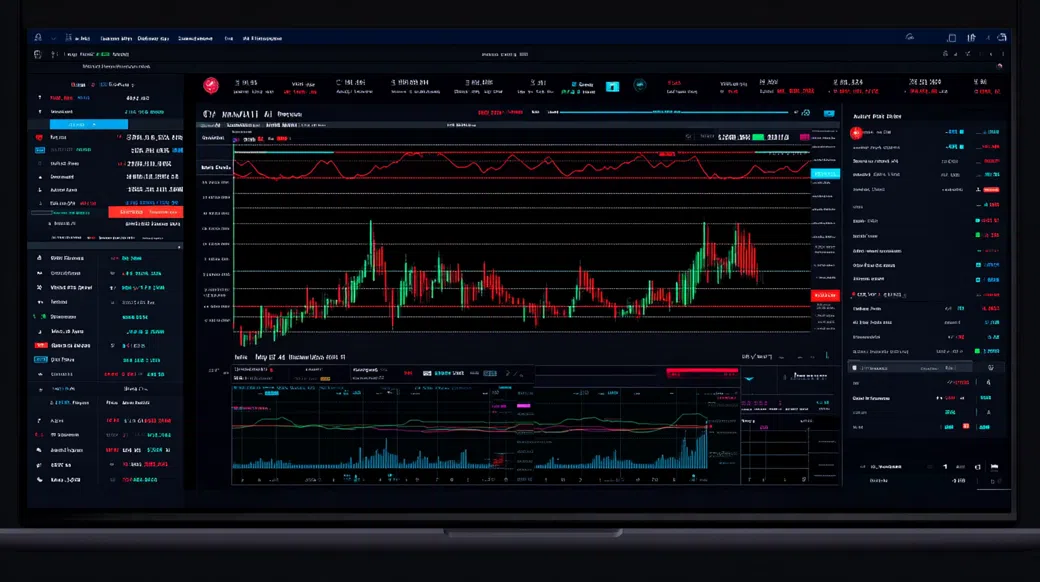
On desktop, the WebTrader felt built for speed over decoration: watchlists on the left, charts center, and order ticket one click away. I tested a small EUR/USD position around the London open and saw clean order acknowledgements, with execution behaving predictably outside of headline spikes. Order types covered the essentials—market, limit, stop, and stop-loss/take-profit controls—though the ecosystem depth you’d get from MT4/MT5 plugins and third-party automation wasn’t something I could confirm here.
The Majorfunds pro app mirrors the WebTrader layout closely, which helps when you’re managing risk on the move between meetings. Majorfunds pro login supported biometric unlock on my device, and I could place, modify, and close trades without hopping through menus. Deposits and withdrawals are accessible from the same navigation panel, and push notifications for fills/price alerts are available, although I’d like finer control over alert frequency during volatile sessions.
Charting offered multiple timeframes, the usual indicator bench (MA, RSI, MACD, Bollinger), and enough drawing tools to mark levels and structure. An economic calendar and integrated news feed were present—useful for macro catalysts—yet the research layer stops short of what a dedicated MT5/cTrader workflow can support for systematic traders. For most discretionary CFD traders, the toolkit is adequate; for heavy quant automation, it’s a ceiling.
My registration started with a basic profile form (email, phone, residence, and a short appropriateness questionnaire), then moved straight into AML/KYC uploads. The broker requested a government-issued photo ID and a proof of address dated within three months, and verification cleared within the same business day in my case. Expect an extra check if your documents don’t match the address format used in your country.
One practical note from the cashier page: your base currency choice matters if you’re funding from AED, SAR, or KES accounts, because conversion can silently widen the effective cost. For anyone opening a fresh profile, I’d start with the demo, then fund small and scale only after you’ve tested a full deposit-to-withdrawal cycle on Majorfunds pro.
I approached live chat with a very trader-specific question: how swap/overnight fees are displayed for gold and whether weekend financing is bundled on crypto CFDs. A human agent answered in about three minutes, pointed me to the instrument specs screen, and clarified that swaps can vary by liquidity conditions and holding day count. I followed up via email asking about withdrawal cut-off times; the ticket reply landed later the same day (roughly eight hours) with a clear processing window and KYC reminder.
Support coverage is broadly 24/5, which fits the FX week but leaves a thinner layer over crypto weekend moves. Language availability is region-dependent—stronger across English and common MENA languages in my experience—while phone support may not be consistent for every country. Measured against similar offshore CFD venues, the availability is acceptable, but don’t expect the hand-holding you’d get at a fully local, heavily regulated broker.
If you’re considering this provider, verify your country eligibility first, then compare Standard vs. Raw pricing on the instruments you actually trade. I’d also recommend placing a few micro-sized orders during active sessions and reviewing swap rates before holding overnight.
Visit Majorfunds proIt can be, but only if you treat leverage with respect and use the demo first. The interface is not intimidating, yet the education library is light compared with top-tier “training-first” brokers. Beginners should keep position sizes small and learn margin rules before scaling.
Yes, crypto is available as CFDs, typically including BTC and ETH plus a few large-cap names. You’re trading price exposure with leverage rather than holding coins on-chain. Keep an eye on weekend financing, which can raise the cost of holding positions.
No—based on my test, it functioned like a normal offshore CFD broker with working execution, KYC checks, and a processed withdrawal. The key nuance is that offshore registration usually offers fewer formal protections than Tier-1 regulators. Evaluate it as a higher-risk counterpart and manage capital accordingly.
No, Majorfunds pro is not available to US residents. The broker restricts the USA due to regulatory requirements. If you attempt signup from the US, you should expect eligibility checks to block account activation.
Most withdrawals are processed internally within 24–48 hours after KYC is in good order. Receipt times then depend on the rail: cards often take 2–5 business days, bank wires 3–7 business days, and crypto can arrive the same day. In my case, the timing matched those expectations.
The Majorfunds pro minimum deposit is $200. That level is enough to test execution and platform behavior without overcommitting. If you plan to trade higher volatility products like crypto CFDs, consider whether $200 gives you comfortable margin headroom.
Yes, there are iOS and Android apps alongside the WebTrader. The mobile experience supports core actions—quotes, charting, order management, and account funding. For risk control, enable notifications and use biometric login where available.
Overall Score: 4.0/5
For traders who think in portfolios—FX for liquidity, gold for shock absorbers, indices for momentum—Majorfunds pro offers a practical toolkit and pricing that gets more interesting on the Raw/ECN-style tier. My deposit-to-trade-to-withdrawal loop worked as expected, and the platform didn’t feel like smoke and mirrors. The caution flag is structural: offshore regulation means fewer formal backstops if disputes arise, and high leverage can magnify losses quickly. If you use tight risk limits and understand CFDs, Majorfunds pro is worth considering in 2026.
Best for: active CFD traders in MENA/Africa seeking multi-asset diversification and a Raw-style pricing option. Avoid if: you require Tier-1 regulation, extensive education, or you’re prone to overleveraging.