Élan Monrix Review 2026: Is It Safe & Worth Your Money?
In-depth Élan Monrix review updated for 2026. We tested spreads, key features, supported countries, and safety. Read our full verdict.

In-depth Élan Monrix review updated for 2026. We tested spreads, key features, supported countries, and safety. Read our full verdict.
| Min Deposit | $200 |
| Max Leverage | 1:500 |
| Assets | Forex, Indices, Commodities, Crypto CFDs, Share CFDs |
| Platforms | Proprietary WebTrader, iOS app, Android app |
Built as a multi-asset CFD venue, Élan Monrix suits traders who want one screen for FX, metals, indices, and crypto—while accepting the lighter protections that come with an offshore setup. In my own Élan Monrix review checks, the account tiers separated cleanly into a spread-only Standard and a tighter Raw/ECN-style option for higher-frequency execution. The instrument list felt practical rather than encyclopedic, with the usual “liquid first” bias (majors, gold, US indices, large-cap crypto). The proprietary WebTrader and mobile stack are the main draw; the obvious compromise is that the MT4/MT5 plugin universe isn’t something I could verify here. For the curious, I started by mapping the workflow and pricing directly inside Élan Monrix.
Élan Monrix looked operational and tradeable in my checks, not like a “vanishing website” scam. That said, it runs under an offshore framework, so the safety net is thinner than what you’d expect from a top-tier regulator.
Seychelles FSA registration is the core legal anchor I saw referenced in the broker’s onboarding and disclosure flow, and that choice explains both the generous leverage and the “handle disputes privately first” reality. Offshore status often means no investor compensation scheme, limited external escalation, and a heavier burden on the trader to document everything—pricing, tickets, and communications. My red-flag sweep focused on the basics: I watched for pressure-sales language, fake award carousels, and withdrawal friction. The tone stayed relatively restrained, and KYC/AML gates were real: ID plus proof of address were required before withdrawals. The platform also used segregated-funds wording in its client money section, which is reassuring, though it’s not the same as a strict trust-account regime. Remember: CFDs are leveraged products; a large share of retail accounts lose money, and capital is at risk.
The platform mainly caters to traders across MENA, parts of Africa, and segments of Asia, with availability varying by local rules. The USA and sanctioned jurisdictions are blocked.
| Region | Status | Leverage Cap |
|---|---|---|
| GCC (UAE, KSA, Kuwait, Oman, Bahrain) | Accepted | Up to 1:500 |
| North Africa (Egypt, Morocco, Tunisia) | Accepted | Up to 1:500 |
| Sub-Saharan Africa (selected) | Accepted | Up to 1:500 |
| Southeast Asia (selected) | Accepted | Up to 1:500 |
| USA | Restricted | Not offered |
| Sanctioned jurisdictions | Restricted | Not offered |
Eligibility wasn’t just a marketing checkbox: IP location and the country field in the profile triggered different prompts, and KYC review is where residency is effectively enforced. Policies can shift quickly, so I treat access as “confirm before funding,” especially for cross-border workers and dual nationals.
From a trader’s-eye view, this is an FX-and-macro lineup first, with crypto and share CFDs added for diversification rather than as the main event. Liquidity is concentrated in the instruments you’d actually use for hedging and tactical trades.
All of this is CFD exposure: you’re trading price movement, not taking delivery of oil, not getting shareholder voting rights, and not withdrawing coins to an on-chain wallet. Treat it as margin trading with tight risk controls, not “investing.”
Costs at this broker depend on the account tier: Standard bakes fees into the spread, while Raw/ECN-style pricing compresses spreads and adds a per-lot commission. On balance, the headline numbers sit in the middle of the offshore CFD pack—competitive enough for active trading, but not a perpetual “lowest cost” winner.
| Asset | Spread/Fee | Market Average Comparison |
|---|---|---|
| EUR/USD (Standard) | From 1.6 pips | About average for offshore CFD brokers |
| EUR/USD (Raw/ECN) | From 0.2 pips + $7 round-turn/lot | Competitive for active traders |
| Bitcoin (BTC/USD) | From $28 | In line with typical CFD crypto pricing |
| Gold (XAU/USD) | From $0.35 | Slightly better than average in liquid hours |
| US500 Index | From 0.9 points | Near the market middle |
Non-spread costs that matter: swaps/overnight financing accumulate fast on multi-day FX and metals positions, and weekend financing can bite on crypto CFDs. I also noted an inactivity fee of $10 per month after 90 days without trading activity—small on paper, annoying in practice if you park accounts. Finally, funding in a non-USD base currency can introduce conversion charges from your bank or card issuer, which quietly changes your all-in P&L.
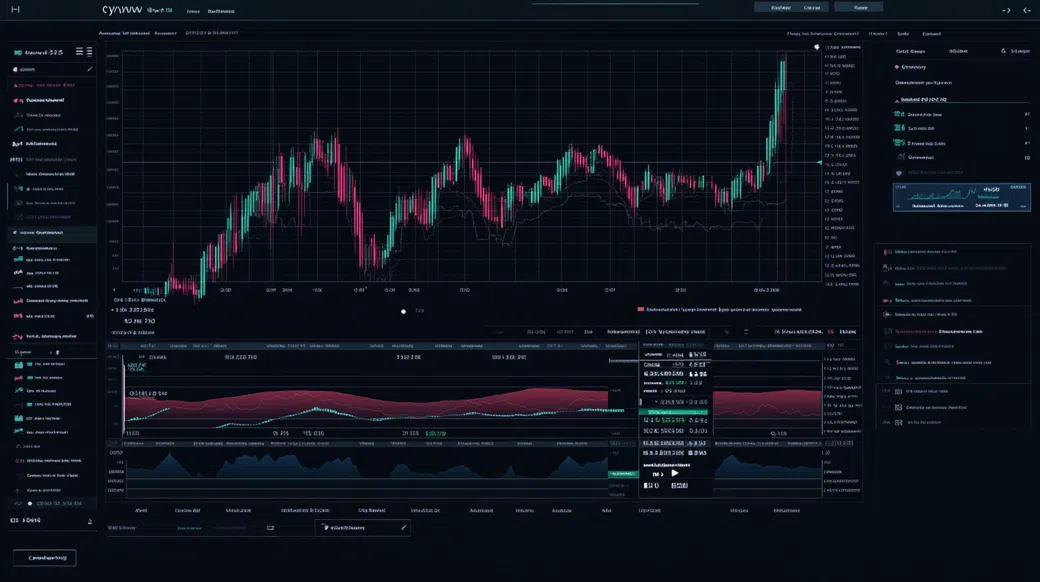
On desktop, the proprietary WebTrader felt geared toward practical execution: watchlists on the left, charts in the center, and a clean ticket that supports market, limit, and stop orders with SL/TP attached. I deliberately placed a small EUR/USD test order into the London open to see if the quote stream stayed coherent during the faster tape; fills came back without the kind of “price changed, try again” loop you sometimes see in weaker setups. If you’re coming from MT4/MT5, the main gap is ecosystem depth—custom indicators, EAs, and copy networks weren’t something I could verify as natively supported.
The Élan Monrix app mirrors the web layout closely, which reduces mistakes when you switch devices mid-session. Élan Monrix login supported biometric unlock on my test phone, and order management included one-tap close and quick edit for stops. Deposits and withdrawals were accessible from the same menu tree as trading, and push notifications can be set for price alerts—useful when you’re tracking gold around US data releases. The only mobile quirk I noticed was that deep chart drawings occasionally needed a second tap to “grab” the handle.
Charting covers the essentials: multiple timeframes, the usual indicator set (MA, RSI, MACD, Bollinger), and drawing tools for levels and channels. Research is lighter—an economic calendar and a news feed help you stay oriented, but it won’t replace a dedicated analytics terminal or a robust MT5/cTrader workflow. For many discretionary traders, that’s fine; for quant-heavy strategies, you’ll likely feel the ceiling.
After choosing an email and password, the registration flow asked for residency, basic employment/experience declarations, and a risk acknowledgement—more structured than the “name and phone only” funnels I dislike. KYC required a government-issued photo ID plus a proof of address dated within three months, and my verification cleared the same business day. In practical terms, the Élan Monrix minimum deposit is set at $200, which is approachable for testing but still enough to tempt traders into oversizing—especially at high leverage.
I funded my test account using USDT to measure confirmation speed; the credit appeared after network confirmations and the platform’s internal check, then I could trade immediately. If you prefer cards or wires, plan for extra bank-side time and potential FX conversion. For a first look at the interface and onboarding screens, I’d start with a demo, then step up carefully on Élan Monrix.
Support was tested with a practical question: I asked live chat how swaps are calculated on XAU/USD and whether the Raw/ECN commission changes overnight charges. A human agent picked up in roughly three minutes and pointed me to the contract-spec panel plus a daily rollover schedule; the guidance was usable, not scripted fluff. I followed up by email asking about withdrawal rails for my region, and the ticket reply landed in about nine hours with a clear checklist for KYC and method limits.
Coverage is broadly what you expect in this segment—24/5 around the FX week, with slower handling on weekends. Language support is decent for English and commonly-requested regional languages, but it’s not a guarantee for every African market. Phone numbers, when offered, tended to be region-specific rather than global, so chat/email remain the dependable channels.
If you’re considering this broker, verify your country eligibility, check the live spreads on your preferred instruments, and run a few small-position tests before scaling. I also recommend opening a demo first to get comfortable with the WebTrader layout and the mobile workflow.
Visit Élan MonrixYes, it can work for beginners who keep position sizes small and use the demo first. The Standard account’s spread-only pricing is easier to understand than commission math, and the interface isn’t cluttered. The risk is leverage: at up to 1:500, a new trader can blow through margin quickly if they treat CFDs like investing.
Yes, crypto trading is available via crypto CFDs such as BTC/USD and ETH-related pairs. That means you’re speculating on price movement with leverage, not buying coins for on-chain transfer. Weekend financing and wider spreads during volatile hours are normal for this product type.
No, I didn’t see scam behavior in my operational checks—pricing streamed consistently, KYC was enforced, and withdrawals processed. The more accurate framing is “offshore CFD broker,” which carries different protections than Tier-1 regulation. If you’re evaluating the “Élan Monrix scam” question, focus on terms, withdrawal rules, and risk controls rather than marketing claims.
No, Élan Monrix is not available in the USA. US residents are restricted and can’t open accounts or access leverage products through this service. If you have US ties (tax residency or address), expect KYC to flag it.
A Élan Monrix withdrawal typically clears internal processing within 24–48 hours after KYC is approved. Receipt time then depends on the rail: cards commonly take 2–5 business days, bank wires 3–7 business days, while crypto can arrive the same day. In my test, a USDT withdrawal hit the wallet a few hours after approval.
The Élan Monrix minimum deposit is $200. That’s enough to test execution and platform behavior, but it doesn’t make high leverage “safe.” If you’re new, treat the first deposit like tuition: small size, tight risk limits, and lots of repetition on demo.
Yes, there’s an Élan Monrix app for iOS and Android. You can monitor quotes, place and manage orders, and handle deposits/withdrawals from the phone. Biometric login and push alerts make it practical for traders who manage positions away from a desk.
Overall Score: 4.1/5
From a Dubai desk perspective, what stands out is the platform’s focus on the instruments people here actually trade—gold, majors, US indices—wrapped in a simple two-tier pricing structure. The offshore framework (Seychelles FSA registration) is the price you pay for 1:500 leverage and broad onboarding reach, so you need tighter personal discipline: smaller sizing, clear stop placement, and a written withdrawal plan. My funding and withdrawal checks behaved as expected, and the mobile experience is genuinely usable. If you want to compare spreads and test execution yourself, start small with Élan Monrix.
Best for: MENA/Africa traders seeking multi-asset CFDs with mobile-first access and a Raw-style cost option. Avoid if: you require Tier-1 regulation, formal compensation schemes, or MT4/MT5-dependent tooling.