Krkon Výnov Trading Platform Alternatives 2026
Compare Krkon Výnov alternatives for 2026: regulated brokers, platforms, costs, markets, and migration steps to help US/EU traders choose safely.

Compare Krkon Výnov alternatives for 2026: regulated brokers, platforms, costs, markets, and migration steps to help US/EU traders choose safely.
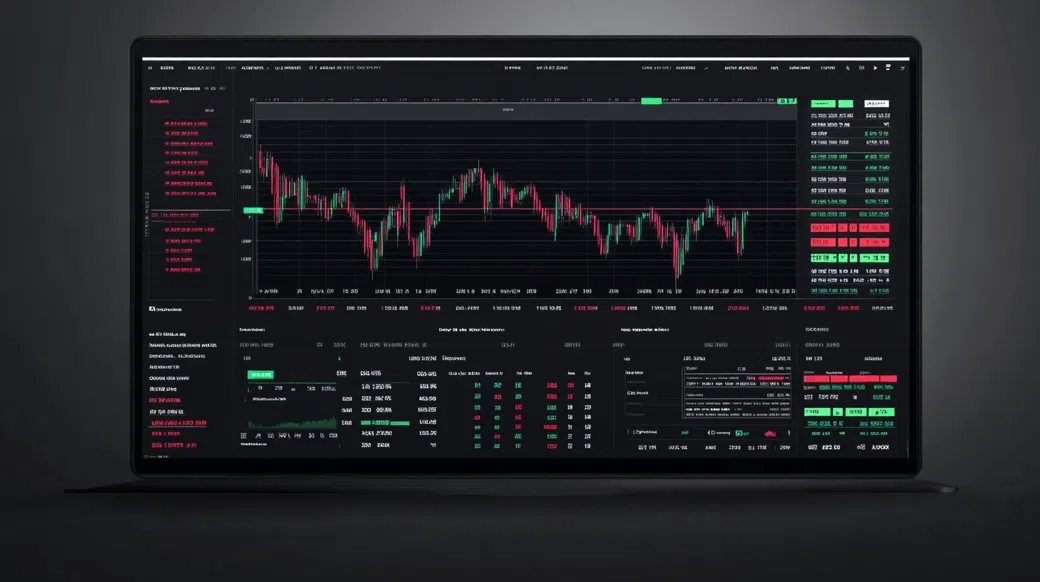
After you’ve traded through a few cycles—oil spikes, currency pegs wobbling, liquidity vanishing around a headline—you develop a healthy allergy to “mystery-meat” brokerage setups. That’s the lens I’m using for this guide on Krkon Výnov trading platform alternatives 2026. Krkon Výnov appears positioned in the offshore CFD segment: a proprietary WebTrader, mobile access, and a menu that typically leans on forex and CFDs (often including crypto CFDs), with headline leverage that can look generous but also amplifies small mistakes into big losses.
For many traders, the real question isn’t whether you can place a trade—it’s whether the surrounding plumbing is strong: execution quality during fast markets, clear funding/withdrawal rails, and a regulator that can actually enforce rules. The offshore model can work for some risk-tolerant speculators, but it’s not the same as dealing with firms supervised by the FCA, ASIC, CySEC, or the NFA, where standards around disclosures, segregation of client funds, and conduct are more formalized.
This article maps practical Krkon Výnov alternatives for different styles—from FX cost-minimizers to investors who want real stocks and ETFs instead of equity CFDs. I’ll also show you what to verify before moving money, because switching brokers is a risk-management exercise first and a “features” decision second.
Disclaimer: This article is for informational purposes only and does not constitute investment advice. CFDs and other leveraged products carry a high risk of loss, and you can lose more quickly than you expect.
From what’s typically observable in this offshore brokerage category, Krkon Výnov presents as a CFD-first provider built around leveraged speculation rather than long-term investing. The product mix usually centers on forex pairs (often a few dozen), major indices, a short list of commodities, and a selection of crypto CFDs—useful for directional views, but not the same as holding underlying assets. Operationally, that segment commonly uses a dealing-desk / market-maker execution model, where the broker may be the counterparty on your trade. That structure isn’t automatically “bad,” but it makes transparency and conflict-of-interest controls far more important than the marketing copy suggests—especially for traders who scalp, trade news, or run tight stops.
The platform stack is usually a proprietary WebTrader with an iOS/Android companion app—practical for quick entries, but often lighter than MT4/MT5 or cTrader when you start demanding more. Expect functional charting (multiple timeframes, basic indicators, drawing tools) and standard order tickets for market and pending orders; the gaps tend to show up in depth-of-market views, advanced conditional orders, and strategy automation. Mobile parity is typically “good enough” for monitoring margin and managing positions, though heavy chart work and fast multi-order workflows are generally smoother on desktop. If you’ve used platforms like Krkon Výnov before, you’ll recognize the pattern: easy onboarding, fewer pro-grade controls.
Costs in this bracket often come as a spread-led model: EUR/USD commonly prints around 2.0 pips on a standard-style account. Some brokers in the same lane advertise “raw” pricing (think 0.0–0.4 pips) but then charge a commission, often roughly $6–$8 round-turn per standard lot—so you must calculate the all-in. Overnight financing (swap) is a meaningful line item if you hold CFDs beyond a day, and it’s where accounts quietly bleed when traders overtrade or average down. Minimum deposits tend to sit around $250, while maximum leverage is often marketed near 1:500; that leverage is a double-edged tool, not a gift.
In my experience, the “switch” moment usually arrives when a trader’s strategy matures faster than their broker’s infrastructure. A platform can feel fine while you’re placing occasional trades, then suddenly look fragile when you start measuring slippage, tracking swap, or trying to diversify beyond a narrow CFD list. That’s where Krkon Výnov alternatives come into the conversation: not for novelty, but for better governance, better market access, or simply fewer operational surprises. If you’re trading leveraged CFDs, your broker is part of your risk—right alongside your setup and your position size.
Think of broker selection like building a trading book: you don’t size everything the same, and you don’t accept the same risk in every sleeve. The best substitutes for Krkon Výnov are the ones that match your instruments, your holding period, and your tolerance for platform and counterparty risk—while staying inside a regulatory framework that can actually enforce client-money rules.
Start with who supervises the firm: FCA (UK), ASIC (Australia), CySEC (EU), and NFA/CFTC (US) each impose different requirements, but they’re a different universe from lightly supervised offshore jurisdictions. For UK entities, the FSCS can provide compensation up to £85,000 in eligible cases; in Cyprus, the ICF can cover up to €20,000. Look for segregated client funds, negative balance protection where applicable, and clear legal entity disclosures—those details matter more than an extra 100:1 leverage headline.
Map instruments to objectives. FX and index CFDs can be efficient for tactical trades, but investors building wealth often want real stocks and ETFs (with shareholder rights), or futures for commodities and rates. If your goal is diversification—the closest thing finance gives you to a free lunch—brokers with broad market access can reduce concentration risk versus a CFD-only shelf. Regulated options vs Krkon Výnov usually means better breadth: equities, ETFs, bonds, options, and futures under one roof.
Compare the round-turn cost: spread + commission + any ticket fees, then add the swap/overnight fee if you hold positions. A scalper might care about half a pip; a swing trader might care more about financing and execution stability at rollover. Also scan for non-trading charges: inactivity fees, currency conversion costs, and withdrawal fees. Cost is rarely “cheap vs expensive”—it’s “cheap for your style vs costly for your style.”
Platform choice shapes behavior. MT4/MT5 and cTrader support automation, custom indicators, and a deeper ecosystem; proprietary platforms can be clean but limiting. Then comes execution model: market maker vs STP/ECN vs DMA. DMA matters when you want direct access (particularly for equities), while STP/ECN style routing can be attractive for FX traders focused on spreads and fills. Watch for slippage during volatility; if you can’t measure it, you can’t manage it. And if you’re comparing competitors to Krkon Výnov, execution reporting is a key differentiator.
Operational friction costs money. Look for support that matches your trading hours (especially around London/NY overlap), multi-language coverage if you trade across regions, and a help center that actually explains margin calls, order types, and swap. Strong mobile parity matters if you manage risk on the move. Education isn’t about “signals”; it’s about understanding product risk, platform mechanics, and how leverage interacts with volatility.
For pure FX/CFD speculation, the biggest practical differences are usually all-in cost and execution behavior—especially during fast markets when spreads widen and stops get hit. In the offshore CFD bracket, EUR/USD around 2.0 pips isn’t unusual on a standard account, but it becomes a noticeable drag if you trade frequently. Pepperstone and IC Markets, for example, are often chosen by active FX traders because they offer MT4/MT5/cTrader stacks and pricing that can be meaningfully tighter on raw-style accounts (with transparent commissions). That doesn’t remove risk—CFDs are leveraged and margin can turn against you quickly—but it does make the cost math cleaner. Another difference is how brokers explain their execution model; tighter disclosure and better tooling for analyzing fills can matter more than a flashy leverage number.
Here’s where many traders hit a wall with CFD-first platforms: “stocks” can mean equity CFDs rather than owning the underlying shares. With CFDs, you don’t get shareholder rights, and overnight financing can penalize longer holds. If your plan includes diversified portfolios—US equities, EU ETFs, maybe some bonds—Interactive Brokers (IBKR) is hard to ignore for breadth (stocks, ETFs, options, futures, bonds, FX) and for professional-grade routing. Saxo Bank is another strong option for multi-asset access with a platform built for cross-market allocation. This is the difference between trading price and building exposure. For traders moving away from narrower platforms, real stocks/ETFs can be the bridge from “trading” to “investing,” while still keeping CFDs available for tactical hedges where appropriate.
Crypto access on offshore CFD platforms typically comes as crypto CFDs—you’re trading a derivative price, not taking custody of coins on-chain. That can be fine for short-term views, but it’s not the same as owning the asset, and it introduces counterparty risk plus financing/spread costs. For traders who want regulated exposure via CFDs, IG is widely used in the UK/EU/AU ecosystem with a mature risk framework and robust platform tooling, while Plus500 is often selected by beginners who prefer a simple interface for CFD exposure. If your goal is long-term crypto holding, you’d usually look outside CFD brokers altogether; if your goal is tactical trading, focus on spreads, volatility controls, and how the broker handles gaps—because crypto can move when FX is asleep.
Regulation: DFSA, FCA, MAS
Markets: Stocks, ETFs, bonds, options, futures, FX, CFDs
Fees: FX spreads typically from ~0.6–1.2 pips (account/volume dependent); investing fees vary by venue and product
Platform: SaxoTraderGO, SaxoTraderPRO
Best For: Multi-asset diversification across regions
Regulation: SEC/FINRA, FCA, IIROC
Markets: Stocks, ETFs, options, futures, bonds, FX, funds
Fees: Commission-based with tiered options; FX pricing is typically tight with explicit commissions depending on schedule
Platform: Trader Workstation (TWS), IBKR Desktop, Mobile, Client Portal API
Best For: Advanced traders needing global market access
Regulation: FCA, ASIC, CySEC, DFSA
Markets: FX, CFDs (indices, commodities, some shares depending on entity)
Fees: Raw accounts often pair ~0.0–0.3 pip spreads with commission (commonly ~US$6–$7 round-turn); standard spreads typically higher
Platform: MT4, MT5, cTrader
Best For: Cost-focused FX traders and scalpers
Regulation: CFTC/NFA, FCA, ASIC, IIROC
Markets: FX, CFDs (availability varies by region)
Fees: Spread-only pricing on many accounts (often from ~0.8–1.6 pips on major pairs); financing applies on held positions
Platform: OANDA Trade (web/mobile), MT4
Best For: US-eligible FX traders prioritizing oversight
Regulation: ASIC, CySEC, FSA Seychelles
Markets: FX, CFDs (indices, commodities, crypto CFDs depending on entity)
Fees: Raw spreads often ~0.0–0.3 pips plus commission (commonly ~US$6–$7 round-turn); standard spreads typically wider
Platform: MT4, MT5, cTrader
Best For: Algorithmic trading with MT4/MT5/cTrader
Regulation: FCA, ASIC, MAS
Markets: CFDs (indices, FX, commodities, shares), spread betting (UK)
Fees: Spreads vary by market conditions; majors can be competitive, with financing costs for overnight holds
Platform: IG Web Platform, Mobile; MT4 (in supported regions)
Best For: Broad CFD coverage with strong research tools
| Platform | Regulation | Main Markets | Typical Costs | Best For |
|---|---|---|---|---|
| Saxo Bank | DFSA, FCA, MAS | Stocks/ETFs, futures/options, FX, CFDs, bonds | FX from ~0.6–1.2 pips (varies); venue/product fees apply | Multi-asset diversification across regions |
| Interactive Brokers (IBKR) | SEC/FINRA, FCA, IIROC | Global stocks/ETFs, options, futures, bonds, FX | Commission schedules; FX typically tight with explicit commission | Advanced traders needing global market access |
| Pepperstone | FCA, ASIC, CySEC, DFSA | FX and CFDs (indices/commodities; shares vary) | Raw ~0.0–0.3 pips + ~US$6–$7 RT; Standard wider | Cost-focused FX traders and scalpers |
| OANDA | CFTC/NFA, FCA, ASIC, IIROC | FX (plus CFDs where available) | Often spread-only ~0.8–1.6 pips majors; swaps for holds | US-eligible FX traders prioritizing oversight |
| IC Markets | ASIC, CySEC, FSA Seychelles | FX and CFDs (indices/commodities/crypto CFDs vary) | Raw ~0.0–0.3 pips + ~US$6–$7 RT; Standard wider | Algorithmic trading with MT4/MT5/cTrader |
| IG | FCA, ASIC, MAS | CFDs across FX/indices/commodities/shares; UK spread betting | Variable spreads; financing for overnight positions | Broad CFD coverage with strong research tools |
Switching platforms is like rolling a futures position: timing and process matter more than emotion. Before you move funds, reduce operational risk—verify the new venue, lock down your access, and avoid being forced to trade while money is “in transit.” If you’re leaving an offshore CFD setup such as Krkon Výnov, treat the migration as a controlled sequence, not a same-day jump, because leverage plus delays can be a nasty combination.
If you’re still evaluating fit, review the current onboarding flow, product list, and regional eligibility side by side with regulated brokers. Then compare the platform stack and the full cost picture (spread, commission, and overnight fees) before committing meaningful capital.
Visit Krkon VýnovThe best alternative depends on whether you need multi-asset investing or pure FX/CFD execution. For global diversification and real stocks/ETFs, Interactive Brokers (IBKR) and Saxo Bank are strong picks; for active FX trading, Pepperstone or IC Markets are often preferred for MT4/MT5/cTrader support and competitive raw pricing. For a research-heavy CFD experience, IG is a common choice in the UK/EU/AU ecosystem.
Krkon Výnov appears to operate in an offshore framework commonly associated with the Seychelles FSA segment rather than top-tier retail regulators. That doesn’t automatically mean you can’t trade, but it usually means fewer formal investor-protection mechanisms than FCA/ASIC/CySEC/NFA-regulated firms (including compensation schemes like FSCS/ICF where applicable). If safety is your priority, prioritize segregated client funds, clear legal entity disclosures, and verifiable regulatory supervision.
With Krkon Výnov, the common pattern is forex and CFDs, with crypto usually offered as crypto CFDs rather than on-chain ownership; stocks and ETFs, if offered, are typically CFDs rather than real share dealing. Exchange-traded futures access is more typical at multi-asset brokers like IBKR or Saxo than in offshore WebTrader setups. If you need broader market access, that’s where Krkon Výnov alternatives can materially change your toolkit.
Before switching, verify the new broker on the regulator’s register, confirm your product eligibility (especially if you’re in the US), and read the margin/negative-balance policy for CFDs. Next, complete KYC on the new account and only then withdraw from Krkon Výnov using the same funding method where possible to avoid AML friction. Finally, test execution with small size first—slippage and spreads during volatility are where “paper comparisons” break down.
About the Author: Nadia El-Amin is a former commodities trader based in Dubai who now covers brokerage markets across the Middle East and Africa for a global trading audience. She focuses on execution quality, regulation, and portfolio construction—and treats diversification as the only free lunch finance reliably offers.