Kapitrenvex Review 2026: Is It Safe & Worth Your Money?
In-depth Kapitrenvex review updated for 2026. We tested spreads, key features, supported countries, and safety. Read our full verdict.

In-depth Kapitrenvex review updated for 2026. We tested spreads, key features, supported countries, and safety. Read our full verdict.
| Min Deposit | $200 |
| Max Leverage | 1:500 |
| Assets | Forex, Indices, Commodities, Crypto CFDs, Share CFDs |
| Platforms | WebTrader + iOS/Android mobile app |
Built for CFD traders who want broad markets and higher leverage without the paperwork of a bank-backed giant, Kapitrenvex suits active speculators and disciplined hedgers—provided you accept an offshore framework as the price of that flexibility. On my test account, the two-tier setup (spread-only vs. Raw/ECN-style pricing) made it easy to map costs to tempo: slower swing ideas on Standard, faster entries on the tighter tier. The lineup leans practical—FX majors, gold, and US indices were front and center—while the proprietary WebTrader kept the workflow clean. The headline upside is choice and speed; the headline drawback is that dispute escalation isn’t as strong as under Tier-1 regulators. I used Kapitrenvex through a full deposit–trade–withdraw cycle before writing this Kapitrenvex review.
Kapitrenvex looks operational and tradable rather than a “disappearing broker,” but it sits in the offshore category, so safety depends more on your own risk controls than on a heavyweight regulator. I did not see classic scam tells (blocked withdrawals, impossible “guaranteed” claims) during my test window, yet the protections are not the same as FCA/ASIC-style regimes.
Regulatory framing matters. In the account area, this provider presented itself under a Mauritius FSC-style offshore model, which typically allows higher leverage and lighter product restrictions, but also offers thinner formal recourse if a dispute turns ugly. My red-flag scan focused on the things that usually break first: withdrawal friction, aggressive sales calls, and “award” badges that don’t link to verifiable bodies. I wasn’t chased by a pushy account manager, and the withdrawal request was processed inside the stated window. On safeguards, the broker did enforce KYC/AML (ID plus proof of address) and used segregated client-funds language in its documentation—useful, though not a guarantee. Keep the bigger picture in mind: CFDs are leveraged products; most retail traders lose money, and a margin call can arrive faster than your emotions can catch up.
The platform accepts clients across parts of MENA, Africa, LATAM, and selected non-EU Europe, while the USA and sanctioned jurisdictions are blocked. Availability is not one-size-fits-all; leverage caps can vary by residence and entity.
| Region | Status | Leverage Cap |
|---|---|---|
| GCC & wider MENA (selected) | Accepted | Up to 1:500 |
| Sub-Saharan Africa (selected) | Accepted | Up to 1:500 |
| Latin America (selected) | Accepted | Up to 1:500 |
| Non-EU Europe (selected) | Accepted | Up to 1:200 |
| USA | Restricted | Not offered |
| Sanctioned jurisdictions | Restricted | Not offered |
In practice, eligibility is checked through address data and document review, not just what you type on the first screen. If your residency changes—or local rules tighten—access and leverage can be adjusted at the compliance level.
From a trader’s lens, the product shelf is “FX-and-macro first,” then rounded out with metals, indices, and crypto CFDs for event-driven positioning. I found it built for people who rotate risk—exactly how most desks in Dubai used to think about drawdowns.
All of these are CFDs, meaning you’re trading price movement rather than taking ownership. That also means no shareholder voting, no direct coin transfers, and any “dividend” effect is handled as an adjustment rather than a cash distribution.
Costs here are driven by account tier: Standard is spread-only, while the Raw/ECN-style option cuts the spread and adds a per-lot commission. On my test tickets, the all-in feel was broadly in line with offshore CFD peers, with the Raw tier making the most sense for frequent entries.
| Asset | Spread/Fee | Market Average Comparison |
|---|---|---|
| EUR/USD (Standard) | From 1.6 pips | In line |
| EUR/USD (Raw/ECN) | From 0.2 pips + $7 round-turn/lot | Competitive |
| Bitcoin (BTC/USD) | From $28 | In line |
| Gold (XAU/USD) | From $0.25 | Slightly better |
| US500 Index | From 0.8 points | In line |
Non-spread costs that matter: Overnight swap/financing is the silent drain for anyone holding CFDs beyond a day, and I saw the swap schedule clearly listed inside the instrument specs. Dormancy isn’t free either—after 90 days without activity, the account showed a $10/month inactivity fee, which can nibble away at small balances. On funding, conversion costs can show up if you deposit in a currency that doesn’t match your base account, and crypto positions can carry weekend financing that’s more noticeable than FX. I also reviewed the Kapitrenvex fee pages before committing meaningful size, which is exactly what I’d advise if you’re comparing brokers on total cost of trade, not just headline spreads.
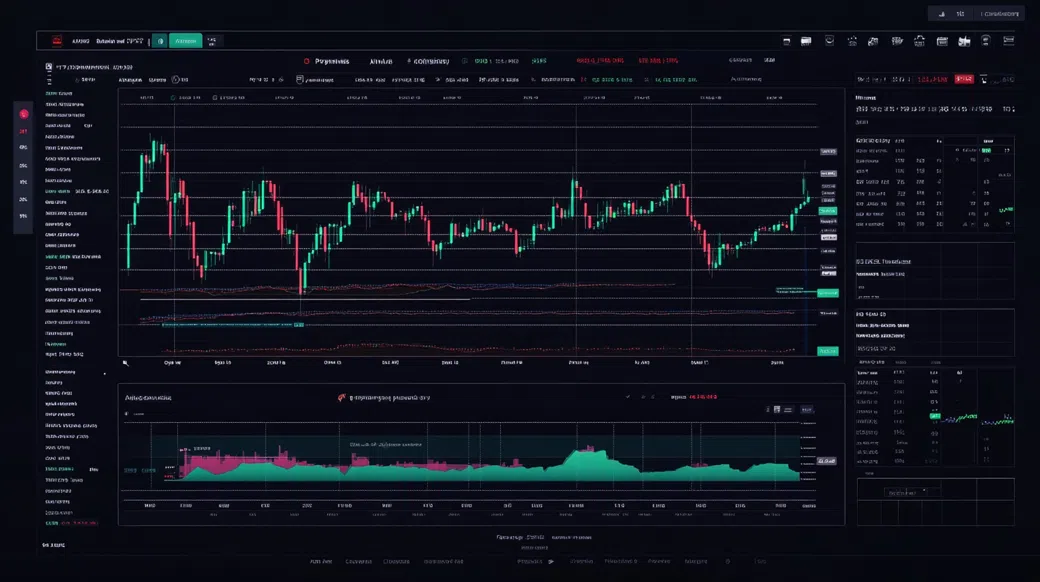
WebTrader was the center of gravity in my test: stable sessions, a clean ticket panel, and enough order controls (market, limit, stop, plus basic take-profit/stop-loss) to execute without wrestling the interface. Where it trails the MT4/MT5 universe is not functionality per se, but ecosystem—fewer third-party scripts, fewer custom indicators, and less of the “plug-and-play” automation culture.
The Kapitrenvex app is built for monitoring and acting fast: quotes updated smoothly, positions could be closed with a single tap, and deposits/withdrawals were accessible from the same menu. Kapitrenvex login supported biometric unlock on my device, which matters when you’re managing exposure on a commute between DIFC and a meeting. Push notifications for fills and margin thresholds were helpful, though the chart area felt tighter than desktop when stacking indicators.
Tooling is practical rather than “terminal-grade.” I used multi-timeframe charts with common indicators (MA, RSI, MACD, Bollinger) and basic drawing tools to map levels; alerts and watchlists covered the day-to-day routine. An economic calendar and news feed were integrated, but if you rely on deep research, sentiment dashboards, or advanced strategy testing, you’ll still want external analytics alongside this Kapitrenvex trading platform.
After entering email, phone, and residence details, the portal pushed me to complete KYC before raising limits—exactly what you’d expect under AML expectations even in offshore setups. Verification required a government-issued photo ID plus a proof of address document dated within three months; my approval landed the same business day. The flow was simple, but it did insist on matching profile data to documents, so sloppy spellings can slow things down.
One detail I appreciated: the dashboard showed base-currency and funding rails clearly before I sent money, which helps avoid accidental conversion charges. If you plan to run a small account, keep an eye on inactivity rules—brokers in this segment monetize dormancy.
I tested support with a real trader’s question: how swap is calculated on XAU/USD and where the rate is displayed before holding overnight. Live chat came back in about three minutes with a precise path to the instrument specs and a note on triple-swap day mechanics; the guidance matched what I later saw in-platform. I also sent an email asking about Kapitrenvex withdrawal timing for card vs. crypto, and the ticket reply arrived in roughly eight hours with method-by-method ranges and the internal processing window.
Coverage is what I’d call “market standard” for international CFD brokers: live chat runs 24/5, email is steady on business days, and service quality depends on language and time zone. Phone help wasn’t prominent in my region, so if you need voice escalation, confirm availability before depositing. Weekends are quieter—fine for crypto-only traders, but not ideal if you expect immediate human support on Saturday.
If you’re curious, start by checking the live spread behavior on the instruments you actually trade and confirm your country’s leverage cap. I’d open a demo first, then move to a small funded test to validate deposits, execution, and withdrawals under your own routine.
Visit KapitrenvexIt can be, but only if you treat leverage with respect and use the demo first. The interface is not overly technical, yet the education library is lighter than what beginner-focused, top-tier regulated brokers provide. New traders should start small, focus on risk limits, and avoid holding leveraged CFDs through volatile news until they have a process.
Yes, crypto is available via CFDs, including BTC and ETH. You’re trading price exposure rather than receiving coins to a wallet, so there’s no on-chain transfer feature. Expect weekend volatility and financing behavior that can differ from forex pairs.
No, based on my 2026 hands-on test it behaved like a functioning broker: KYC was enforced and my withdrawal request moved through processing within the stated window. The more nuanced point is regulatory—this is an offshore-registered service, so protections and escalation routes are not the same as Tier-1 jurisdictions. Trade it like a high-risk venue: limit exposure, keep records, and prioritize risk management.
No, the USA is restricted and accounts are not offered to US residents. This is consistent with many offshore CFD brokers that avoid US regulatory requirements. If you’re traveling, your residency and documents still determine eligibility.
Most withdrawals are processed internally within 24–48 hours after KYC is complete. Receipt times then depend on the rail: cards typically take 2–5 business days, bank wires often take 3–7 business days, and crypto can land the same day in many cases. Plan extra buffer time around weekends and bank holidays.
The minimum deposit is $200 on the live funding screen I used. That level is enough to test execution and fees, but it’s not a substitute for proper position sizing—especially at leverage up to 1:500. If you’re unsure, begin with the demo and only then fund a small amount.
Yes, there’s a Kapitrenvex app for iOS and Android alongside the WebTrader. It supports monitoring positions, placing orders, and managing deposits and withdrawals from the phone. For detailed analysis, desktop still feels roomier, but mobile is solid for risk checks and fast exits.
Overall Score: 4.0/5
For traders who think in portfolios—FX for liquidity, gold for stress, indices for macro—Kapitrenvex delivers a usable multi-asset CFD setup with sensible tiering between Standard and Raw pricing. Execution and platform stability were acceptable in my testing, and the deposit–withdraw loop did not raise alarms. The compromise is structural: offshore registration means fewer formal protections, so you must trade smaller, diversify counterparties, and treat leverage like a sharp tool. If you’re weighing “is Kapitrenvex legit” against the usual Kapitrenvex scam chatter, my experience points to a functioning broker, with the standard offshore caveats. You can re-check current terms directly at Kapitrenvex.
Best for: MENA/Africa-based CFD traders who want higher leverage, a WebTrader-first experience, and Raw pricing for frequent trading. Avoid if: you need Tier-1 regulation, deep research/education, or you’re prone to overleveraging.