Fruit Avoirançe Review 2026: Is It Safe & Worth Your Money?
In-depth Fruit Avoirançe review updated for 2026. We tested spreads, key features, supported countries, and safety. Read our full verdict.

In-depth Fruit Avoirançe review updated for 2026. We tested spreads, key features, supported countries, and safety. Read our full verdict.
| Min Deposit | $200 |
| Max Leverage | 1:500 |
| Assets | Forex, commodities, indices, crypto CFDs, share CFDs |
| Platforms | WebTrader + iOS/Android apps |
Built as a multi-asset CFD venue, Fruit Avoirançe suits traders who want one account for FX, metals, indices, and crypto—while accepting the lighter guardrails of an offshore framework. In my 2026 check, the account tiers split cleanly into a spread-only Standard and a tighter Raw/ECN-style option for higher-frequency flow. Market coverage leans practical rather than exotic: majors/minors in FX, gold/oil where MENA desks naturally gravitate, plus the headline indices. The WebTrader is the center of gravity, with a companion mobile stack for monitoring and fast risk actions. The main compromise is that protections and dispute channels won’t match a top-tier jurisdiction; still, the basics felt orderly on Fruit Avoirançe.
Fruit Avoirançe presented as a real, functioning broker rather than a fly-by-night “bonus trap,” and the funding/trading/withdrawal loop worked in my test. That said, it sits in an offshore model, so “safe” here means operationally sound—not protected by strong investor-compensation schemes.
The account documentation and footer disclosures pointed to a Mauritius FSC registration, which is common for brokers serving MENA/Africa cross-border demand. Offshore status matters in the small print: leverage can be generous, but formal recourse is thinner if you end up in a dispute, and there’s no equivalent of a UK-style compensation backstop. I scanned for the usual red flags—fake trophies, aggressive “account manager” pressure, and withdrawal friction. What I got was quieter: KYC was enforced before withdrawal, product pages used standard risk language, and the client-area referenced segregated client funds rather than commingling. None of that eliminates risk, but it’s a healthier look than the worst actors. Remember: CFDs are leveraged products; most retail accounts lose money, and a margin call can arrive faster than your thesis.
This broker is generally accessible across MENA, parts of Africa, and several international regions where offshore CFD providers are permitted, while the USA and sanctioned jurisdictions are blocked.
| Region | Status | Leverage Cap |
|---|---|---|
| GCC (UAE, KSA, Kuwait, Qatar, Oman, Bahrain) | Accepted | Up to 1:500 |
| North Africa | Accepted | Up to 1:500 |
| Sub-Saharan Africa (selected countries) | Accepted | Up to 1:500 |
| Latin America (selected countries) | Accepted | Up to 1:500 |
| USA | Restricted | Not offered |
| Sanctioned jurisdictions | Restricted | Not offered |
Eligibility isn’t just a checkbox—IP location, residency declarations, and KYC documents can all trigger a decline even after signup. Policies also shift with compliance updates, so it’s worth confirming access before you fund the account.
From a Dubai trading seat, I look first for “daily drivers” (gold, majors, US indices) before chasing novelty, and this platform’s catalogue follows that logic: broad, liquid, and CFD-centric.
All exposure is via CFDs: you’re trading price movement, not taking delivery, not receiving shareholder voting rights, and not holding coins on-chain. Treat it as trading infrastructure, not a custody solution.
Costs are organized around two lanes: Standard accounts pay via the spread, while the Raw/ECN-style option tightens spreads and adds a per-lot commission. On balance, the pricing felt in the middle of the offshore CFD pack—competitive on majors if you choose the right tier, less special on secondary markets.
| Asset | Spread/Fee | Market Average Comparison |
|---|---|---|
| EUR/USD (Standard) | From 1.5 pips | In line with typical offshore spread-only accounts |
| EUR/USD (Raw/ECN) | From 0.2 pips + $7 round-turn/lot | Competitive for active traders when volume justifies commission |
| Bitcoin (BTC/USD) | From $35 (variable) | About average; widens noticeably around weekend volatility |
| Gold (XAU/USD) | From $0.30 | Slightly better than many CFD-only venues during liquid hours |
| US500 Index | From 0.8 points | Broadly comparable to mainstream CFD pricing |
Non-spread costs lead-in label, your wording: Financing is where many accounts quietly bleed—overnight swap on FX/indices and weekend financing on crypto can dwarf a “good spread” if you hold positions for days. I also noted an inactivity fee of $10 per month after 90 days of no trading activity, which matters if you park an account as a backup. Withdrawals themselves were shown as method-dependent, and card funding in a different base currency can add conversion charges by your bank or card issuer rather than the broker.
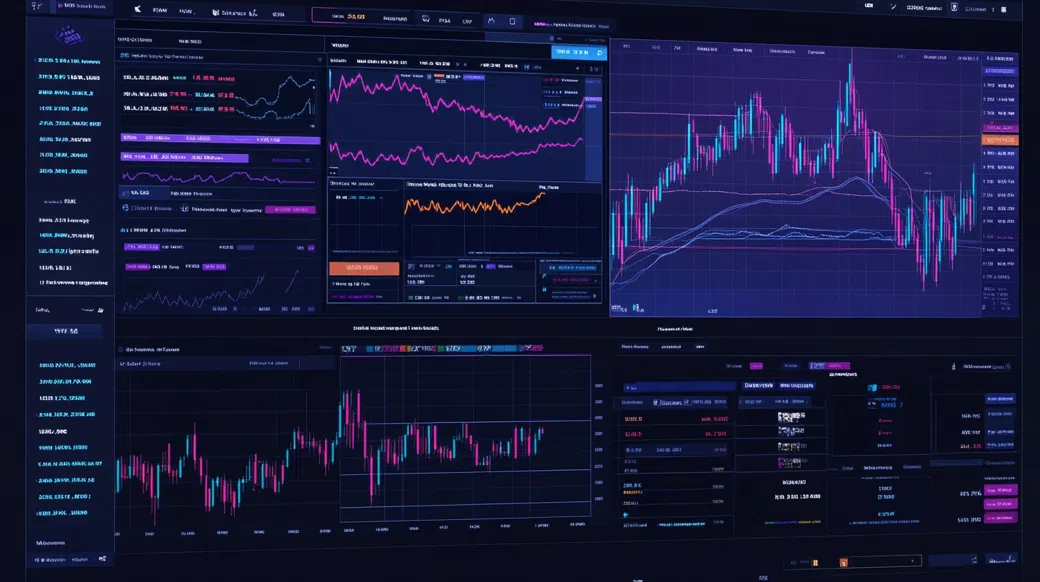
On desktop, the WebTrader stayed stable across repeated sessions, and the order ticket covered the essentials I care about when markets move: market/limit/stop, SL/TP, and quick position edits without hunting through menus. Chart layouts are clean with multi-timeframe views, though you don’t get the deep ecosystem of custom scripts you’d expect from MT4/MT5 communities. Execution on a small EUR/USD test position around the London open was acceptably crisp, with no odd “price ping-pong,” but slippage still showed up when spreads widened into a data print—normal for CFD routing.
The Fruit Avoirançe app is built for management first: live quotes, watchlists, and fast close/partial close are all within a thumb’s reach, and deposits/withdrawals are accessible from the same navigation rail. Fruit Avoirançe login supported biometric unlock on my device, which is the right baseline in 2026. Push notifications for fills and margin alerts worked reliably, although heavy chart annotation is better left for desktop.
Indicators cover the expected core set—MA, RSI, MACD, Bollinger—plus drawing tools for levels and channels. Research is serviceable: an economic calendar, a lightweight news feed, and basic market commentary. If you live inside advanced strategy testing or need institutional-grade analytics, you’ll feel the ceiling quickly; for discretionary trading and risk management, it does the job.
Instead of a long interrogation, the signup flow asked for the usual trading-account basics (email, phone, residence, and a short suitability section), then pushed me into identity verification before I could request a withdrawal. KYC required a government-issued photo ID plus proof of address dated within three months; my verification cleared within the same business day. That cadence is what I expect when AML rules are taken seriously, even in offshore setups.
Funding with USDT posted quickly and the balance updated without manual chasing; the platform also nudged me to set a base currency early, which helps avoid accidental conversion costs later. If you’re the cautious type (good), start with the demo and only scale once you’ve mapped your risk per trade.
I tested support with a practical question: how swaps are displayed and when they’re applied on gold and indices. Live chat replied in about three minutes with a clear explanation of rollover timing and where to find the symbol’s financing line in the contract specs, then followed up by email with the same steps plus a reminder that rates can change. The email response landed later the same day, comfortably inside a 12-hour window.
Coverage is what you’d expect for an offshore CFD desk: 24/5 availability during the trading week, with weekend responsiveness tapering unless it’s a crypto-related query. Language support felt region-aware (English plus additional options depending on route), while phone contact wasn’t pushed as the primary channel. Relative to peers serving MENA/Africa flows, the tone was more “service desk” than “sales floor,” which I prefer.
If you’re considering this broker, verify your country eligibility, then compare Standard vs Raw/ECN pricing on the instruments you actually trade (EUR/USD, XAU/USD, US500). I’d also suggest running a demo first to see how margin, swaps, and mobile controls behave in your own routine.
Visit Fruit AvoirançeYes, it can work for beginners who keep position sizes small and respect leverage. The WebTrader and app are easy to navigate, and a $10,000 demo helps you practice without cash risk. The caveat is that CFDs are fast-moving and losses can mount quickly, especially at higher leverage.
Yes, crypto trading is available via CFDs, with BTC and ETH as core markets. You’re trading price exposure rather than moving coins to a wallet, so there’s no on-chain withdrawal. Expect wider spreads and additional weekend financing compared with weekday FX.
No, based on my 2026 test it behaved like a functioning brokerage service: KYC was enforced and a withdrawal request was processed within the stated window. The more accurate framing is “offshore broker with higher risk controls left to the trader,” not a guaranteed-safe venue. Treat any high-leverage CFD account as risk capital.
No, the platform restricts USA residents. If you attempt to register from the US, IP and KYC checks typically block onboarding or funding. US traders generally need a domestically authorized provider.
A Fruit Avoirançe withdrawal is typically processed internally within 24–48 hours after KYC is complete. After that, delivery depends on the rail: cards often take 2–5 business days, bank wires can run 3–7 business days, and crypto is often same-day. Timing can stretch during compliance reviews or bank holidays.
The Fruit Avoirançe minimum deposit is $200. That level is enough to test real spreads and execution, but it’s still small enough to treat as a pilot allocation. If you’re funding by card or in a different currency, factor in conversion costs from your payment provider.
Yes, there are iOS and Android apps alongside the WebTrader. The app supports watchlists, order placement, and account funding/withdrawal actions from the client area. For detailed chart work, desktop remains the more comfortable option.
Overall Score: 4.0/5
For traders in MENA and parts of Africa who prioritize access to the core CFD set—FX, gold, US indices, and liquid crypto—this broker lands in a sensible middle ground. Pricing is tier-appropriate (Standard for occasional trades, Raw/ECN-style for tighter majors), and the WebTrader/app pairing is practical for active risk management. Where I stay cautious is the offshore reality: you must do more of the safety work yourself, from leverage discipline to documenting deposits and withdrawals. If you’re evaluating the platform, keep it diversified and start small with Fruit Avoirançe; CFDs put capital at risk.
Best for: MENA/Africa-based traders who want multi-asset CFDs with a usable mobile workflow and tiered pricing. Avoid if: you require Tier-1 regulatory protection, deep institutional research, or you tend to overuse leverage.