Forte Rendovale Trading Platform Alternatives 2026
Compare Forte Rendovale alternatives for 2026: regulated brokers, fees, platforms, execution quality, and a safer migration checklist for US/EU traders.

Compare Forte Rendovale alternatives for 2026: regulated brokers, fees, platforms, execution quality, and a safer migration checklist for US/EU traders.
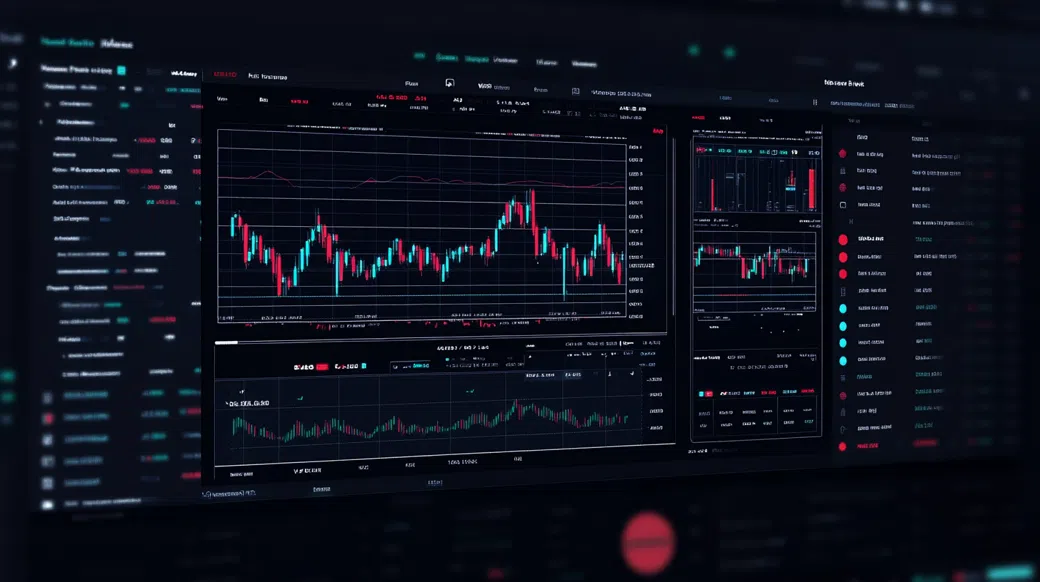
After a few cycles trading energy and metals out of Dubai, you learn to respect one rule: capital survives when your counterpart is solid and your tools behave under pressure. That’s the lens I’m using for this guide to Forte Rendovale trading platform alternatives 2026—especially for readers in the US/EU where regulatory guardrails and product rules matter. Forte Rendovale appears to sit in the offshore CFD/FX bracket, commonly associated with lighter-touch oversight (often a Seychelles FSA-style framework), higher headline leverage (frequently up to 1:500), and a proprietary WebTrader plus mobile app. That combination can be convenient for quick access, but it also concentrates risk in the one place retail traders can’t diversify: the broker relationship itself.
Cost and execution matter too. A typical EUR/USD “standard” spread around 2.0 pips is workable for swing trading, but it can bleed a fast strategy dry once you add slippage, swap/overnight fees, and wider spreads in volatile windows. And if you want true multi-asset diversification—real stocks/ETFs, exchange-traded futures, options, bonds—offshore CFD-first venues often don’t deliver the same depth as top-tier regulated houses.
This article lays out Forte Rendovale alternatives with a safety-first bias, highlights where platforms like Forte Rendovale may fall short, and gives a practical migration path. If you’re currently using Forte Rendovale, treat the checklist sections as seriously as you treat your risk limits.
Disclaimer: This content is for informational purposes only and does not constitute investment advice. CFDs and other leveraged products carry a high risk of loss, and you can lose more quickly than you expect.
From what’s typically observed in this segment, Forte Rendovale presents itself as a CFD-first broker focused on forex and leveraged derivatives rather than a full multi-asset investment venue. The trading experience is usually built around a proprietary WebTrader and companion iOS/Android app, aiming for a simple onboarding path and quick instrument access. The common audience is retail traders who want FX pairs, indices, commodities, and crypto CFDs in one place, often with relatively high leverage. The trade-off is that features prized by systematic traders—third‑party platform ecosystems, deep analytics, and transparent execution reporting—may not be as mature as at regulated competitors to Forte Rendovale.
Platform-first traders will recognize the pattern: a browser-based terminal with clean chart panels, basic-to-mid indicator coverage, and an account dashboard that keeps deposits, margin, and open P/L in view. Charting tends to be serviceable for discretionary work—common timeframes, drawing tools, and a handful of indicators—without the breadth you’d expect from MT5 or cTrader communities. Order entry usually covers market and pending orders, plus stop-loss/take-profit management; advanced order logic can feel thinner. Mobile parity is often decent for monitoring and manual execution, but fast conditions can expose the limits of a lightweight WebTrader, where slippage and order re-quotes (or fills away from the click) become the real test.
In offshore CFD models, pricing typically comes in two flavors: a “Standard” spread-only setup and a “Raw/ECN-style” tier that adds commission. For a baseline comparison, a typical EUR/USD spread around 2.0 pips on a standard account is common, while a raw tier might show 0.0–0.4 pips plus roughly $6–$8 round-turn commission per standard lot. Expect swap/overnight financing on leveraged positions, which can be material for hold times measured in days. Minimum deposits in this bracket often land near $250, and withdrawal or inactivity fees may appear depending on payment route and account status—details that should be read line-by-line before funding.
Regret in trading rarely arrives in one dramatic moment; it creeps in as friction. The most common push toward Forte Rendovale alternatives is a mismatch between your strategy’s requirements and what the broker can reliably deliver—particularly around execution quality, withdrawals, and the depth of regulation. If you’re scaling size or running tighter stops, a small change in spread, slippage, or margin policy can flip a profitable method into a slow leak. And remember: leverage amplifies outcomes both ways, so “more” is not automatically “better.”
I treat broker selection like building a transport plan across borders: paperwork, counterparty risk, and contingency options matter as much as the ticket price. For alternatives to the Forte Rendovale trading platform, start with safety, then fit-to-strategy, then cost. If a broker can’t clear the first hurdle, the rest is noise.
In the US/EU context, regulators are not a badge for marketing—they’re a system of rules and audits. FCA (UK), ASIC (Australia), CySEC (Cyprus/EU), and NFA/CFTC (US) each impose capital requirements and conduct standards, and many require segregated client funds. Investor compensation can matter too: FSCS in the UK covers eligible clients up to £85,000, while Cyprus’ ICF provides coverage up to €20,000 (eligibility and product scope apply). These protections are one reason regulated options vs Forte Rendovale are often the first stop for risk-aware traders.
Diversification is the only free lunch I’ve seen survive every market regime. If you want FX and CFDs only, a specialist venue may do. If you want to blend FX with real stocks/ETFs, options hedges, or exchange-traded futures, you’ll need a multi-asset broker with the plumbing for it. Some brokers offer stocks only as CFDs—fine for short-term exposure, but it’s not ownership: no shareholder rights, and financing costs can stack up. Match the broker’s menu to your plan, not to a trending instrument list.
Spreads get the headlines, but your P&L pays the full bill: spread + commission + swap + “hidden” costs like slippage and wider quotes at rollover. A cleaner comparison is round-turn cost per lot (or per $100k) under your expected trade frequency. For example, a 2.0‑pip EUR/USD spread can be heavy for a high-turnover strategy, while a raw account with low spreads plus commission may be cheaper if execution is consistent. Also scan for inactivity fees and withdrawal charges—small line items that become large when you’re moving money frequently.
Tools are not decoration; they’re risk controls. MT4/MT5 and cTrader bring mature ecosystems for automation, custom scripts, and detailed reporting, while proprietary terminals can be simpler and sometimes smoother for manual trading. Execution model matters: market maker setups can be fine for many retail flows, while STP/ECN/DMA-style routing may better suit scalpers or traders who care about depth and fills. If you’re stepping away from Forte Rendovale, test execution with small size during active sessions and track slippage versus your entry logic before scaling.
When something breaks—payment delays, login issues, margin confusion—you learn quickly whether support is operational or performative. Look for clear service hours, multilingual coverage, and written policies that match what support tells you. Education should be more than webinars; strong brokers publish platform guides, margin explanations, and product risk notes you can actually use. Finally, check mobile parity: if you manage risk on the phone, you need reliable order modification, alerts, and account reporting.
On paper, offshore CFD brokers often look generous: leverage up to 1:500, dozens of FX pairs (often 30–50), indices, and a handful of commodities. In practice, the deciding edge is execution and cost stability. If Forte Rendovale runs around a 2.0‑pip EUR/USD spread on a standard tier, that’s tolerable for lower-frequency trading, but it becomes expensive when you’re in and out all week. FX/CFD specialists like Pepperstone and IC Markets are frequently used by traders who care about tighter pricing and platform choice (MT4/MT5/cTrader), plus the ability to align the account type with the strategy (standard vs raw). For traders who manage risk tightly, the conversation is less about maximum leverage and more about margin transparency, negative balance protection where applicable, and how the broker behaves during fast markets.
This is where many platforms like Forte Rendovale show a structural gap. If equities are offered at all, they’re often delivered as stock CFDs—useful for directional exposure, but not the same as holding the underlying shares or ETFs on an exchange. Regulated multi-asset houses close that gap. Interactive Brokers is built for breadth: real stocks and ETFs, options, futures, bonds, and FX under one roof, with routing and reporting that suit serious portfolio builders. Saxo Bank is another strong bridge for global investors who want multi-asset access with a polished platform stack and research tools. If your objective is to diversify across regions (US, Europe, and emerging markets) rather than only trade indices as CFDs, these substitutes for Forte Rendovale can change your risk profile in a meaningful way.
Crypto exposure inside CFD brokers is usually exactly that—crypto CFDs—meaning you’re trading price movements, not taking custody of coins on-chain. That can be convenient for short-term speculation and hedging, but it comes with financing costs, weekend liquidity quirks, and the familiar counterparty layer. If Forte Rendovale offers crypto CFDs (often 10–30 coins in this segment), treat it as leveraged derivatives, not “owning crypto.” For regulated alternatives, IG and Plus500 are commonly used for crypto CFD access in permitted regions, with clearer risk disclosures and established compliance processes (availability varies by country and regulation). If you want actual coin ownership, that typically involves a regulated crypto exchange and a different custody conversation—separate from the broker list in this article.
Regulation: FCA, DFSA, MAS (entity depends on region)
Markets: stocks, ETFs, bonds, options, futures, FX, CFDs
Fees: FX spreads typically from ~0.6–1.2 pips depending on tier; commissions apply on exchange-traded products
Platform: SaxoTraderGO, SaxoTraderPRO
Best For: Multi-asset diversification with strong platform analytics
Regulation: SEC/FINRA, FCA, IIROC (regional entity applies)
Markets: stocks, ETFs, options, futures, bonds, FX
Fees: low, tiered commissions on many markets; FX pricing typically tight with commission-style structure on larger sizes
Platform: Trader Workstation (TWS), IBKR Desktop, mobile apps, APIs
Best For: Professional-grade execution and global market access
Regulation: FCA, ASIC, CySEC, DFSA
Markets: FX, CFDs (indices, commodities, some shares depending on entity)
Fees: EUR/USD often ~0.0–0.3 pips + commission on Razor/Raw accounts; ~1.0+ pips typical on Standard
Platform: MT4, MT5, cTrader
Best For: Systematic traders using EAs and VPS setups
Regulation: CFTC/NFA, FCA, ASIC, IIROC
Markets: FX, CFDs (availability varies by region)
Fees: spreads typically from ~0.6–1.4 pips depending on pair/region; commissions may apply on certain account structures
Platform: OANDA Trade (proprietary), MT4
Best For: FX-first traders prioritizing transparency and supervision
Regulation: FCA, ASIC, BaFin
Markets: CFDs (FX, indices, commodities, treasuries, shares/ETFs as CFDs)
Fees: FX spreads often from ~0.7 pips on major pairs; share-CFD and other product charges vary by market
Platform: Next Generation platform, MT4 (in some regions)
Best For: Active CFD traders who want rich charting and research
Regulation: FCA, CySEC, ASIC, MAS
Markets: CFDs (FX, indices, commodities, shares, ETFs, crypto CFDs where permitted)
Fees: spread-based pricing; typical major-pair spreads often around ~0.8–1.6 pips depending on conditions
Platform: Plus500 WebTrader, mobile apps
Best For: Simplicity-focused traders who prefer a clean proprietary app
| Platform | Regulation | Main Markets | Typical Costs | Best For |
|---|---|---|---|---|
| Saxo Bank | FCA, DFSA, MAS | Stocks/ETFs, options, futures, FX, CFDs, bonds | FX ~0.6–1.2 pips (tiered); commissions on exchanges | Multi-asset diversification with strong platform analytics |
| Interactive Brokers (IBKR) | SEC/FINRA, FCA, IIROC | Stocks/ETFs, options, futures, bonds, FX | Low commissions; tight FX with commission-style pricing | Professional-grade execution and global market access |
| Pepperstone | FCA, ASIC, CySEC, DFSA | FX, CFDs (indices/commodities; shares vary) | Raw ~0.0–0.3 pips + commission; Standard ~1.0+ pips | Systematic traders using EAs and VPS setups |
| OANDA | CFTC/NFA, FCA, ASIC, IIROC | FX (plus CFDs where permitted) | Spreads commonly ~0.6–1.4 pips (pair/region dependent) | FX-first traders prioritizing transparency and supervision |
| CMC Markets | FCA, ASIC, BaFin | CFDs across FX/indices/commodities/shares | FX often from ~0.7 pips; product-specific charges apply | Active CFD traders who want rich charting and research |
| Plus500 | FCA, CySEC, ASIC, MAS | CFDs incl. FX/indices/commodities/shares/ETFs/crypto CFDs | Spread-based; majors often ~0.8–1.6 pips (conditions apply) | Simplicity-focused traders who prefer a clean proprietary app |
Switching brokers is not a “click and go” event; it’s a controlled handover of counterparty exposure. Do it like you’d roll a hedge from one venue to another: confirm the new venue first, reduce open risk, then move funds with paperwork tidy. Keep position sizing small during the transition—leverage magnifies mistakes when you’re learning a new platform’s margin and execution behavior.
If you’re still comparing brokers similar to Forte Rendovale, review onboarding steps, product availability in your country, and the platform stack before committing funds. Even small differences in spreads, swaps, and execution can matter once you trade size or frequency.
Visit Forte RendovaleThe best choice depends on whether you need multi-asset investing or mainly FX/CFDs. For broad diversification, Interactive Brokers or Saxo Bank are strong Forte Rendovale alternatives; for FX-focused trading with MT4/MT5/cTrader, Pepperstone or OANDA are more directly comparable. If your priority is a simple app-driven CFD experience, Plus500 is a cleaner fit among regulated options.
Forte Rendovale appears to operate in an offshore framework (often associated with Seychelles FSA-style registration in this category), which generally provides fewer investor-protection layers than FCA/CySEC/NFA-regulated firms. That doesn’t automatically mean a platform will fail, but it does mean you should treat counterparty risk, withdrawal policy clarity, and fund segregation as primary due-diligence items. With leveraged CFDs, safety is also about how margin and negative balance outcomes are handled under stress.
Most brokers in this segment focus on forex and CFDs, so stocks/ETFs—if offered—are commonly delivered as CFDs rather than real share ownership. Listed futures are typically not the core product for offshore CFD platforms, while crypto exposure is often via crypto CFDs (price exposure without on-chain custody). If you want real stocks/ETFs or exchange-traded futures, brokers like Interactive Brokers or Saxo Bank are usually better substitutes for Forte Rendovale.
Before moving, verify the new broker on the regulator’s official register and confirm the exact legal entity that will hold your account. Next, compare the all-in trading cost (spread + commission + swap) under your strategy, and test execution with small size to observe slippage. Finally, plan withdrawals and deposits around AML rules so you don’t get stuck mid-transfer.
About the Author: Nadia El-Amin is a former commodities trader based in Dubai who covers brokerage risk, market access, and trading infrastructure across the Middle East and Africa. She approaches broker comparisons like portfolio construction: diversify what you can, and be brutally conservative about counterparty exposure.