Boldequitor Trading Platform Alternatives 2026
Boldequitor trading platform alternatives 2026: compare regulated brokers, costs, platforms, and safety steps to move your account with more confidence.

Boldequitor trading platform alternatives 2026: compare regulated brokers, costs, platforms, and safety steps to move your account with more confidence.
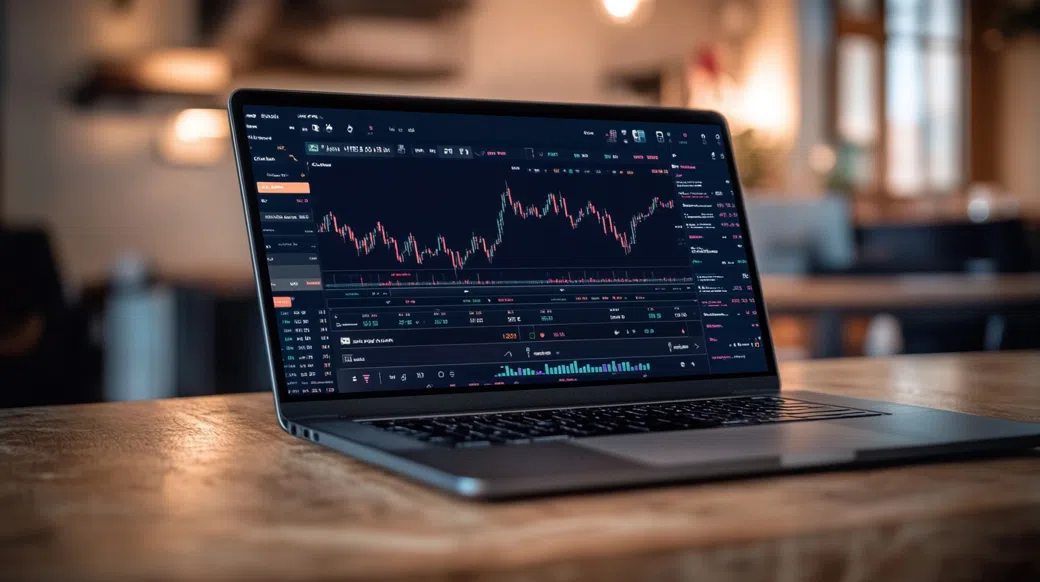
Some brokers sell you a story; others sell you a structure. From my seat in Dubai’s commodities lanes—where execution and cash movement matter as much as the chart—structure wins every time. Boldequitor sits in the familiar offshore CFD lane: a proprietary WebTrader, a mobile app, and a product mix that tends to revolve around forex and CFDs (with crypto CFDs often on the menu). Public-facing details can be thin in this segment, and that’s exactly why many traders end up comparing Boldequitor against better-documented venues with clearer rulebooks.
Based on what’s typically observed for offshore providers, traders should expect a minimum deposit around $250, leverage that can reach 1:500, and a “from” spread on EUR/USD near 2.0 pips on a standard-style account. That combination—high leverage plus wider spreads—can be workable for short-term traders, but it also magnifies risk fast. If you’re trading CFDs, a margin call doesn’t negotiate, and slippage shows up precisely when markets are loud.
This guide is built to help you shortlist Boldequitor alternatives for 2026 without relying on hype. I’ll focus on regulated options (FCA, ASIC, CySEC, NFA/CFTC where relevant), platform stacks (MT4/MT5/cTrader vs WebTrader), and practical migration steps—because getting in is easy, getting out smoothly is the real test.
Disclaimer: This article is for informational purposes only and does not constitute investment advice. Trading leveraged products such as CFDs involves a high risk of loss and may not be suitable for all investors.
Seen through a trader’s lens, Boldequitor looks like a CFD-first brokerage built around leveraged speculation rather than long-term ownership. The typical client profile is retail—someone who wants access to major FX pairs, indices, a handful of commodities, and a shortlist of crypto CFDs, all inside one login. Its operating footprint aligns with an offshore framework (commonly associated with jurisdictions such as Seychelles in this broker category), which can mean fewer investor-protection layers than you’d get under the FCA, ASIC, CySEC, or the NFA/CFTC regime.
That doesn’t automatically tell you how your trades are executed, but it does change the “rules of engagement”: dispute resolution, segregation standards, and compensation schemes often look very different compared with competitors to Boldequitor that sit under top-tier regulators.
On the platform side, the baseline offering is a proprietary WebTrader with a companion iOS/Android app. Expect competent, mid-level charting—enough indicators for basic trend and momentum work, drawing tools for levels and channels, and quick access to common order tickets. The order menu in this class of platform usually covers market and pending orders with stop-loss and take-profit controls, but advanced tooling (strategy testing, custom indicators, deep DOM views) tends to be limited compared with MT5 or cTrader ecosystems.
Mobile parity is often decent for monitoring positions and managing risk on the go, while the account dashboard typically centralizes deposits, withdrawals, and KYC steps. Execution “feel” varies by liquidity and volatility; during news spikes, watch for slippage and requotes if the execution model behaves like a market maker.
Cost is where many traders start doing the math. A common pricing shape here is a Standard-style account with EUR/USD around 2.0 pips, while a Raw/ECN-style tier (if offered) can advertise very tight spreads (roughly 0.0–0.4 pips) plus a round-turn commission in the $5–$8 range. Overnight financing (swap) is part of the deal on CFDs; holding indices or commodities through volatile sessions can turn swap into a real line item, not a footnote.
Other fees to check in this category include withdrawal charges (sometimes payment-method dependent) and inactivity fees if you step away. If you’re comparing platforms similar to Boldequitor, focus on the all-in cost per round turn, not just the headline spread.
The first crack usually appears in the back office, not on the chart. Traders can tolerate a basic WebTrader; they struggle with unclear execution policies, uneven withdrawal experiences, or risk controls that don’t match their strategy. That’s why Boldequitor alternatives become a practical search, not a theoretical one—especially for US/EU traders who want a regulator with teeth and a clear complaints path. I also see a second pressure point: diversification. If your broker only offers CFDs, your “portfolio” is often one market regime away from looking identical across assets.
And yes—leverage cuts both ways. At 1:500, a modest move can flip into a margin call if you size aggressively, particularly during gaps or fast news where slippage is real.
Pick your next broker the way you’d pick a counterparty in physical commodities: define the risk first, then the price. For alternatives to the Boldequitor trading platform, I’d treat the selection as a fit-to-strategy exercise—execution, instruments, and cash controls must match how you actually trade, not how the marketing banner wants you to trade.
Start with the regulator and work outward. FCA oversight in the UK brings the FSCS compensation scheme (up to £85,000 for eligible clients) and tighter conduct rules; CySEC oversight in the EU connects to the ICF (up to €20,000, eligibility dependent). ASIC and the NFA/CFTC framework emphasize strict supervision and reporting, with the US market having its own leverage and product constraints. Look for segregated client funds language, clear complaints procedures, and published legal entities—details that often separate regulated options vs Boldequitor.
Write down what you actually need: FX and indices for tactical trading, commodities for macro expression, and possibly real equities/ETFs for longer horizons. Many offshore CFD venues keep you in derivatives-only exposure; that’s fine until you want bonds, options, futures, or direct market access (DMA) to equities. Brokers similar to Boldequitor can feel “complete” until you try to build a diversified book across instruments with different carry, volatility, and correlation behavior.
Think in round-turn cost, not slogans. A “2.0 pip” EUR/USD spread is materially different from a 0.1–0.3 pip spread plus commission once you scale volume, especially for intraday strategies. Add swap/overnight financing to the spreadsheet—CFDs can look cheap in the ticket, then expensive after a week of holding. Also watch for non-trading charges: inactivity fees, conversion fees, and withdrawal costs. If you’re currently with Boldequitor, pull a month of statements and compute your true cost per trade.
Platform choice isn’t about aesthetics; it’s about what you can automate and measure. MT4/MT5 ecosystems support EAs and broad indicator libraries, while cTrader tends to appeal to execution-focused traders who watch depth and fills. Proprietary platforms can be stable, but you’re dependent on the broker’s development pace. Then comes execution model: market maker versus STP/ECN/DMA affects how orders are filled and when slippage shows up. Test execution during liquid and illiquid hours before committing serious size.
Support quality becomes visible when something breaks. Check service hours against your trading sessions, and confirm language coverage if you trade across regions (MENA/Africa clients often need multi-lingual desks). Education matters less for veterans, more for newer traders—but even pros benefit from clear margin-call rules, platform manuals, and transparent product disclosures. A broker can have tight spreads and still fail you with weak account operations or an app that misbehaves when volatility spikes.
Forex and CFDs are the natural home turf here: think roughly 30–50 FX pairs, a set of indices, and a small commodities shelf (often 5–10 instruments). With offshore-style leverage around 1:500 and EUR/USD near 2.0 pips on a standard account, the proposition leans toward accessibility rather than precision pricing. The trade-off is that you may not get the same depth of execution reporting, order protections, or dispute frameworks you’d see under stricter regulators.
For tighter pricing and platform choice, Pepperstone and IC Markets are commonly used by active FX traders because they offer MT4/MT5 and cTrader, plus Raw-style pricing where the spread can be close to zero and the commission is explicit. If your strategy is sensitive to fills—news trading, scalping, or algorithmic execution—that transparency around spreads vs commission often matters more than maximum leverage.
Stocks and ETFs are where many CFD-first brokers feel narrow. Even when “shares” appear in the menu, the exposure is frequently via CFDs—meaning no shareholder rights, no direct participation in corporate actions the way an investor expects, and financing costs if you hold positions. For US/EU readers building a diversified portfolio, that distinction is not academic; it changes tax handling, overnight carry, and the entire purpose of the position.
Interactive Brokers (IBKR) and Saxo Bank are strong counterweights because they’re built for multi-asset access, including real stocks and ETFs (and, depending on jurisdiction and account permissions, options and futures). That’s the cleanest way to expand beyond “trade-only” instruments and into longer-duration allocation. In my own books, that’s the difference between a tactical hedge and an investment sleeve.
Crypto access in this category is usually crypto CFDs—price exposure without on-chain ownership. That can be useful for short-term positioning (long/short, leverage, quick risk limits), but it doesn’t give you wallets, staking, or the ability to withdraw crypto to your own custody. It also means overnight financing and weekend gapping can bite harder than new traders expect.
If you want regulated crypto CFD exposure, IG and Plus500 are names that often appear on shortlists in the UK/EU context (availability varies by country and product rules). For traders who primarily want crypto as a small satellite position around FX/indices, those regulated venues can be more predictable on disclosures and risk controls. Either way, keep position sizing conservative—crypto volatility makes leverage a fast teacher.
Regulation: DFSA, FCA, MAS (entity and protections vary by region)
Markets: Stocks, ETFs, FX, CFDs, options, futures, bonds (product scope depends on jurisdiction)
Fees: FX spreads typically from ~0.6+ pips on major pairs (account tier dependent); investing fees vary by exchange and volume
Platform: SaxoTraderGO, SaxoTraderPRO
Best For: Diversified multi-asset portfolios with a pro-grade platform
Regulation: FCA, ASIC, CySEC, DFSA
Markets: FX, CFDs (indices, commodities, some crypto CFDs where permitted)
Fees: Standard spreads often from ~1.0 pip; Razor/Raw-style pricing can be ~0.0–0.3 pips plus commission (varies by platform/account)
Platform: MT4, MT5, cTrader
Best For: Algorithmic FX traders who need MT4/MT5 or cTrader
Regulation: SEC/FINRA, FCA, IIROC (entity depends on client location)
Markets: Stocks, ETFs, options, futures, bonds, FX (broad global market access)
Fees: Commission-based pricing on many products; FX spreads can be competitive for larger sizes (fee schedule varies by region and tier)
Platform: Trader Workstation (TWS), IBKR Mobile, Client Portal
Best For: Active investors who want global markets beyond CFDs
Regulation: FCA, ASIC, MAS
Markets: CFDs (FX, indices, commodities, shares), spread betting (UK), limited investing features in some regions
Fees: Spread-based pricing; majors often from ~0.6+ pips (varies by instrument and region); financing applies on CFDs
Platform: IG Trading Platform, MT4 (where available)
Best For: Macro traders who rotate indices, FX, and commodities
Regulation: CFTC/NFA, FCA, ASIC, IIROC
Markets: FX (core), CFDs in some jurisdictions (availability varies)
Fees: Spread-based pricing; majors can be around ~1.0+ pip depending on market conditions and account type; rollover applies on leveraged positions
Platform: OANDA Trade (proprietary), MT4
Best For: US-eligible FX traders prioritizing oversight
Regulation: FCA, ASIC, BaFin
Markets: CFDs (FX, indices, commodities, shares); product access varies by country
Fees: Competitive spread-based pricing; majors often from ~0.7+ pips (instrument- and region-dependent); financing on overnight CFD holds
Platform: Next Generation, MT4 (where available)
Best For: Chart-centric discretionary traders who want robust tooling
| Platform | Regulation | Main Markets | Typical Costs | Best For |
|---|---|---|---|---|
| Saxo Bank | DFSA, FCA, MAS | Stocks/ETFs, FX, CFDs, options, futures, bonds | FX ~0.6+ pips (tier-dependent); multi-asset fees vary | Diversified multi-asset portfolios with a pro-grade platform |
| Pepperstone | FCA, ASIC, CySEC, DFSA | FX and CFDs | Std ~1.0+ pip; Raw ~0.0–0.3 pip + commission | Algorithmic FX traders who need MT4/MT5 or cTrader |
| Interactive Brokers (IBKR) | SEC/FINRA, FCA, IIROC | Stocks/ETFs, options, futures, bonds, FX | Commissions by product; FX pricing varies by size/tier | Active investors who want global markets beyond CFDs |
| IG | FCA, ASIC, MAS | CFDs (FX, indices, commodities, shares); spread betting (UK) | Majors often ~0.6+ pips; financing on CFD holds | Macro traders who rotate indices, FX, and commodities |
| OANDA | CFTC/NFA, FCA, ASIC, IIROC | FX (core); CFDs in some regions | Majors around ~1.0+ pip (conditions/account dependent) | US-eligible FX traders prioritizing oversight |
| CMC Markets | FCA, ASIC, BaFin | CFDs across FX/indices/commodities/shares | Majors often ~0.7+ pips; overnight financing applies | Chart-centric discretionary traders who want robust tooling |
Switching brokers is closer to a logistics job than a marketing decision. Sequence matters: you want continuity of access, clean records, and controlled risk while funds are in transit. If you’re moving from an offshore-style venue to one of the best Boldequitor alternatives 2026 lists often highlight, treat the process like a risk transfer—because during gaps, you’re exposed to both operational friction and market volatility.
If you’re still assessing where it fits, review current onboarding steps, product availability in your country, and the platform tools you’ll actually use. Then compare those details against regulated substitutes for Boldequitor before committing meaningful capital.
Visit BoldequitorThe best alternative depends on whether you want CFDs-only trading or true multi-asset access. For broad diversification (real stocks/ETFs plus derivatives), Interactive Brokers (IBKR) or Saxo Bank are hard to beat; for FX execution with MT4/MT5/cTrader, Pepperstone is a practical pick. If your priority is strict US oversight for spot FX, OANDA is often the most straightforward route.
Boldequitor appears to operate under an offshore-style framework (commonly associated with jurisdictions such as Seychelles for this broker category), which usually provides fewer investor-protection layers than FCA/ASIC/CySEC/NFA-regulated firms. That doesn’t prove wrongdoing, but it does change your recourse if a dispute arises and may affect protections like compensation schemes or negative balance rules. Traders comparing Boldequitor alternatives should prioritize verifiable licensing, segregated client funds policies, and clear withdrawal terms.
With Boldequitor, the common pattern is forex and CFDs as the core offering, with crypto exposure typically delivered via crypto CFDs rather than on-chain ownership. Real stocks/ETFs and exchange-traded futures are often not offered directly in this offshore CFD model, or they may appear only as CFDs with financing costs. If you want real equities or listed futures, IBKR or Saxo are more natural fits.
Before switching, verify the new broker’s license on the regulator’s register and confirm which legal entity will hold your account (protections depend on the entity). Next, compare total trading costs (spread + commission + swap) and confirm platform support (MT4/MT5/cTrader vs proprietary) for your strategy. Finally, test deposits/withdrawals with a small amount first—operational reliability matters as much as tight spreads when real money is involved.
About the Author: Nadia El-Amin is a former commodities trader based in Dubai who now writes as a financial journalist covering brokerage markets across the Middle East and Africa. Her work focuses on execution quality, risk controls, and the practical realities of moving capital across platforms—because diversification, done properly, is still the closest thing finance offers to a free lunch.