Technical Analysis Definition: Meaning in Trading and Investing
Learn what Technical Analysis means in trading and investing, how it’s used across stocks, forex, and crypto, and how to interpret it with practical examples and key risks.

Learn what Technical Analysis means in trading and investing, how it’s used across stocks, forex, and crypto, and how to interpret it with practical examples and key risks.
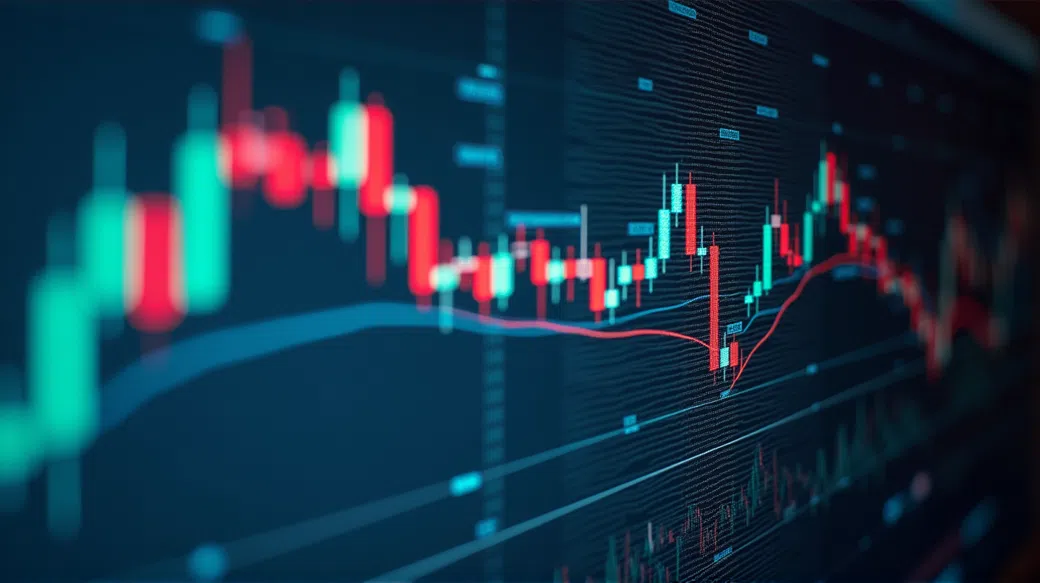
Technical Analysis is a method of studying markets by focusing on price action, trading volume, and chart behaviour rather than company accounts or macro headlines. In plain language, it asks: “What is the market doing right now, and how have similar moves played out before?” This chart-based analysis is widely used across stocks, forex, crypto, and commodities because every traded instrument leaves a visible footprint on a price chart.
In my years trading commodities from Dubai and working closely with brokers across the Middle East and Africa, I learned that the Technical Analysis meaning is practical: it helps you frame entries, exits, and risk in uncertain conditions. Still, Technical Analysis in trading is a tool—never a guarantee. Markets can gap on news, liquidity can vanish, and patterns can fail, especially during volatile sessions.
Disclaimer: This content is for educational purposes only.
In trading desks and dealing rooms, Technical Analysis is understood as a structured way to translate collective behaviour into a plan. It is not “market magic” or a single indicator. It is a price-and-volume framework built on a simple observation: markets move because participants act, and their actions show up as trends, ranges, breakouts, and reversals.
Practically, traders use market chart analysis to answer three questions. First: direction—is the market trending up, trending down, or ranging? Second: location—where are the obvious zones of supply and demand (often seen as support/resistance)? Third: timing—is there a trigger that suggests momentum is picking up or fading?
This approach is best viewed as a decision tool rather than a “sentiment indicator” on its own. Sentiment is part of it, but the outputs are concrete: a thesis (“trend continuation”), a level (“invalidate below X”), and a risk plan (“size the position so a stop is survivable”). In finance, you will also hear it described as price-based analysis because it deliberately prioritizes observable data over narrative.
Technical Analysis adapts well because its input—price—exists in every liquid market. In stocks, traders often combine chart work with earnings calendars and liquidity considerations. They watch trend structure, gaps, and volume spikes to judge whether a move is institutional accumulation or a short-lived reaction.
In forex, price action analysis is frequently anchored around sessions (Asia, London, New York), key levels, and volatility regimes. Because currencies are sensitive to rates and risk sentiment, technicians pay attention to momentum shifts and “range-to-trend” transitions after data releases, while keeping position sizing tight during event risk.
Crypto is open 24/7, so candlestick analysis and market structure are used to manage timing when liquidity varies between weekdays, weekends, and major exchange flows. Sudden liquidations can exaggerate moves, making stops and leverage discipline essential.
In indices, traders use trend-following tools for medium-term positioning and shorter-term setups around volatility and rebalancing effects. Across all markets, time horizon matters: a day trader may use 5–15 minute charts, while an investor may rely on daily/weekly charts to avoid noise and focus on dominant trends.
Technical Analysis tends to be most useful when the market is liquid and orderly enough for patterns to form and be respected. Look for consistent swings (higher highs/higher lows in uptrends, or the opposite in downtrends) and for ranges where price repeatedly fails near the same boundaries. In choppy conditions, price-based market reading can still help, but you must accept more false breaks and reduce trade frequency.
Volatility is the second clue. A market moving from low volatility to high volatility often shifts from mean-reversion to momentum. If candles expand, ranges widen, and closes begin to hold beyond prior pivots, the market may be transitioning into a trend phase—an environment where structure and momentum tools can be more informative.
Signals work best when they align. Start with structure (trend or range), then add a trigger. Common triggers include a break and retest of a key level, a momentum push confirmed by higher volume (where volume is reliable), or a failure swing that shows exhaustion. In chart analysis, you are not looking for perfection; you are looking for a repeatable process: identify a level, define an invalidation point, and estimate reward versus risk.
Indicators can help, but they should support—not replace—reading the tape. Moving averages may help filter trend direction; oscillators may help spot stretched conditions in a range; and volatility tools can guide stop distance. The goal is clarity: fewer, well-understood tools applied consistently.
Even the cleanest setup can fail when the narrative shifts. That is why Technical Analysis should be paired with awareness of catalysts: central bank decisions, inflation releases, geopolitical shocks, or major corporate events. Sentiment also matters—crowded positioning can fuel sharp squeezes that break typical patterns.
When fundamentals and headlines are dominant, treat the chart as a risk map rather than a prediction engine. Use it to define where you are wrong, where liquidity may sit, and how to avoid oversized exposure. As I often remind clients in frontier and emerging markets: diversification is the only free lunch, and no single signal deserves your entire appetite.
Technical Analysis is often misunderstood as a forecasting machine. In reality, it is a probabilistic framework that can be disrupted by news, liquidity gaps, and regime changes. In thin or fragmented markets—something I have seen across certain MENA and African venues—spreads and slippage can invalidate otherwise clean chart-based signals.
Professionals tend to use Technical Analysis as a risk language. A discretionary trader may define bias with weekly/daily structure, execute with intraday levels, and size positions so a stop-loss is a manageable business expense. A systematic desk may codify price-based rules (trend filters, breakouts, volatility targeting) and focus on consistency rather than “perfect calls.”
Retail traders often start with indicators, but the most durable progress comes from simplifying: identify trend or range, mark key levels, and decide where the idea is wrong. Regardless of account size, position sizing matters more than being right. If your stop is 1% away, a 2% risk per trade is very different from a 0.5% risk per trade.
Investors also use chart reading, typically for timing and risk. For example, they may scale in near long-term support, reduce exposure when a major trend breaks, or avoid buying into euphoric blow-off moves. If you want a structured foundation, study a Risk Management Guide alongside technical tools; it is the difference between analysis and survivability.
To deepen your foundation, pair chart skills with basics like position sizing, stop placement, and a dedicated Risk Management Guide.
It is neither good nor bad; it is a tool. Used with risk limits, chart analysis can improve consistency, but it can also amplify losses if paired with overconfidence or leverage.
It means using price charts to understand what buyers and sellers are doing. In simple terms, price action is treated as the clearest summary of market behaviour.
Start by learning trend vs range, then mark support and resistance. Add one or two tools (like moving averages) and focus on stops, position sizing, and a journal rather than constant indicator changes.
Yes, it can be wrong. Patterns fail, levels break, and headlines can override clean setups; that is why market structure analysis must include invalidation points and predefined risk.
No, but it helps. A basic grasp of trends, key levels, and volatility will improve your execution and reduce impulsive decisions, especially when markets move quickly.